
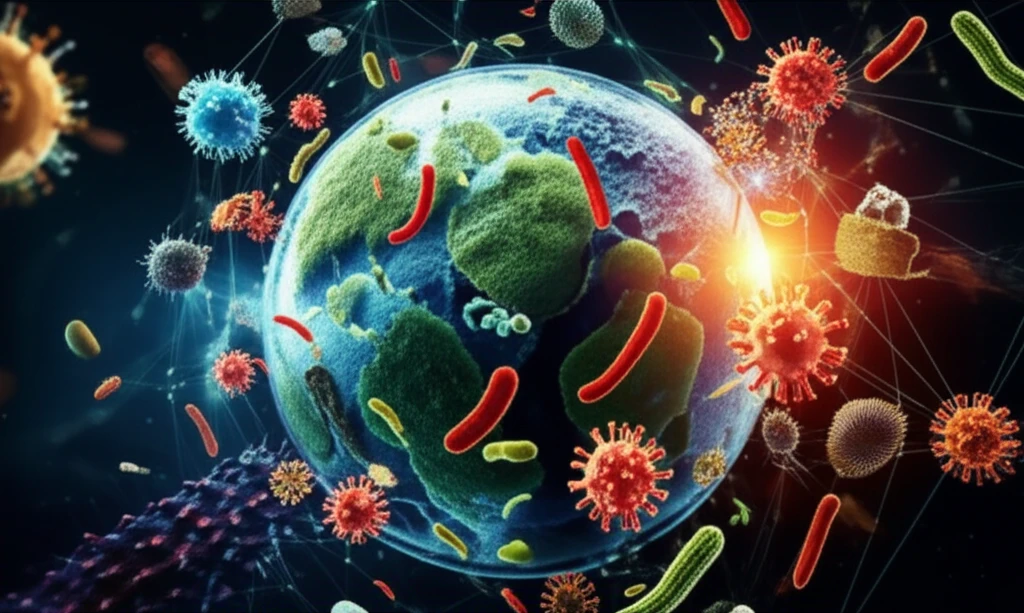
Decoding Infectious Diseases: A Comprehensive Guide

"Understand the evolving world of infectious diseases, their impact, and strategies for prevention and treatment."
Infectious diseases have always been a significant threat to human health. Throughout history, outbreaks and pandemics have reshaped societies, driven scientific advancements, and influenced public health policies. Today, infectious diseases remain a leading cause of mortality worldwide, with new and re-emerging pathogens posing constant challenges.
This guide aims to provide a comprehensive overview of infectious diseases. It covers a range of topics, from understanding the basic principles of infectious agents to exploring the latest advancements in prevention and treatment. The content is designed to be accessible to a broad audience, including healthcare professionals, students, and anyone interested in learning more about this critical area of health.
We will delve into various aspects of infectious diseases, including their causes, transmission, symptoms, and management. Additionally, this guide highlights the importance of public health initiatives, such as vaccination and sanitation, in controlling the spread of infections. Finally, we will discuss future challenges and opportunities in the field of infectious disease research and prevention.
Understanding Infectious Agents
Infectious diseases are caused by pathogenic microorganisms, such as viruses, bacteria, fungi, and parasites. These agents invade the host organism, replicate, and cause disease. Each type of infectious agent has unique characteristics that influence its mode of transmission, virulence, and the type of illness it causes.
- Fungi: Eukaryotic organisms that can cause infections, such as athlete's foot, ringworm, and systemic infections like candidiasis.
- Parasites: Organisms that live in or on a host and obtain nutrients at the host's expense. Examples include malaria, giardiasis, and helminth infections.
The Future of Infectious Disease Control
The fight against infectious diseases is an ongoing battle. Emerging pathogens, antimicrobial resistance, and global travel continue to challenge public health systems worldwide. However, advancements in research, technology, and international collaboration offer hope for a future where infectious diseases are better controlled. By investing in prevention, surveillance, and innovative treatments, we can protect ourselves and future generations from the threat of infectious diseases.