
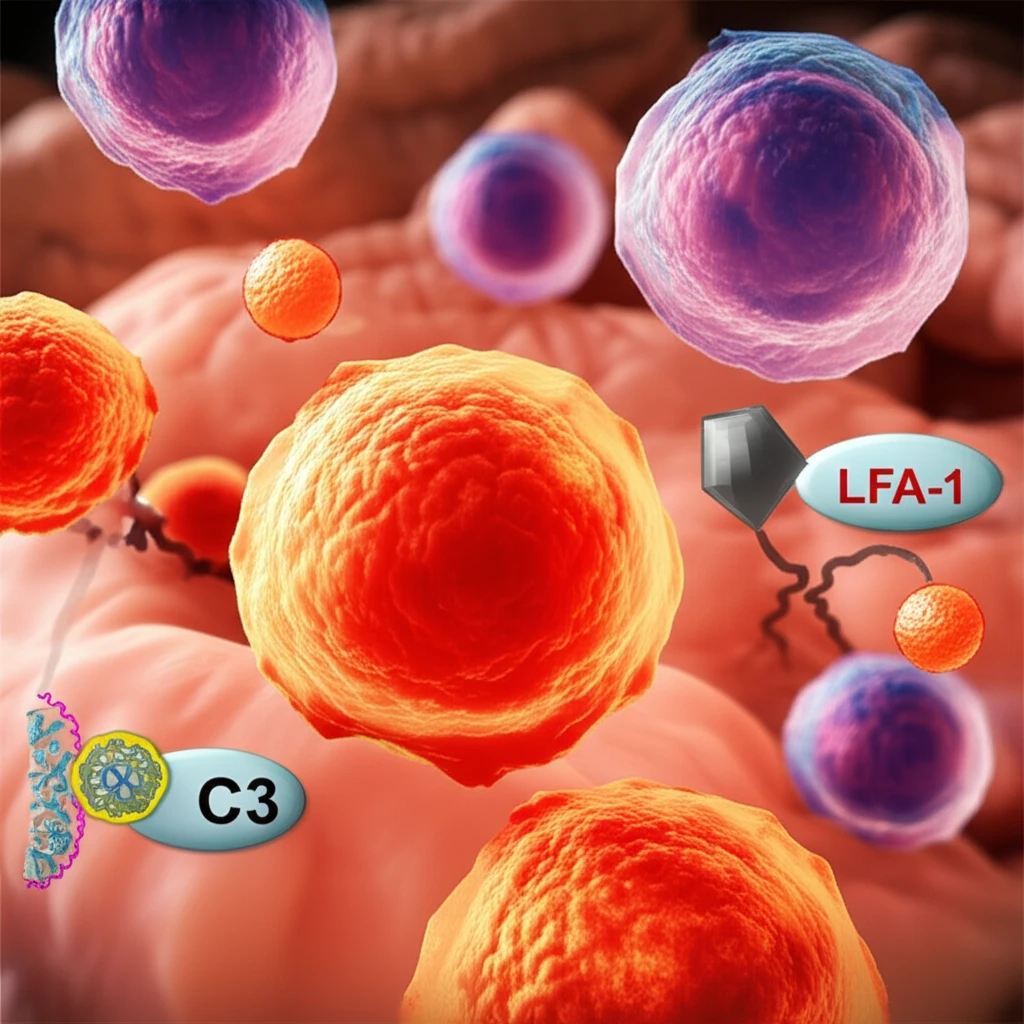
Decoding Immunity: How Cell Location and Triggers Shape T Cell and Prostate Cell Behavior

"Unlocking the secrets of intracellular processes for targeted therapies in autoimmune diseases and cancer."
Our immune system's T cells and the cells within our organs, like the prostate, don't operate in isolation. Their behavior is heavily influenced by their surroundings and the signals they receive. Recent research is shedding light on how these local interactions shape cell function, with significant implications for understanding and treating diseases like autoimmune disorders and cancer.
Two key areas of focus are how T cells are activated to fight off threats and how prostate cells maintain healthy function. In T cells, the process of 'complement C3-licensing' is crucial for launching effective immune responses. In prostate cells, intracellular C3a plays a vital role in maintaining normal cell behavior.
This article delves into the latest findings on these processes, exploring how cell location and specific triggers dictate cell behavior. By understanding these intricate mechanisms, we can potentially develop more targeted and effective therapies for a range of diseases.
T Cells and Autoimmunity
T cells are crucial for immune functions that maintain health and help prevent disease, developing through a stepwise process in the thymus that mainly generates CD4+ and CD8+ T cells. In autoimmune conditions, T cells can directly damage host tissue or help B cells produce autoantibodies. A 2024 meta-analysis examined more than 1.8 million CD4+ T cells from published single-cell data covering 20 diseases and integrated genome-wide association study statistics for 180 traits. These approaches are helping researchers connect T-cell quantitative trait loci with autoimmune disease.
Established Methods and Constraints
Standard T-cell research relies on structured laboratory protocols that specify materials, reagents, troubleshooting guidance, known pitfalls, and reproducible steps. Systems-immunology studies increasingly use sequencing-based methods to examine transcriptomic and epigenomic regulation in T cells during disease. Regulatory T-cell infusion is also being reviewed as a treatment approach for autoimmune diseases and allograft transplantation, although current technical challenges and disadvantages remain. Other emerging strategies aim to use T cells as effector cells to disrupt B–T-cell collaboration, including in rituximab-resistant autoimmune disease.
A Developing Field
The understanding of T-cell biology has developed through foundational work on immune development, antigen recognition, and immune tolerance. Over time, research has increasingly connected T-cell behavior with inflammatory and autoimmune disease. This historical progression provides context for current efforts to study cellular states, signaling, and therapeutic manipulation.
The Role of Location: T Cell Activation and the Importance of LFA-1
T cells are essential for orchestrating immune responses. Their activation and ability to launch an effective attack depend on a complex interplay of signals. One crucial aspect of this activation is the 'complement C3-licensing' process, which is necessary for successful Th1 responses – a type of immune response vital for fighting intracellular pathogens and tumors.
- LFA-1's Key Role: The integrin LFA-1, which helps T cells move out of blood vessels (extravasation), plays a crucial role. When LFA-1 on T cells is stimulated by ICAM-1, it triggers strong C3 gene expression.
- AP-1 Dependence: This C3 gene expression relies on the AP-1 pathway, a key regulator of gene expression in cells.
- Enhanced IFN-γ Production: In conjunction with T-cell receptor stimulation, LFA-1 activation increases the T cell's capacity to produce IFN-γ, a critical cytokine for Th1 responses.
- Blocking LFA-1 Impairs Activation: Blocking the LFA-1/ICAM-1 interaction during T cell migration prevents C3 expression and Th1 induction.
- LFA-1 Deficiency Leads to Impaired Responses: T cells from LFA-1 deficient patients fail to increase C3 transcription and generate Th1 responses.
- Restoring C3 Restores Function: Introducing intracellular C3 back into these cells restores their ability to induce Th1 responses.
- 'Transmigration-Experienced' Cells: T cells in inflamed tissues show increased C3 expression and augmented IFN-γ production.
- In Vivo Confirmation: Imaging studies confirm that C3 gene transcription is induced in T cells entering sites of infection.
Current Research Directions
Recent reviews are examining how T-cell location, activation, signaling, and molecular state shape immune behavior. Newer research approaches increasingly combine cellular, genomic, and systems-level perspectives rather than relying on a single measurement. These developments may improve understanding of how immune responses become protective in some settings but pathogenic in others.
The Double-Edged Response
T cells contribute to autoimmune pathogenesis through T-cell receptors, signaling pathways, and costimulatory pathways, but their activation is also essential for immune defense. Foxp3-positive regulatory T cells normally help maintain peripheral tolerance by suppressing autoreactive T cells, restraining antigen-presenting-cell activation, consuming IL-2, and producing anti-inflammatory mediators such as IL-10, TGF-β, and IL-35. In autoimmune disease, dysfunction of this regulatory system can weaken immune control. The resulting dual role helps explain why therapies that alter T-cell activity can offer benefits while also presenting risks.
Signal Strength and Disease
T-cell receptor signaling appears to operate across a spectrum rather than dividing outcomes into simply healthy or diseased states. According to the cited review, graded reduction of TCR signals can correspond to a spectrum that includes T-cell immune deficiency, latent autoimmunity, and overt autoimmune disease. This framing emphasizes that both insufficient and dysregulated signaling may have clinical consequences. It also suggests that immune tolerance depends on maintaining an appropriate signaling range.
Intracellular C3a and Prostate Cell Homeostasis: A Delicate Balance
While circulating complement proteins protect against infections, intracellular complement C3 also plays a vital role within cells. In prostate cells, intracellular C3a regulates proliferation through the mTOR/glycolysis pathway. Disruptions in this system can contribute to abnormal cell function, potentially leading to cancer.
Restoring Immune Balance
T-cell activation begins when antigen-presenting cells, including dendritic cells, display antigens through major histocompatibility complex molecules. This process can support protective immunity, but inappropriate or excessive activation can contribute to autoimmune disease. Modern therapies therefore aim to restore balance rather than simply eliminate T-cell activity. The central challenge is to preserve useful immune defense while limiting harmful responses.
Emerging Directions
Future research will likely continue to examine how T-cell states, tissue location, and activation triggers interact in disease. Advances in cellular profiling may help distinguish harmful immune activity from protective responses. These approaches could support more targeted interventions, although their clinical value will require further validation.
Expanding CAR-T Applications
CAR-T cell therapy is being investigated beyond its established uses, with research exploring applications across autoimmune disease. The cited review reports that CAR-T therapy may expand to both systemic and organ-specific antibody-mediated disorders. This broader scope raises the possibility of treating diverse autoimmune conditions through engineered cellular therapies. Further research is needed to determine how widely these approaches can be applied.
From Case Reports to New Therapies
A 2025 case report described remission in a patient with complex autoimmune disease after CAR-T therapy and highlighted the reported advantages of retroviral vector-based CAR-T cells. Separate research identifies CAR-T-cell therapy and nanomedicine as promising interventions under development for diseases including vitiligo and refractory autoimmune rheumatic diseases. These reports illustrate both the potential human impact of advanced T-cell therapies and the early-stage nature of much of the evidence. Individual cases and emerging interventions still need broader evaluation before their effectiveness can be generalized.
Studies have revealed that while normal prostate cells express 'homeostatic' C3a, cancer cells often exhibit reduced or absent C3/C3a expression. The extent of this reduction correlates with worsening Gleason scores, a measure of cancer aggressiveness. In slow-growing prostate cancer cells, C3a is present, but it's absent in more aggressive, androgen-insensitive cells.
Furthermore, inhibiting C3 in benign prostate cells increases cell proliferation, while restoring intracellular C3a curbs cell growth in certain cancer cells. Animal studies have shown that C3a deficiency leads to malignant transformation in the prostate. These findings suggest that intracellular C3 negatively controls prostate epithelial cell proliferation, highlighting a contrast to T cells, where C3a drives proliferation. Though C3 activation is ubiquitous, its activity is cell type-specific, pointing to context-dependent effects and opening therapeutic avenues.