
Decoding Ikaros: Your Body's Secret Weapon Against Cancer and Autoimmune Diseases

"Unraveling the Mysteries of a Key Protein and Its Impact on Health"
Our bodies are complex ecosystems, with countless processes working in harmony to keep us healthy. Among these, the fight against disease is a constant battle, often waged at the cellular level. One of the key players in this fight is a protein called Ikaros, which has recently emerged as a critical factor in both cancer and autoimmune diseases. This article delves into the fascinating world of Ikaros, exploring its functions, its role in various illnesses, and the potential for innovative treatments.
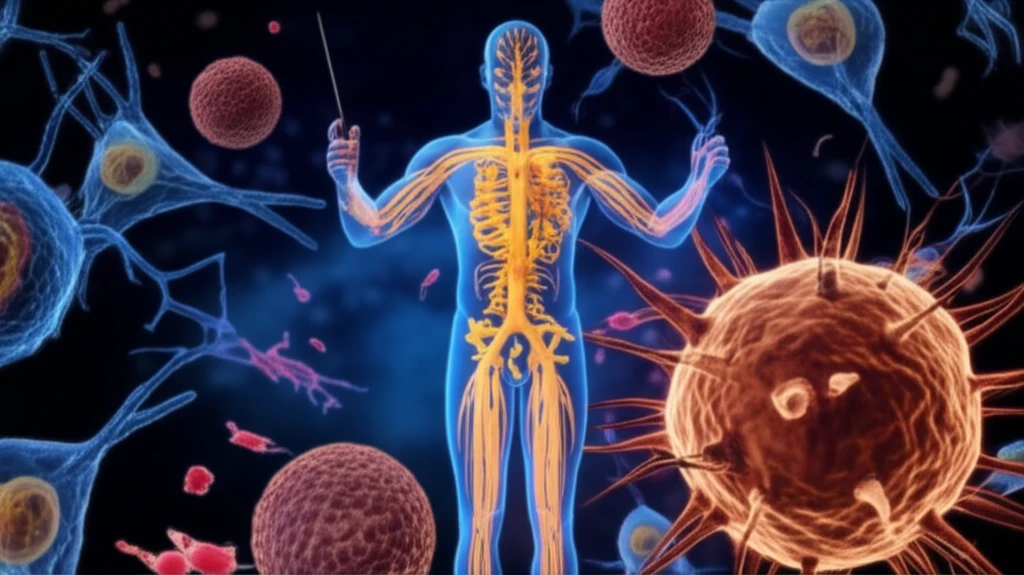
Ikaros, encoded by the gene IKZF1, acts as a master regulator, primarily involved in the development and function of immune cells. It's like the conductor of an orchestra, ensuring that the different instruments (immune cells) play their parts in perfect synchrony. However, when Ikaros malfunctions, the consequences can be severe, leading to a range of health problems.
This exploration will cover the basics of Ikaros, its impact on the immune system, its connection to diseases like leukemia and lupus, and the exciting avenues of research that are paving the way for new therapies. Whether you're a healthcare professional, a patient, or simply someone interested in understanding the human body, this article offers valuable insights into the power of Ikaros and its potential to transform healthcare.
IKZF1 and Immune Function
IKZF1 encodes Ikaros, a DNA-binding transcription factor in the Ikaros family of zinc-finger proteins. Zinc-finger motifs help proteins bind DNA or RNA by coordinating zinc ions that stabilize their structure. GeneCards associates IKZF1 with common variable immunodeficiency 13 and combined immunodeficiency caused by dimerization-defective Ikaros mutations.
Studying Ikaros in Cells
Researchers study IKZF1 through molecular and cellular approaches because Ikaros works with proteins and complexes that control chromatin organization at gene-regulatory regions. Flow cytometry can measure intracellular IKZF1 in heterogeneous cell populations while simultaneously identifying cell types through markers such as CD19 for B cells and CD3 for T cells. Interpretation remains complicated by alternative splicing: inclusion or exclusion of exons 4, 5, and 6 changes whether resulting Ikaros isoforms retain N-terminal zinc fingers and their associated functional capacity.
A Developing Research History
The history of Ikaros research can be understood as a progression from identifying a zinc-finger transcription factor to examining its roles in immune-cell biology and gene regulation. Later work has increasingly focused on how Ikaros interacts with chromatin-regulating machinery and how different isoforms alter its function. Because no source material is provided for this subsection, these points should be treated as broad context rather than a detailed timeline.
Unveiling Ikaros: The Immune System's Conductor
To understand the significance of Ikaros, we must first grasp its fundamental role in the body. This protein is a transcription factor, meaning it controls the activity of genes. Specifically, Ikaros plays a crucial part in the development and differentiation of lymphocytes, the immune cells responsible for fighting infections and diseases. It ensures that these cells mature and function correctly, acting as a gatekeeper for immune cell development.
- Lymphocyte Development: Ikaros is critical for the development and maturation of lymphocytes, ensuring the immune system has enough cells to fight off infections and diseases.
- Tumor Suppression: It also plays a role in preventing the growth of tumors.
- Autoimmune Regulation: Ikaros helps in regulating the immune system to prevent it from attacking the body's own tissues.
An Active Research Field
Current Ikaros research appears to be examining the relationship between transcription-factor function, chromatin regulation, immune-cell development, and disease. The field also includes work on distinct IKZF1 variants and protein isoforms, which may produce different biological effects. Without source material for this subsection, no specific recent study, result, or date can be stated reliably.
Variable Disease Consequences
IKZF1-related disease does not follow a single uniform pattern. A 2025 study reports that mutations affecting IKAROS stability are associated with human disease with incomplete clinical penetrance, similar to findings described for IKZF1 haploinsufficiency, dimerization, and gain-of-function mutations. Reported pathogenic mechanisms include haploinsufficiency, dimerization defects, dominant-negative effects, and gain of function, while hematopoietic stem cell transplantation is described as the definitive treatment for IKAROS-associated disease.
Roles and Isoforms
IKZF1 encodes Ikaros, a zinc-finger DNA-binding transcription factor associated with chromatin remodeling and lymphopoiesis. Alternative splicing generates multiple protein isoforms that share an activation domain and a C-terminal zinc-finger dimerization domain. Only some isoforms contain the N-terminal zinc-finger DNA-binding domain, creating important functional differences among the proteins produced from the same gene.
The Future of Ikaros Research and Treatment
Ikaros research holds immense promise, offering hope for more effective treatments for cancer, autoimmune diseases, and other conditions. As scientists continue to unravel the complexities of this critical protein, we can look forward to the development of targeted therapies that harness the power of Ikaros to improve health and well-being. The journey has just begun, and the potential for positive change is truly exciting.
Ikaros and T-Cell Exhaustion
A 2024 Cell Reports Medicine study identified IKZF1 as a driver of exhaustion progression in an antigen-specific assay producing exhausted T cells that reflected cells found in human tumors. The study reported that the IKZF1 degrader iberdomide preserved effector function by preventing IKZF1-induced silencing of effector-gene enhancers. Separate expert analysis has described unexpectedly diverse roles for germline IKZF1 mutations in primary immunodeficiency, reinforcing the need to distinguish therapeutic effects from the consequences of inherited variants.
Questions for Future Research
Future research may need to clarify how IKZF1 isoforms, mutation mechanisms, chromatin interactions, and cell context combine to shape immune outcomes. Potential progress will depend on connecting molecular findings with reproducible effects in relevant human disease models. Because no source material is provided for this subsection, these are cautious research directions rather than established conclusions.
Complexity Across Systems
Ikaros biology spans gene regulation, immune-cell development, inherited disease, and cancer-related immune dysfunction. That breadth makes simple claims about Ikaros as uniformly protective or harmful difficult to justify. No source material is provided here to assess broader health-system, access, or implementation challenges, so those issues require separate evidence.
From Molecular Findings to Patients
For patients, the consequences of IKZF1 variation may differ because reported disease mechanisms include haploinsufficiency, dimerization defects, dominant-negative effects, and gain of function. The reported incomplete clinical penetrance of some stability-related mutations also suggests that a genetic finding may not produce the same clinical picture in every person. Without source material for this subsection, no broader claims about patient outcomes, treatment access, or lived experience can be made.