
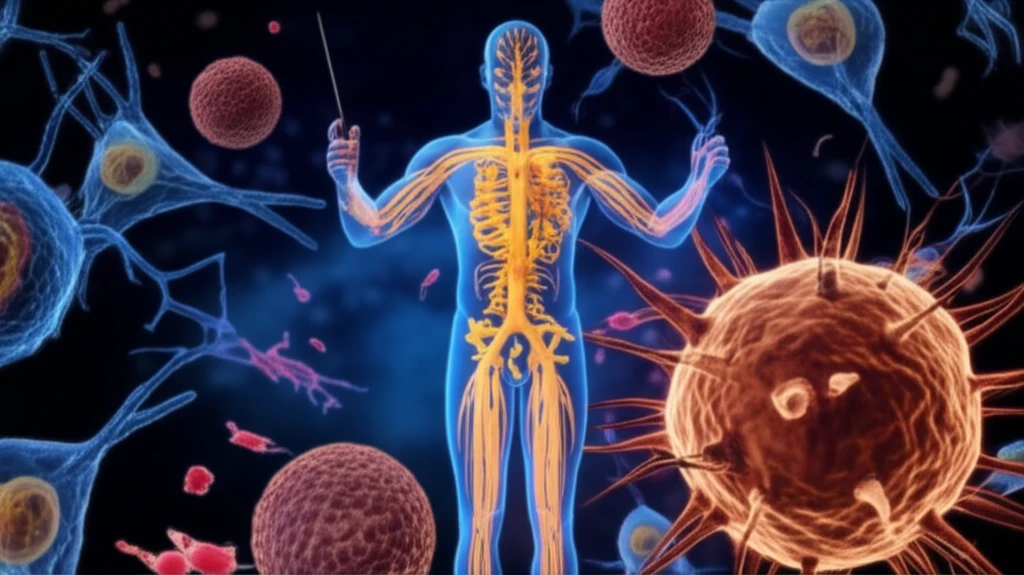
Illustration of Ikaros protein regulating immune cells in the human body, symbolizing its role in health and disease.

Decoding Ikaros: Your Body's Secret Weapon Against Cancer and Autoimmune Diseases

"Unraveling the Mysteries of a Key Protein and Its Impact on Health"


Our bodies are complex ecosystems, with countless processes working in harmony to keep us healthy. Among these, the fight against disease is a constant battle, often waged at the cellular level. One of the key players in this fight is a protein called Ikaros, which has recently emerged as a critical factor in both cancer and autoimmune diseases. This article delves into the fascinating world of Ikaros, exploring its functions, its role in various illnesses, and the potential for innovative treatments.

Ikaros, encoded by the gene IKZF1, acts as a master regulator, primarily involved in the development and function of immune cells. It's like the conductor of an orchestra, ensuring that the different instruments (immune cells) play their parts in perfect synchrony. However, when Ikaros malfunctions, the consequences can be severe, leading to a range of health problems.

This exploration will cover the basics of Ikaros, its impact on the immune system, its connection to diseases like leukemia and lupus, and the exciting avenues of research that are paving the way for new therapies. Whether you're a healthcare professional, a patient, or simply someone interested in understanding the human body, this article offers valuable insights into the power of Ikaros and its potential to transform healthcare.

Unveiling Ikaros: The Immune System's Conductor

Illustration of Ikaros protein regulating immune cells in the human body, symbolizing its role in health and disease.

To understand the significance of Ikaros, we must first grasp its fundamental role in the body. This protein is a transcription factor, meaning it controls the activity of genes. Specifically, Ikaros plays a crucial part in the development and differentiation of lymphocytes, the immune cells responsible for fighting infections and diseases. It ensures that these cells mature and function correctly, acting as a gatekeeper for immune cell development.

Ikaros ensures the proper development of immune cells, making it essential for normal immune function. Without it, the immune system struggles to mount an effective defense against threats. It also impacts the suppression of tumors and the prevention of autoimmune responses. This underscores its vital importance in maintaining overall health.

  • Lymphocyte Development: Ikaros is critical for the development and maturation of lymphocytes, ensuring the immune system has enough cells to fight off infections and diseases.
  • Tumor Suppression: It also plays a role in preventing the growth of tumors.
  • Autoimmune Regulation: Ikaros helps in regulating the immune system to prevent it from attacking the body's own tissues.
The intricate functions of Ikaros highlight its significance. Now, we turn to how this vital protein can go awry. Understanding these malfunctions is key to recognizing how Ikaros is linked to diseases and the potential for novel treatments.

The Future of Ikaros Research and Treatment

Ikaros research holds immense promise, offering hope for more effective treatments for cancer, autoimmune diseases, and other conditions. As scientists continue to unravel the complexities of this critical protein, we can look forward to the development of targeted therapies that harness the power of Ikaros to improve health and well-being. The journey has just begun, and the potential for positive change is truly exciting.

About this Article -

This article was crafted using a human-AI hybrid and collaborative approach. AI assisted our team with initial drafting, research insights, identifying key questions, and image generation. Our human editors guided topic selection, defined the angle, structured the content, ensured factual accuracy and relevance, refined the tone, and conducted thorough editing to deliver helpful, high-quality information.See our About page for more information.

This article is based on research published under:

DOI-LINK: 10.1016/j.gene.2018.10.045, Alternate LINK

Title: Multiple Functions Of Ikaros In Hematological Malignancies, Solid Tumor And Autoimmune Diseases

Subject: Genetics

Journal: Gene

Publisher: Elsevier BV

Authors: Qiuni Chen, Yuye Shi, Yue Chen, Tingting Ji, Yunjie Li, Liang Yu

Published: 2019-02-01

Everything You Need To Know

1

What is Ikaros and why is it important for my health?

Ikaros is a protein that acts as a master regulator in the immune system, primarily involved in the development and function of immune cells, particularly lymphocytes. It ensures that these cells mature and function correctly, which is vital for fighting infections, preventing tumor growth, and regulating the immune system to prevent autoimmune responses. Without proper Ikaros function, the immune system struggles to defend the body effectively.

2

How does Ikaros function in the body, and what happens when it malfunctions?

Ikaros functions as a transcription factor, controlling the activity of genes involved in the development and differentiation of lymphocytes. It acts as a gatekeeper for immune cell development. When Ikaros malfunctions, it can lead to various health problems, including an impaired ability to fight infections, increased risk of tumor growth, and the potential for the immune system to attack the body's own tissues, leading to autoimmune diseases. The specific consequences depend on the nature and extent of the malfunction.

3

What role does Ikaros play in the development of lymphocytes?

Ikaros is critical for the development and maturation of lymphocytes. Lymphocytes are immune cells responsible for fighting infections and diseases, and Ikaros ensures that the immune system has an adequate supply of functional lymphocytes. It acts as a gatekeeper, ensuring that lymphocytes mature and differentiate correctly, which is essential for mounting an effective immune response. Without proper Ikaros function, lymphocyte development can be impaired, leading to immune deficiencies.

4

I've heard Ikaros is being researched for cancer and autoimmune diseases. How could treatments targeting Ikaros potentially help with these conditions?

Research into Ikaros holds immense promise for developing more effective treatments for cancer and autoimmune diseases. In cancer, Ikaros plays a role in tumor suppression, so therapies that enhance Ikaros function could potentially help prevent or combat tumor growth. In autoimmune diseases, where the immune system attacks the body's own tissues, therapies that restore proper Ikaros function could help regulate the immune system and prevent it from attacking healthy cells. The goal is to develop targeted therapies that harness the power of Ikaros to improve health and well-being.

5

How can Ikaros impact tumor suppression and autoimmune regulation?

Ikaros plays a crucial role in preventing the growth of tumors by regulating the expression of genes involved in cell growth and apoptosis (programmed cell death). It also helps regulate the immune system to prevent it from attacking the body's own tissues, which is essential for preventing autoimmune diseases. By maintaining proper immune cell development and function, Ikaros helps ensure that the immune system targets foreign invaders and abnormal cells while sparing healthy tissues. When Ikaros malfunctions, these regulatory mechanisms can be disrupted, leading to an increased risk of both cancer and autoimmune disorders.

Newsletter Subscribe

Subscribe to get the latest articles and insights directly in your inbox.