
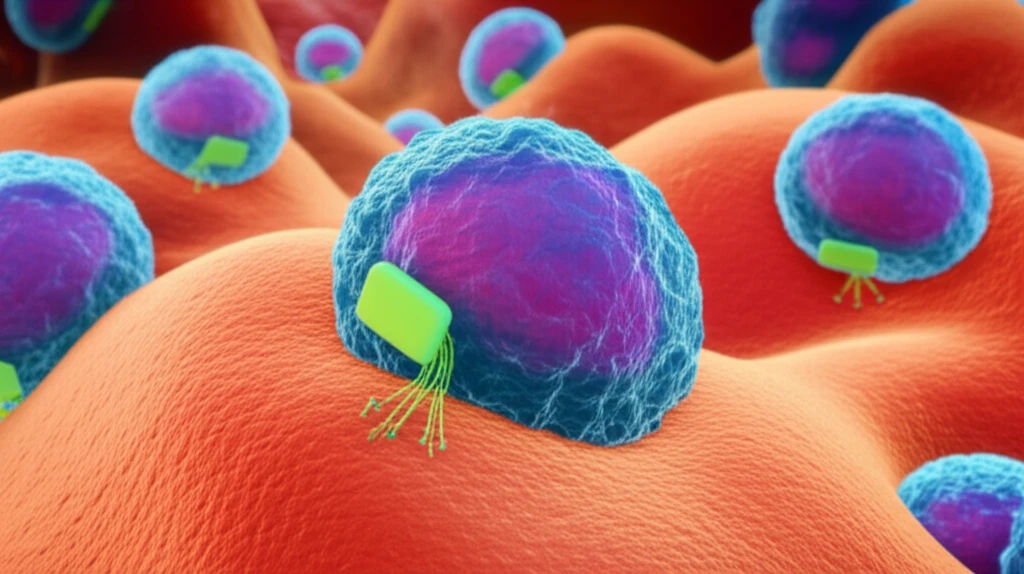
Illustration of HER2 protein markers in cancer cells, highlighting the importance of HER2 testing in gastric cancer treatment.

Decoding HER2: A Guide to Understanding Gastric Cancer Testing and Treatment

"Navigating the Complexities of HER2 Testing in Advanced Gastric and Gastro-Oesophageal Cancer"


Gastric cancer, also known as stomach cancer, remains a significant global health concern, affecting millions of people worldwide. Its complexity lies not only in its various subtypes but also in the evolving landscape of treatment options. One critical aspect of managing this disease is understanding the role of the human epidermal growth factor receptor 2, or HER2, a protein that can influence how cancer cells grow and spread.

HER2 testing has emerged as a crucial tool in guiding treatment decisions for advanced gastric and gastro-oesophageal junction (GOJ) cancers. The presence or absence of HER2 in cancer cells helps doctors determine the most effective course of action, including targeted therapies that can significantly improve patient outcomes. This guide aims to demystify the process of HER2 testing, explain its significance, and provide insights into the latest advancements in treatment.

This article will explore the nuances of HER2 testing, the importance of accurate assessment, and the implications for patients facing a diagnosis of advanced gastric or GOJ cancer. We'll break down the testing procedures, discuss the different criteria used to determine HER2 status, and highlight the impact of these findings on treatment strategies, empowering readers to better understand their diagnosis and treatment options.

Unraveling HER2: What You Need to Know About Testing

Illustration of HER2 protein markers in cancer cells, highlighting the importance of HER2 testing in gastric cancer treatment.

HER2 testing is a sophisticated process designed to assess the levels of HER2 protein in cancer cells. This protein, when overexpressed, can drive cancer growth and make it more aggressive. The testing process involves several steps, beginning with obtaining a tissue sample, usually through an endoscopic biopsy or surgical resection. These samples are then analyzed in specialized laboratories using various techniques.

The primary methods used for HER2 testing include:

  • Immunohistochemistry (IHC): This method uses antibodies to detect the presence of HER2 protein in cancer cells. The results are typically scored on a scale, with higher scores indicating greater HER2 protein levels.
  • In Situ Hybridization (ISH): ISH techniques, such as dual-probe ISH, are used to determine the number of HER2 genes present in cancer cells. This helps assess if the HER2 gene is amplified, which can lead to increased protein production.
  • Combined Approach: Often, both IHC and ISH are performed to provide a comprehensive evaluation of HER2 status. The results from both tests are then considered to determine if a patient is HER2-positive.
Understanding these testing methods is essential for patients and their families, as they form the basis for determining the most appropriate treatment plan. The goal of HER2 testing is to accurately identify patients who may benefit from targeted therapies like trastuzumab, a medication that specifically targets HER2-positive cancer cells.

Empowering Patients Through Knowledge

Understanding HER2 testing and its implications is a crucial step in managing advanced gastric and gastro-oesophageal cancer. By providing clear, accessible information, this article aims to empower patients and their families with the knowledge they need to navigate their treatment journey. Always consult with your healthcare team for personalized guidance and the most up-to-date information regarding your specific situation. With a better understanding of HER2 testing and its role in treatment, patients can actively participate in their care and make informed decisions that lead to the best possible outcomes.

About this Article -

This article was crafted using a human-AI hybrid and collaborative approach. AI assisted our team with initial drafting, research insights, identifying key questions, and image generation. Our human editors guided topic selection, defined the angle, structured the content, ensured factual accuracy and relevance, refined the tone, and conducted thorough editing to deliver helpful, high-quality information.See our About page for more information.

Everything You Need To Know

1

What is HER2 and why is it important in gastric and gastro-oesophageal cancer?

HER2, or human epidermal growth factor receptor 2, is a protein that can influence how cancer cells grow and spread. In advanced gastric and gastro-oesophageal junction cancers, HER2 testing is crucial because the presence or absence of HER2 in cancer cells helps doctors determine the most effective treatment, including targeted therapies like trastuzumab, that can significantly improve patient outcomes. Overexpression of the HER2 protein can drive cancer growth and make it more aggressive, hence the importance of identifying its status through testing.

2

How is HER2 status determined in gastric cancer, and what testing methods are used?

HER2 status is determined through a sophisticated testing process that assesses the levels of HER2 protein in cancer cells. The primary methods include Immunohistochemistry (IHC), which uses antibodies to detect the presence of HER2 protein, and In Situ Hybridization (ISH), such as dual-probe ISH, which determines the number of HER2 genes present. Often, both IHC and ISH are performed to provide a comprehensive evaluation. IHC results are scored on a scale indicating HER2 protein levels, while ISH assesses HER2 gene amplification. The combined results determine if a patient is HER2-positive.

3

What does it mean if a patient is HER2-positive, and how does it impact treatment strategies for gastric cancer?

If a patient is HER2-positive, it means that their cancer cells have higher than normal levels of the HER2 protein, potentially leading to more aggressive growth. This finding is significant because it makes the patient eligible for targeted therapies like trastuzumab, a medication that specifically targets HER2-positive cancer cells. HER2 positivity guides treatment decisions, allowing doctors to incorporate these targeted therapies into the treatment plan, aiming to improve outcomes by directly addressing the HER2-driven growth.

4

Can you explain the difference between Immunohistochemistry (IHC) and In Situ Hybridization (ISH) in HER2 testing?

Immunohistochemistry (IHC) and In Situ Hybridization (ISH) are distinct methods used in HER2 testing. IHC uses antibodies to detect the presence and quantity of HER2 protein in cancer cells, with results scored on a scale. In contrast, ISH techniques, such as dual-probe ISH, determine the number of HER2 genes present in cancer cells. IHC assesses protein expression levels, while ISH assesses gene amplification. Both tests provide complementary information, and a combined approach often offers a comprehensive evaluation of HER2 status, ensuring more accurate treatment decisions.

5

What are the implications of inaccurate HER2 assessment in gastric cancer, and why is precise testing so important?

Inaccurate HER2 assessment can have significant implications for patients with gastric cancer. A false negative result might lead to a patient missing out on potentially life-extending targeted therapies like trastuzumab, while a false positive result could lead to unnecessary treatment and its associated side effects. Precise testing is crucial to ensure that patients receive the most appropriate and effective treatment based on their HER2 status, maximizing the chances of improved outcomes and quality of life.

Newsletter Subscribe

Subscribe to get the latest articles and insights directly in your inbox.