
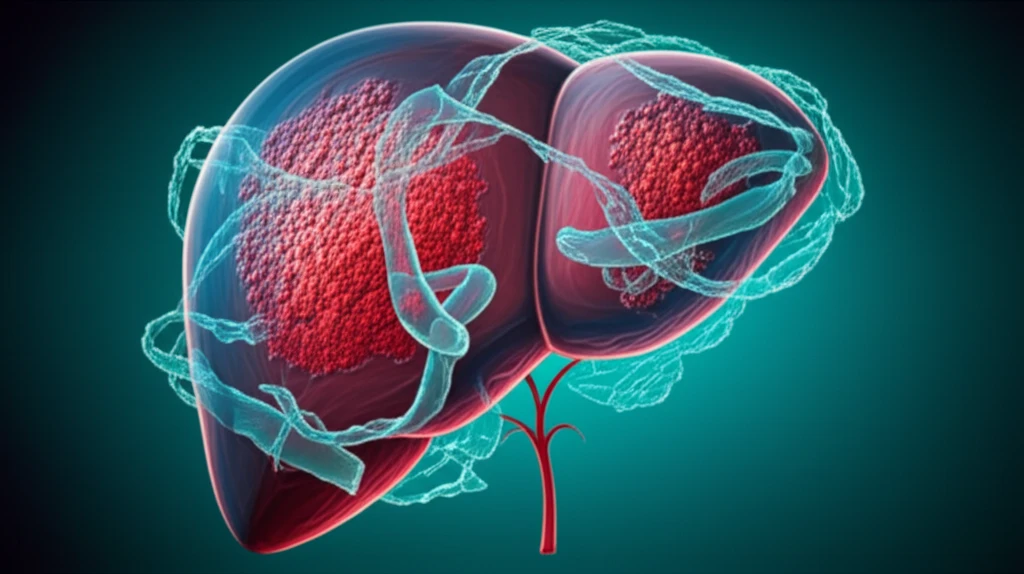
Stylized illustration of a liver with reduced inflammation due to BATF interference.

Decoding Hepatitis B: How Blocking a Key Protein Could Ease Liver Inflammation

"New research explores how interfering with BATF, a key protein, can help reduce liver damage in Hepatitis B virus transgenic mice, offering potential insights for future treatments."


Hepatitis B is a widespread health concern, affecting millions globally and leading to serious liver diseases. While the virus itself doesn't directly harm the liver, the body's immune response to the infection can cause significant inflammation and damage.

A key player in this immune response is a type of immune cell called Th17. These cells release substances that contribute to inflammation, and their activity is often elevated in chronic Hepatitis B infections. Scientists are working to understand how to regulate Th17 cell activity to reduce liver damage.

Now, research is shedding light on the role of a protein called BATF in driving Th17 cell activity in Hepatitis B. A new study explores how blocking BATF could help to reduce Th17 activity, and consequently, the inflammation in the liver. Let's delve into the findings and what they could mean for future Hepatitis B treatments.

BATF's Role in Hepatitis B Inflammation: An Explainer

Stylized illustration of a liver with reduced inflammation due to BATF interference.

The study, published in Digestive Diseases and Sciences, used Hepatitis B virus transgenic mice to investigate the effects of blocking BATF. These mice are engineered to carry the Hepatitis B virus and develop chronic liver inflammation, mimicking the human disease.

Researchers experimented with different approaches to reduce BATF activity in these mice, including using a technique called shRNA interference. shRNA interferes with the production of BATF, effectively 'silencing' the gene. They also tested the effects of combining BATF interference with entecavir, a common antiviral drug used to treat Hepatitis B.

The study revealed several key findings:
  • HBV infection significantly increased BATF expression and promoted Th17 cell activation.
  • BATF interference reduced the proportion of Th17 cells and serum IL-17 and IL-22 concentrations.
  • BATF interference significantly impeded the proliferation of Th17 cells and secretion of IL-17 and IL-22 while alleviating hepatic lesions.
  • HBV core antigen (HBcAg) concentration, BATF mRNA, and Th cell proportions all had significantly positive correlations.
The results showed that blocking BATF led to a decrease in Th17 cell activity and reduced signs of liver inflammation. This suggests that BATF plays a significant role in driving the inflammatory response in Hepatitis B. Interestingly, blocking BATF did not reduce the amount of virus in the mice, suggesting that its primary effect is on the immune system rather than the virus itself.

What This Means for Future Hepatitis B Treatments

This research provides valuable insights into the complex interplay between the immune system and Hepatitis B. By identifying BATF as a key regulator of inflammation, it opens the door for new therapeutic strategies that target this protein.

While the study was conducted in mice, the findings suggest that similar approaches could be beneficial in humans with chronic Hepatitis B. Future research will need to explore how to safely and effectively block BATF in humans and whether this approach can improve long-term outcomes for patients.

Ultimately, understanding and modulating the immune response in Hepatitis B is crucial for developing more effective treatments that can reduce liver damage and prevent the progression to serious liver diseases. This study highlights the potential of BATF as a therapeutic target in the fight against Hepatitis B.

About this Article -

This article was crafted using a human-AI hybrid and collaborative approach. AI assisted our team with initial drafting, research insights, identifying key questions, and image generation. Our human editors guided topic selection, defined the angle, structured the content, ensured factual accuracy and relevance, refined the tone, and conducted thorough editing to deliver helpful, high-quality information.See our About page for more information.

This article is based on research published under:

DOI-LINK: 10.1007/s10620-018-5392-x, Alternate LINK

Title: Batf Interference Blocks Th17 Cell Differentiation And Inflammatory Response In Hepatitis B Virus Transgenic Mice

Subject: Gastroenterology

Journal: Digestive Diseases and Sciences

Publisher: Springer Science and Business Media LLC

Authors: Long-Yan Chen, Xiao-Peng Fan, Yu-Chen Fan, Jing Zhao, Shuai Gao, Feng Li, Zhao-Xia Qi, Kai Wang

Published: 2018-11-29

Everything You Need To Know

1

What is Hepatitis B?

Hepatitis B is a viral infection that affects the liver, leading to inflammation and potential long-term damage. While the virus itself doesn't directly harm the liver, the body's immune response to the infection causes significant inflammation. This inflammation is a key factor in the progression of liver diseases associated with Hepatitis B.

2

What is the role of BATF in Hepatitis B?

BATF, or 'B-cell activating transcription factor,' is a protein identified as a key regulator of inflammation in the context of Hepatitis B. The research showed that HBV infection significantly increased BATF expression and promoted Th17 cell activation. By blocking BATF, the study observed a reduction in Th17 cell activity and decreased signs of liver inflammation. This suggests that BATF plays a significant role in driving the inflammatory response in Hepatitis B.

3

What are Th17 cells and how are they related to Hepatitis B?

Th17 cells are a type of immune cell that plays a key role in the immune response to Hepatitis B. These cells release substances that contribute to inflammation, and their activity is often elevated in chronic Hepatitis B infections. Blocking BATF led to a decrease in Th17 cell activity and reduced signs of liver inflammation.

4

How was the study conducted?

The study used Hepatitis B virus transgenic mice, which are engineered to carry the Hepatitis B virus and develop chronic liver inflammation. Researchers experimented with different approaches to reduce BATF activity in these mice, including using shRNA interference, which interferes with the production of BATF, effectively 'silencing' the gene. They also tested the effects of combining BATF interference with entecavir, a common antiviral drug.

5

What are the potential implications of this research for future treatments?

The research suggests that targeting BATF could be a promising strategy for managing Hepatitis B. Blocking BATF reduces Th17 cell activity and liver inflammation, which could lead to better outcomes for patients. By understanding the role of BATF, scientists can develop new treatments that specifically target the inflammatory response, potentially improving liver health and reducing the progression of liver diseases associated with Hepatitis B. This approach focuses on managing the immune response rather than directly attacking the virus itself.

Newsletter Subscribe

Subscribe to get the latest articles and insights directly in your inbox.