
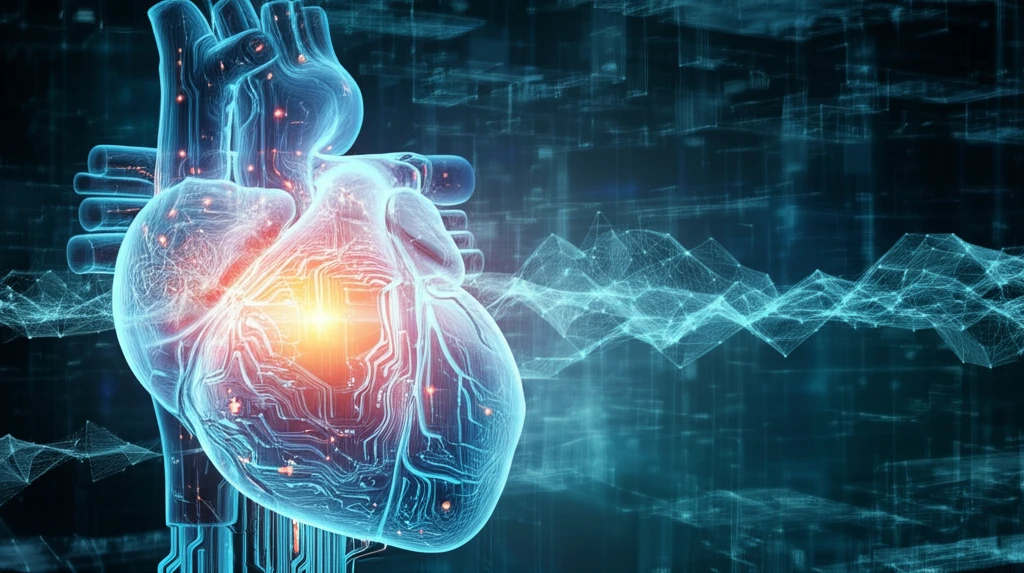
Technological Heart: A symbol of integrated medical science and technology.

Decoding Heart Health: How Cutting-Edge Tech is Changing Cardiac Care

"From advanced imaging to stroke prevention, explore the latest innovations in cardiovascular medicine and how they're improving patient outcomes."


In the realm of cardiac health, continuous innovation is paramount. Recent advancements in technology and medical understanding are reshaping how we diagnose, treat, and prevent heart conditions. This article delves into several cutting-edge developments presented in recent research, shedding light on how these innovations are translating into better patient care and improved outcomes.

We'll explore the use of magnetic resonance imaging (MRI) in analyzing atrial fibrillation, offering a more detailed view of the heart's structure and function. We'll also examine new approaches to stroke prevention through left atrial appendage occlusion, a technique that's gaining traction as a safer alternative for many patients. Finally, we'll investigate innovative mapping techniques for identifying the origins of tachycardia, a rapid heart rate that can significantly impact quality of life.

These advancements represent a significant leap forward in our ability to manage and treat complex heart conditions. By understanding these technologies, individuals can better advocate for their health and make informed decisions in partnership with their healthcare providers.

MRI: Unveiling Atrial Fibrillation's Secrets

Technological Heart: A symbol of integrated medical science and technology.

Atrial fibrillation (AFib) is a common heart rhythm disorder that increases the risk of stroke and other cardiovascular complications. Traditional diagnostic methods often provide an incomplete picture of the condition, making it challenging to tailor treatment effectively. However, late gadolinium enhancement (LGE) cardiovascular magnetic resonance (CMR) imaging is emerging as a powerful tool for visualizing the heart in unprecedented detail.

LGE CMR imaging allows doctors to see areas of scarring in the left atrium (LA), a key chamber involved in AFib. These scars can be pre-existing or caused by previous ablation procedures, interventions designed to correct the abnormal heart rhythm. Distinguishing between these types of scars is crucial because it can influence treatment strategies and predict the success of future ablation attempts.

  • Enhanced Visualization: LGE CMR provides a clearer picture of the heart's structure, revealing both pre-existing and ablation-induced scarring.
  • Treatment Stratification: Identifying the characteristics of LA wall LGE aids in tailoring treatment strategies for AFib patients, improving outcomes.
  • Ablation Insights: The technique helps in assessing the effectiveness of previous ablation procedures and planning future interventions.
Research has shown that post-ablation LGE demonstrates a significantly higher image intensity ratio (IIR) compared to pre-existing LGE, indicating a greater contrast uptake and denser scar tissue. Furthermore, LA wall thickness is significantly reduced in post-ablation LGE regions. These findings suggest that CMR can help us better understand the remodeling processes that occur in the heart after ablation, paving the way for more informed and effective treatment decisions.

The Future of Heart Health is Here

The convergence of technological advancements and medical expertise is revolutionizing cardiac care. From detailed imaging techniques to innovative stroke prevention strategies and precise mapping for tachycardia, these breakthroughs promise to enhance patient outcomes and improve the quality of life for individuals living with heart conditions. As research continues and these technologies become more widely accessible, the future of heart health looks brighter than ever.

About this Article -

This article was crafted using a human-AI hybrid and collaborative approach. AI assisted our team with initial drafting, research insights, identifying key questions, and image generation. Our human editors guided topic selection, defined the angle, structured the content, ensured factual accuracy and relevance, refined the tone, and conducted thorough editing to deliver helpful, high-quality information.See our About page for more information.

Everything You Need To Know

1

What is the role of MRI in understanding and treating Atrial Fibrillation (AFib)?

Magnetic resonance imaging (MRI), specifically using late gadolinium enhancement (LGE) cardiovascular magnetic resonance (CMR) imaging, provides detailed visualization of the heart's structure, particularly the left atrium (LA), which is crucial in understanding Atrial Fibrillation (AFib). This advanced imaging technique helps doctors identify areas of scarring in the LA, whether pre-existing or caused by ablation procedures. By differentiating between these types of scars, healthcare providers can tailor treatment strategies more effectively and predict the success of future ablation attempts, leading to improved patient outcomes in the management of AFib.

2

How does LGE CMR imaging help in distinguishing between different types of scarring in the left atrium?

LGE CMR imaging is crucial because it allows doctors to visualize the heart with a high degree of detail, differentiating between pre-existing scars and those caused by ablation procedures. Research indicates that post-ablation LGE demonstrates a significantly higher image intensity ratio (IIR) compared to pre-existing LGE, indicating denser scar tissue. Also, the LA wall thickness is reduced in post-ablation LGE regions. This detailed imaging helps physicians understand the remodeling processes after ablation, guiding more informed and effective treatment decisions, which subsequently improves AFib treatment strategies.

3

What are the potential benefits of left atrial appendage occlusion in stroke prevention?

Left atrial appendage occlusion is highlighted as a stroke prevention technique. It is gaining traction as a safer alternative for many patients. This technique works to prevent strokes by closing off the left atrial appendage, a small pouch in the left atrium where blood clots often form in patients with atrial fibrillation. By occluding this appendage, the risk of a stroke caused by blood clots traveling to the brain is significantly reduced, offering a targeted approach to stroke prevention in the context of heart health.

4

Can you explain the significance of innovative mapping techniques for tachycardia?

Innovative mapping techniques are essential for identifying the origins of tachycardia, a condition characterized by a rapid heart rate. These techniques enable healthcare professionals to pinpoint the specific areas in the heart where the abnormal electrical signals causing tachycardia originate. By accurately mapping these origins, doctors can perform targeted interventions, such as ablation, to eliminate or control the rapid heart rate. This approach significantly improves the quality of life for individuals suffering from tachycardia by reducing symptoms like palpitations, dizziness, and fatigue, and preventing more severe complications.

5

How are the latest advancements in cardiac care, like MRI analysis and stroke prevention techniques, improving patient outcomes?

The latest advancements in cardiac care are leading to significant improvements in patient outcomes through more accurate diagnosis and targeted treatments. For example, MRI analysis, specifically LGE CMR imaging, allows for a detailed assessment of the heart's structure, including the identification of scarring in the left atrium, which aids in tailoring treatment strategies for atrial fibrillation. Stroke prevention techniques, such as left atrial appendage occlusion, offer safer and more effective ways to reduce stroke risk. The innovative mapping techniques for tachycardia allow for precise identification of the source of rapid heart rates, enabling targeted interventions. Together, these advancements lead to more effective management of heart conditions, improved patient outcomes, and enhanced quality of life.

Newsletter Subscribe

Subscribe to get the latest articles and insights directly in your inbox.