
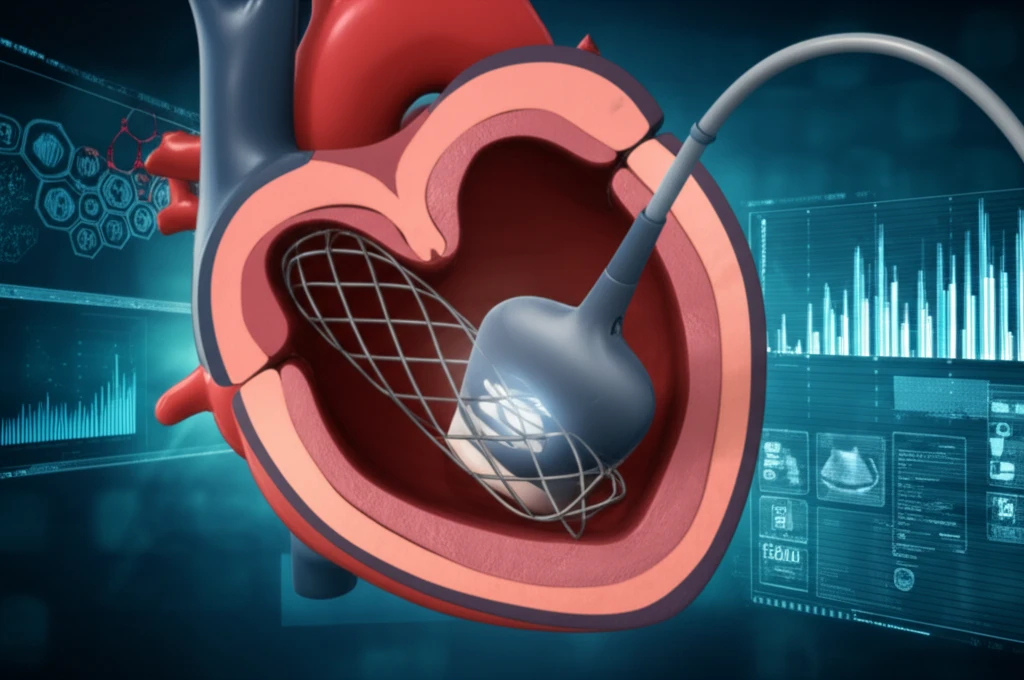
Decoding Heart Health: A Groundbreaking Ultrasound Technique Predicts Future Cardiac Events

"New Ultrasound Technique Could Change the Game for Heart Disease Patients"
Heart disease remains a leading cause of death worldwide, but what if we could predict future cardiac events with greater accuracy? A recent study has unveiled a novel ultrasound technique that may do just that. By analyzing the intraluminal intensity of blood speckle (IBS) on intravascular ultrasound (IVUS), doctors can potentially identify patients at risk of target vessel revascularization (TVR) after coronary stent implantation. This groundbreaking method offers a new perspective on assessing heart health, moving beyond traditional metrics to provide a more comprehensive understanding of an individual's risk.
This innovative approach, detailed in a recent study, focuses on measuring the difference in intraluminal IBS (AIBS) across coronary artery stenosis. The study's findings suggest a strong correlation between AIBS at post-procedure and the likelihood of future TVR. This means that by simply using IVUS, physicians might be able to predict which patients are most likely to require further interventions, allowing for more proactive and personalized care. The potential implications are significant, offering a new tool in the fight against heart disease.
This article breaks down the science behind AIBS, explains the study's findings, and explores the potential impact on patient care. We'll examine how this ultrasound technique works, the benefits it offers, and what it means for those living with or at risk of heart disease. This innovative approach offers hope and a path toward better heart health outcomes for millions worldwide. Let's dive into the details of this promising advancement in cardiology.
Unveiling the Science Behind AIBS and IVUS: A New Way to Look at Heart Health
Intravascular ultrasound (IVUS) is a sophisticated imaging technique that provides detailed images of the inside of blood vessels. Unlike traditional angiograms that show only the vessel's silhouette, IVUS offers a cross-sectional view, allowing doctors to assess the vessel's structure, including the presence of plaque and the health of the vessel wall. IVUS has been used for years to guide procedures such as stent placements, ensuring optimal results. The novel aspect of this research involves the analysis of something called "intraluminal intensity of blood speckle" (IBS).
- IVUS: Provides detailed images of the inside of blood vessels.
- AIBS: Measures the difference in intraluminal intensity of blood speckle.
- Correlation: AIBS is linked to the likelihood of future TVR.
The Future of Heart Health: What Does This Mean for You?
This ultrasound technique offers a promising step forward in the fight against heart disease. By identifying individuals at higher risk of TVR, doctors can proactively tailor treatment plans, potentially preventing future cardiac events and improving patient outcomes. This research underscores the importance of continued advancements in cardiovascular medicine and highlights the potential for innovative diagnostic tools to transform patient care. While further research is needed, the findings suggest that IVUS and AIBS could play a significant role in the future of heart health management, offering a beacon of hope for those at risk.