
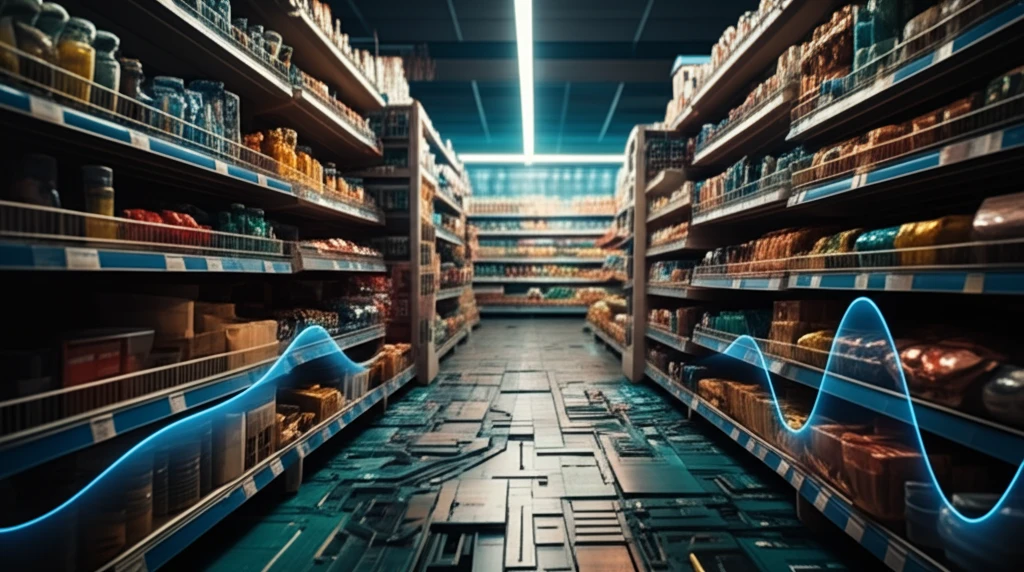
AI-powered grocery inventory management

Decoding Grocery Inventory: How AI is Revolutionizing E-Retail

"Discover how dynamic stochastic inventory management, powered by AI, is optimizing stock levels and boosting customer satisfaction in the rapidly evolving world of e-grocery."


The digital transformation has touched nearly every facet of our lives, and the grocery industry is no exception. E-grocery, once a niche market, has surged into the mainstream, offering unparalleled convenience to consumers. Ordering groceries online for future delivery is increasingly popular. This shift, however, has presented retailers with a unique set of challenges, particularly in managing inventory.

Unlike traditional brick-and-mortar stores, e-grocers face heightened risks. A single stock-out can lead to the cancellation of an entire order, frustrating customers and potentially driving them to competitors. To combat this, e-retailers strive for extremely high service levels, which means maintaining ample stock while simultaneously minimizing waste from perishable goods. This delicate balance requires a sophisticated approach to inventory management that goes beyond conventional methods.

Enter dynamic stochastic inventory management. This advanced strategy leverages predictive and prescriptive analytics to navigate the uncertainties inherent in e-grocery. By estimating probability distributions for fluctuating customer demand, varying shelf lives, and potential supply disruptions, retailers can make smarter decisions about replenishment, ensuring they have the right products at the right time.

What is Dynamic Stochastic Inventory Management?

AI-powered grocery inventory management

At its core, dynamic stochastic inventory management is a sophisticated method of optimizing inventory levels in the face of uncertainty. It moves beyond static models to embrace the dynamic nature of supply chains and customer behavior. Instead of relying on fixed assumptions, it incorporates probability distributions to represent the range of possible outcomes for key variables.

In the context of e-grocery, this means considering factors such as:

  • Non-Stationary Customer Demand: Demand isn't constant; it fluctuates based on seasonality, promotions, and even the day of the week.
  • Shelf Life: Perishable goods have limited lifespans, requiring careful management to minimize spoilage.
  • Supply Uncertainty: Deliveries can be delayed or reduced due to unforeseen circumstances.
By accounting for these uncertainties, retailers can develop more robust inventory policies that adapt to changing conditions. The goal is to minimize costs associated with overstocking (holding and spoilage) and understocking (lost sales and customer dissatisfaction).

The Future of E-Grocery is Intelligent

As e-grocery continues to expand, the adoption of dynamic stochastic inventory management will only accelerate. Retailers who embrace AI-driven solutions will be best positioned to navigate the complexities of the modern marketplace, delivering fresh, high-quality products while maximizing profitability and customer loyalty. The key is to move beyond traditional methods and leverage the power of data to create a truly intelligent and responsive supply chain.

About this Article -

This article was crafted using a human-AI hybrid and collaborative approach. AI assisted our team with initial drafting, research insights, identifying key questions, and image generation. Our human editors guided topic selection, defined the angle, structured the content, ensured factual accuracy and relevance, refined the tone, and conducted thorough editing to deliver helpful, high-quality information.See our About page for more information.

This article is based on research published under:

DOI-LINK: https://doi.org/10.48550/arXiv.2205.06572,

Title: Dynamic Stochastic Inventory Management In E-Grocery Retailing

Subject: econ.gn q-fin.ec

Authors: David Winkelmann, Matthias Ulrich, Michael Römer, Roland Langrock, Hermann Jahnke

Published: 13-05-2022

Everything You Need To Know

1

What is the primary challenge for e-grocers in managing inventory, and how does it differ from traditional stores?

The main challenge for e-grocers is maintaining high service levels while minimizing waste, which is significantly more complex than in brick-and-mortar stores. E-grocers face the risk of order cancellations due to stock-outs, which can lead to customer dissatisfaction and loss of business. Unlike traditional stores, they must manage perishable goods with limited shelf lives, and unpredictable demand, which requires a sophisticated inventory management approach that goes beyond conventional methods.

2

How does Dynamic Stochastic Inventory Management work, and what specific factors does it consider in the e-grocery context?

Dynamic Stochastic Inventory Management is a method that optimizes inventory levels by taking into account uncertainties. It utilizes probability distributions to represent the range of possible outcomes, considering several factors. In the context of e-grocery, this includes Non-Stationary Customer Demand, which fluctuates based on seasonality, promotions, and day of the week. It also considers Shelf Life, as perishable goods have limited lifespans, and Supply Uncertainty, which accounts for potential delivery delays or reductions. By accounting for these uncertainties, retailers can develop robust inventory policies that adapt to changing conditions to minimize costs associated with overstocking or understocking.

3

Why is it important for e-grocers to minimize waste and maximize stock availability, and how does this relate to customer satisfaction?

Minimizing waste and maximizing stock availability are crucial for e-grocers to maintain customer satisfaction and ensure profitability. A single stock-out can lead to an entire order cancellation, directly impacting customer experience and potentially driving them to competitors. By effectively managing inventory through strategies like Dynamic Stochastic Inventory Management, e-grocers can reduce spoilage, fulfill orders accurately, and create a positive shopping experience, fostering customer loyalty.

4

In what ways does AI contribute to the effectiveness of Dynamic Stochastic Inventory Management in e-grocery?

AI enhances Dynamic Stochastic Inventory Management by providing the computational power and analytical capabilities necessary to process large datasets and make accurate predictions. AI-driven solutions leverage predictive and prescriptive analytics to analyze historical sales data, assess current demand, forecast future trends, and optimize inventory levels. By identifying patterns in customer behavior, shelf life of products, and potential supply disruptions, AI enables e-grocers to make data-driven decisions, minimize waste, and ensure optimal stock levels.

5

How can e-retailers benefit from adopting Dynamic Stochastic Inventory Management in the evolving e-grocery landscape?

E-retailers can gain several benefits by adopting Dynamic Stochastic Inventory Management. By implementing this approach, e-grocers can improve their supply chain operations, minimize waste, optimize stock levels, and deliver the freshest products to customers. This strategy helps retailers navigate the complexities of the modern marketplace, enhance profitability, and increase customer loyalty. By leveraging AI-driven solutions, e-retailers are better positioned to meet the challenges of fluctuating demand, supply chain uncertainties, and the need for high service levels in the competitive e-grocery industry.

Newsletter Subscribe

Subscribe to get the latest articles and insights directly in your inbox.