
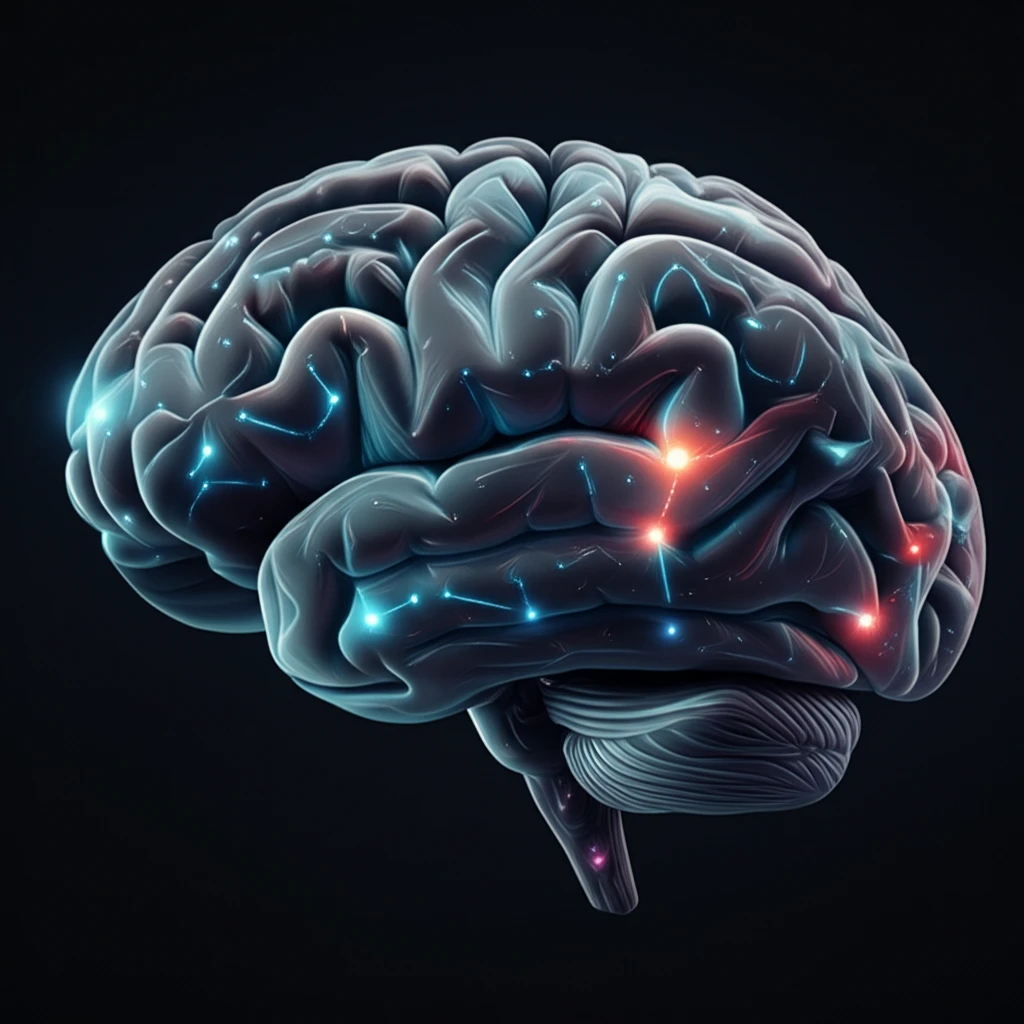
Stylized brain with glowing gene patterns, representing the FAM72 gene signature in glioblastoma multiforme.

Decoding Glioblastoma: How a Unique Gene Signature Could Revolutionize Brain Cancer Treatment

"Scientists identify a novel gene expression profile in glioblastoma multiforme (GBM) that could lead to more effective diagnostic and therapeutic strategies."


Cancer remains a significant global health challenge, demanding innovative approaches for effective treatment. Glioblastoma multiforme (GBM), a particularly devastating form of brain cancer, presents a complex landscape of genetic alterations that defy conventional therapies. Researchers are constantly seeking new ways to understand and combat this disease.

A recent study has shed light on a novel aspect of GBM by identifying a unique gene expression profile associated with the FAM72 protein. FAM72 is typically found in neural stem cells (NSCs) and is comprised of four paralogous genes (FAM72 A-D), this study explores how the functional significance of FAM72 in cancer development and progression and is the core intent of researcher.

This article will delve into the details of this research, explaining how scientists analyzed extensive cancer genomics data to uncover this gene signature and how it might pave the way for more precise diagnostic tools and targeted therapies for GBM, offering hope for improved patient outcomes.

Unlocking the FAM72 Code: A New Perspective on GBM

Stylized brain with glowing gene patterns, representing the FAM72 gene signature in glioblastoma multiforme.

The study, leveraging data from The Cancer Genome Atlas (TCGA), meticulously analyzed the expression and mutation patterns of FAM72 (A-D) genes in GBM tumors. Researchers sought to establish a clear connection between FAM72 and other genes involved in the development and progression of GBM.

The findings revealed a distinct FAM72 transcription profile strongly correlated with the expression of MKI67, a well-known marker of cell proliferation. This suggests that FAM72 plays a significant role in the rapid growth and division of GBM cells.

  • FAM72 paralogs: The study found that FAM72 paralogs are often overexpressed in cancerous cells, especially in correlation with genes pivotal to the mitotic cell cycle (ASPM, KIF14, KIF23, CENPE, CEP55, SGO1, and BUB1). This indicates that FAM72 may contribute to centrosome and mitotic spindle formation.
  • GBM-Specific Gene Set: Researchers identified a novel GBM-specific gene set (SCN9A, MXRA5, ADAM29, KDR, LRP1B, and PIK3C2G) associated with FAM72 expression, suggesting that this set plays a key role in the development of primary GBM and could be used as therapeutic target.
These discoveries highlight the potential of FAM72, and its associated gene signature, as a new foundation for developing prognostic biomarkers and therapeutic interventions for GBM. By understanding how FAM72 influences cell proliferation and interacts with other critical genes, researchers can develop strategies to target these pathways and disrupt cancer growth.

A New Hope for Glioblastoma Treatment

This research offers a promising avenue for developing more effective GBM treatments. By identifying a unique gene signature associated with FAM72, scientists have opened the door to new diagnostic and therapeutic possibilities.

Further studies are needed to fully elucidate the precise mechanisms by which FAM72 promotes GBM development and how best to target this protein and its related pathways. However, the initial findings suggest that FAM72 could be a key player in disrupting cancer cell proliferation and improving patient outcomes.

The identification of the GBM-specific gene set (SCN9A, MXRA5, ADAM29, KDR, LRP1B, and PIK3C2G) offers potential therapeutic targets. This suggests that targeting mutant variants of this new gene set, perhaps in combination with already available medications, may significantly improve outcomes for individuals with Glioblastoma.

About this Article -

This article was crafted using a human-AI hybrid and collaborative approach. AI assisted our team with initial drafting, research insights, identifying key questions, and image generation. Our human editors guided topic selection, defined the angle, structured the content, ensured factual accuracy and relevance, refined the tone, and conducted thorough editing to deliver helpful, high-quality information.See our About page for more information.

This article is based on research published under:

DOI-LINK: 10.1007/s11060-018-03029-3, Alternate LINK

Title: A Cancer Tissue-Specific Fam72 Expression Profile Defines A Novel Glioblastoma Multiform (Gbm) Gene-Mutation Signature

Subject: Cancer Research

Journal: Journal of Neuro-Oncology

Publisher: Springer Science and Business Media LLC

Authors: Chinmay Satish Rahane, Arne Kutzner, Klaus Heese

Published: 2018-11-09

Everything You Need To Know

1

What is the key finding regarding gene expression in Glioblastoma Multiforme (GBM) tumors?

The research identified a unique gene expression profile linked to the FAM72 protein in Glioblastoma Multiforme (GBM) tumors. This profile shows a strong correlation between FAM72 expression and MKI67, a marker of cell proliferation, suggesting FAM72 plays a key role in the rapid growth of GBM cells. This expression pattern can be leveraged to develop more precise diagnostic tools to identify GBM earlier and more accurately.

2

How are FAM72 paralogs linked to cell division in Glioblastoma Multiforme (GBM)?

FAM72 paralogs, specifically FAM72 A-D, are often overexpressed in cancerous cells, particularly alongside genes crucial to the mitotic cell cycle like ASPM, KIF14, KIF23, CENPE, CEP55, SGO1, and BUB1. This suggests that FAM72 contributes to centrosome and mitotic spindle formation, which are vital for cell division. Therefore, understanding how FAM72 influences these processes could lead to new ways to disrupt cancer cell division.

3

What is the significance of the GBM-specific gene set identified in connection with FAM72 expression?

Researchers identified a novel GBM-specific gene set including SCN9A, MXRA5, ADAM29, KDR, LRP1B, and PIK3C2G associated with FAM72 expression. This gene set is thought to play a key role in the development of primary GBM. By targeting these specific genes, scientists could potentially develop therapies that halt or reverse GBM progression. Further research is needed to fully understand the function of each gene within the set and how they interact with FAM72.

4

What data sources and methodologies were used to identify the FAM72 gene signature in GBM?

The study used data from The Cancer Genome Atlas (TCGA) to analyze the expression and mutation patterns of FAM72 (A-D) genes in GBM tumors. By meticulously examining this data, researchers established a clear connection between FAM72 and other genes involved in GBM development and progression. This involved extensive cancer genomics data analysis, a crucial step to uncover the gene signature and validate its significance.

5

What are the potential therapeutic implications of identifying FAM72 and its associated gene signature in Glioblastoma Multiforme (GBM)?

The identification of FAM72 and its associated gene signature opens possibilities for developing prognostic biomarkers and therapeutic interventions for Glioblastoma Multiforme. By understanding how FAM72 influences cell proliferation and interacts with critical genes like those in the GBM-specific gene set, researchers can develop strategies to target these pathways and disrupt cancer growth. This could lead to more effective, targeted therapies that improve patient outcomes.

Newsletter Subscribe

Subscribe to get the latest articles and insights directly in your inbox.