
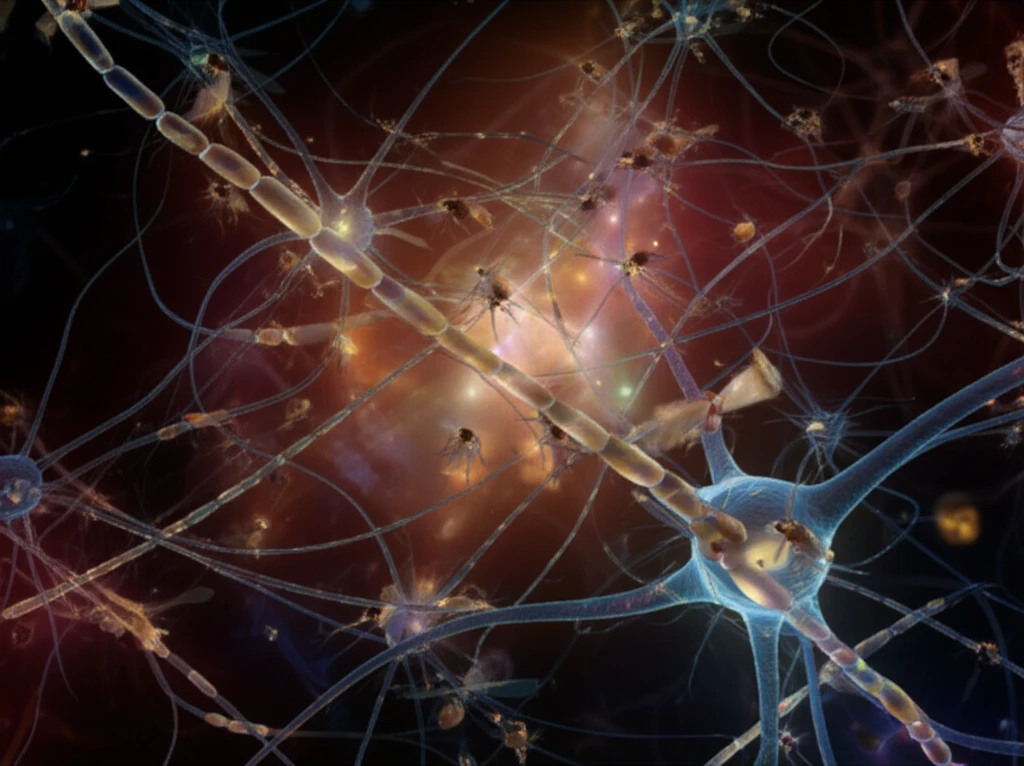
Interconnected neurons and genetic pathways symbolizing SMN-Gemins complex interactions in Drosophila.

Decoding Genetic Interactions: How Errors Led to New Insights into SMN-Gemins Complex

"A closer look at how corrections to a study on Drosophila genetics reveal crucial information about the SMN-Gemins complex and its implications for motor neuron health."


In the realm of genetic research, accuracy is paramount. A recent publication in PLOS ONE focusing on the genetic interactions within the SMN-Gemins complex in Drosophila (fruit flies) initially contained errors that obscured key findings. This article highlights those corrections and explores the deeper implications of the corrected data.

The SMN-Gemins complex is vital for motor neuron function and survival. Errors in scientific publications, while unfortunate, provide learning opportunities, allowing researchers to refine their understanding and ensure the reliability of published data. The original paper aimed to map out the genetic relationships between members of this complex, providing a foundation for future studies on motor neuron disorders.

This article will delve into the specifics of the corrected data, focusing on how these changes impact our understanding of the genetic interactions within the SMN-Gemins complex. We'll explore what these interactions mean for motor neuron health and discuss potential avenues for therapeutic interventions. This corrected research underscores the importance of meticulousness in scientific work and the valuable insights that can be gleaned from even minor adjustments to data.

Unraveling the SMN-Gemins Complex: What the Corrections Reveal

Interconnected neurons and genetic pathways symbolizing SMN-Gemins complex interactions in Drosophila.

The primary errors in the original publication centered around Table 1, which summarized the phenotypic effects resulting from various genetic manipulations. Specifically, there was a lack of clear separation between the 'Gemin3 x Gemin5' and 'Gemin3 x SMN' sections, leading to potential misinterpretations of the data. Additionally, delta symbols were missing in column 2, further complicating the analysis.

The SMN-Gemins complex plays a critical role in RNA splicing, a fundamental process in gene expression. Disruptions in this complex have been linked to motor neuron diseases, such as spinal muscular atrophy (SMA). Therefore, understanding the precise genetic interactions within this complex is crucial for developing effective treatments.

  • Gemin3 x Gemin5 Interactions: The corrected table clarifies the distinct genetic interactions between Gemin3 and Gemin5, providing a clearer picture of their functional relationship.
  • Gemin3 x SMN Interactions: The revised data offers a more accurate representation of how Gemin3 interacts with SMN (Survival Motor Neuron), a key protein deficient in SMA patients.
  • Phenotypic Effects: By rectifying errors in the table, the corrected study provides a more reliable assessment of the phenotypic effects resulting from different genetic manipulations, including viability and motor defects.
The corrected data allows researchers to draw more accurate conclusions about the functional relationships between these proteins. For example, it enables a more precise understanding of how specific genetic combinations affect motor neuron function, which can guide the development of targeted therapies. This level of detail is invaluable for researchers working to combat motor neuron diseases.

The Path Forward: Leveraging Corrected Data for Therapeutic Innovation

The correction of errors in the PLOS ONE publication highlights the self-correcting nature of the scientific process and the importance of transparency in research. While errors are inevitable, the ability to identify and rectify them ensures the integrity and reliability of scientific findings.

The corrected data provides a solid foundation for future research aimed at understanding and treating motor neuron diseases. Researchers can now use this refined information to design more targeted experiments, identify potential drug targets, and develop novel therapeutic strategies.

By understanding the genetic interactions within the SMN-Gemins complex, scientists can potentially develop therapies that enhance the function of this complex, thereby protecting motor neurons from degeneration. This could translate into effective treatments for SMA and other related disorders, offering hope for individuals and families affected by these debilitating conditions.

About this Article -

This article was crafted using a human-AI hybrid and collaborative approach. AI assisted our team with initial drafting, research insights, identifying key questions, and image generation. Our human editors guided topic selection, defined the angle, structured the content, ensured factual accuracy and relevance, refined the tone, and conducted thorough editing to deliver helpful, high-quality information.See our About page for more information.

Everything You Need To Know

1

Why is understanding the genetic interactions within the SMN-Gemins complex so important for motor neuron health?

The SMN-Gemins complex is crucial for the health and survival of motor neurons. Disruptions within this complex are linked to motor neuron diseases like spinal muscular atrophy (SMA). A better understanding of the genetic interactions involved can lead to new and more effective therapies that target the root causes of these debilitating conditions. The corrected data specifically allows for a more precise understanding of how genetic combinations affect motor neuron function, potentially guiding the development of targeted therapies.

2

What specific errors were found in the original publication concerning the SMN-Gemins complex in Drosophila?

The original publication contained errors primarily in Table 1, which summarized the phenotypic effects of various genetic manipulations within the SMN-Gemins complex in Drosophila. Key issues included a lack of clear separation between data pertaining to 'Gemin3 x Gemin5' and 'Gemin3 x SMN' interactions, leading to potential misinterpretations. Additionally, delta symbols were missing in column 2, further complicating the analysis of the phenotypic effects resulting from different genetic manipulations.

3

How does the corrected data change our understanding of the roles Gemin3, Gemin5, and SMN play in the SMN-Gemins complex?

The corrected data offers a more reliable assessment of the phenotypic effects resulting from different genetic manipulations within the SMN-Gemins complex. The refined data clarifies the distinct genetic interactions between Gemin3 and Gemin5, offering a clearer understanding of their functional relationship. Additionally, the revised data provides a more accurate representation of how Gemin3 interacts with SMN (Survival Motor Neuron), a key protein deficient in SMA patients. These corrections enables researchers to draw more accurate conclusions about the functional relationships between these proteins.

4

The research focuses on Drosophila. How does this research connect with studies of humans and what are the future implications?

The focus was on the interactions within the SMN-Gemins complex in Drosophila, specifically how corrections to data on these interactions impact our understanding of motor neuron health. While the research uses Drosophila as a model, the principles and insights gained can often be extrapolated to more complex organisms, including humans. This is because many fundamental biological processes, such as RNA splicing, are conserved across species. Future research might involve translating these findings to human cell models or even clinical trials to assess the effectiveness of potential therapies.

5

What does the correction of these errors tell us about the scientific process and the reliability of research findings related to the SMN-Gemins complex?

The correction of errors in the PLOS ONE publication regarding the SMN-Gemins complex and its role in motor neuron health demonstrates the scientific process's self-correcting nature and the importance of transparency in research. This iterative process of error identification and correction ensures the integrity and reliability of scientific findings. While errors are inevitable, the ability to identify and rectify them is vital for advancing our understanding of complex biological systems and developing effective treatments for diseases like spinal muscular atrophy (SMA).

Newsletter Subscribe

Subscribe to get the latest articles and insights directly in your inbox.