
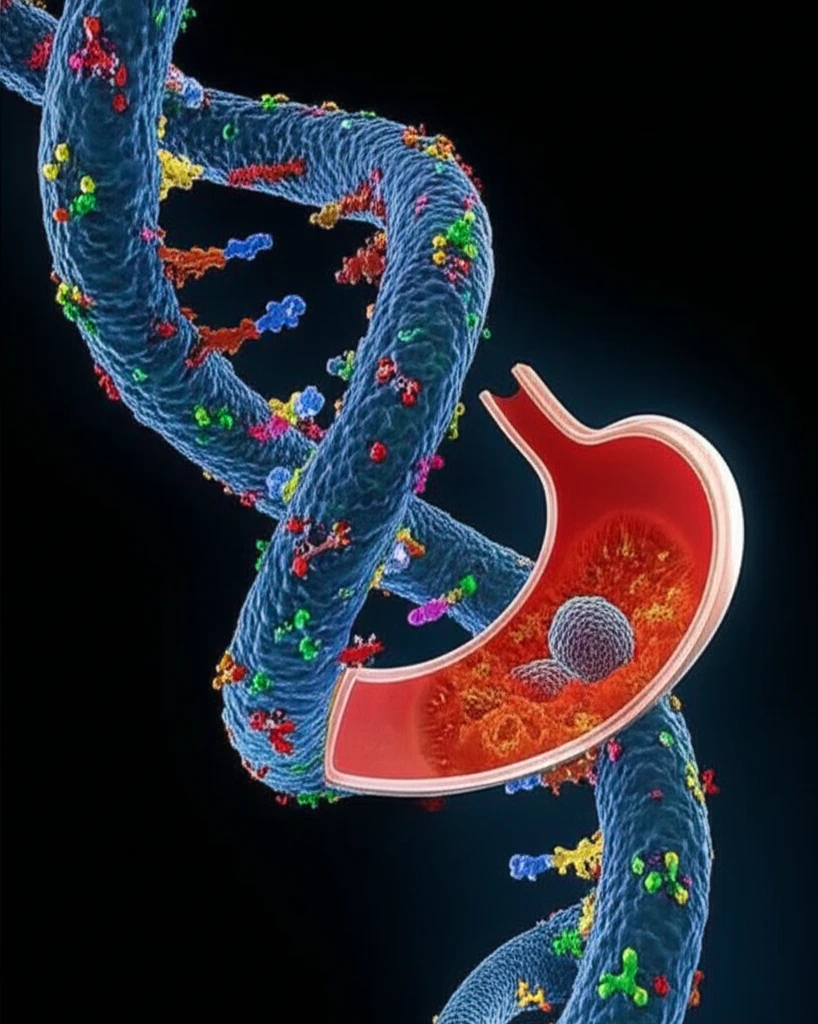
Illustration depicting DNA methylation in a gastric cancer cell, showing the interplay between genetic information and epigenetic modifications.

Decoding Gastric Cancer: How DNA's Secrets Unlock New Treatment Paths

"A deep dive into the role of DNA methylation in gastric cancer, offering hope for improved diagnosis and targeted therapies."


Gastric cancer, also known as stomach cancer, remains a significant global health challenge. It's a disease where the cells lining the stomach grow out of control, often leading to serious health issues. While genetics play a role, recent research highlights the importance of epigenetics, particularly DNA methylation, in the development and progression of gastric cancer. This article aims to unravel the complex relationship between DNA methylation and gastric cancer, shedding light on potential new avenues for treatment and improved patient outcomes.

DNA methylation is a fundamental biological process where methyl groups are added to a DNA molecule, changing its function. These changes can switch genes on or off, influencing cell behavior. In the context of cancer, aberrant DNA methylation can silence tumor suppressor genes or activate oncogenes, leading to uncontrolled cell growth and tumor formation. Understanding these methylation patterns is key to developing effective therapies.

As we explore the intricacies of DNA methylation in gastric cancer, it’s important to remember that this is an evolving field of study. Scientists are constantly discovering new insights, and this knowledge is gradually transforming how we approach diagnosis and treatment. By highlighting the key findings and potential breakthroughs, we aim to empower you with a deeper understanding of this critical area of medical research.

The Methylation Maze: Unraveling DNA's Role in Gastric Cancer

Illustration depicting DNA methylation in a gastric cancer cell, showing the interplay between genetic information and epigenetic modifications.

At the heart of gastric cancer, as with many other cancers, lies a series of changes at the cellular level. One of the most significant of these is DNA methylation. Think of DNA as a vast instruction manual, where genes are the recipes for making proteins. DNA methylation acts like a highlighter, marking certain sections of the manual to be ignored or emphasized. In healthy cells, this process is carefully regulated, ensuring that the right genes are active at the right time. However, in cancer, this process goes awry.

In gastric cancer, aberrant DNA methylation can lead to the silencing of tumor suppressor genes—those that normally keep cell growth in check. Conversely, it can activate oncogenes, which promote cell growth and division. This imbalance creates an environment where cancer cells thrive, leading to tumor formation and progression. The enzymes responsible for adding these methyl groups, known as DNA methyltransferases (DNMTs), are key players in this process, and their activity can determine the fate of cells.

  • Silencing Tumor Suppressors: DNA methylation can shut down genes that prevent cancer, allowing tumors to grow unchecked.
  • Activating Oncogenes: Conversely, it can turn on genes that drive cancer cell growth.
  • DNMTs as the Culprits: DNA methyltransferases are enzymes that control DNA methylation. They can be overactive or misregulated in cancer, causing abnormal methylation patterns.
  • Impact on Treatment: These methylation patterns can affect how well treatments like chemotherapy work, making it harder to get rid of cancer cells.
The implications of DNA methylation extend beyond the initial development of cancer. These epigenetic changes can influence how the cancer responds to treatment and how it progresses over time. This understanding has fueled a significant shift in cancer research, leading scientists to explore how they can manipulate these DNA methylation patterns to fight the disease more effectively.

Looking Ahead: The Future of DNA-Targeted Therapies

The journey to conquer gastric cancer is an ongoing endeavor, with DNA methylation research leading the way. With a deeper understanding of DNA methylation and its impact on cancer development and resistance, scientists are getting closer to their goal. While the path forward is challenging, the promise of precision medicine—where treatments are tailored to the specific genetic and epigenetic makeup of an individual’s cancer—offers a beacon of hope. It's a future where treatments target the root causes of cancer, improving outcomes, and transforming lives.

About this Article -

This article was crafted using a human-AI hybrid and collaborative approach. AI assisted our team with initial drafting, research insights, identifying key questions, and image generation. Our human editors guided topic selection, defined the angle, structured the content, ensured factual accuracy and relevance, refined the tone, and conducted thorough editing to deliver helpful, high-quality information.See our About page for more information.

This article is based on research published under:

DOI-LINK: 10.2217/epi-2018-0096, Alternate LINK

Title: Dna Methyltransferases And Gastric Cancer: Insight Into Targeted Therapy

Subject: Cancer Research

Journal: Epigenomics

Publisher: Future Medicine Ltd

Authors: Sadegh Fattahi, Monireh Golpour, Fatemeh Amjadi-Moheb, Marzieh Sharifi-Pasandi, Parastesh Khodadadi, Maryam Pilehchian-Langroudi, Gholam Hossein Ashrafi, Haleh Akhavan-Niaki

Published: 2018-11-01

Everything You Need To Know

1

What role does DNA methylation play in the development of gastric cancer?

DNA methylation, a process where methyl groups are added to a DNA molecule, plays a significant role in the development of gastric cancer. It can alter gene function by switching genes on or off. In gastric cancer, aberrant DNA methylation can silence tumor suppressor genes, which normally prevent cancer, or activate oncogenes, which promote cancer cell growth and division, leading to uncontrolled cell growth and tumor formation.

2

How does DNA methylation affect the treatment of gastric cancer?

DNA methylation patterns can influence how well treatments like chemotherapy work. Aberrant methylation can make cancer cells resistant to treatment, complicating the process of eliminating them. By understanding these methylation patterns, scientists aim to develop therapies that can manipulate them to improve treatment effectiveness and patient outcomes. Research focuses on how to reverse or counteract these changes to make cancer cells more susceptible to existing treatments.

3

What are DNA methyltransferases (DNMTs), and why are they important in gastric cancer?

DNA methyltransferases (DNMTs) are enzymes responsible for adding methyl groups to DNA, thereby controlling DNA methylation. They are crucial in gastric cancer because their activity can be overactive or misregulated, leading to abnormal methylation patterns. These abnormal patterns can result in the silencing of tumor suppressor genes or the activation of oncogenes, contributing to the development and progression of gastric cancer. Targeting DNMTs is therefore being explored as a potential therapeutic strategy.

4

In the context of gastric cancer, what is the significance of 'silencing tumor suppressors' through DNA methylation?

Silencing tumor suppressor genes via DNA methylation is a critical factor in gastric cancer development. Tumor suppressor genes normally function to regulate cell growth and prevent the formation of tumors. When DNA methylation inappropriately silences these genes, cells can grow unchecked, leading to tumor development and progression. This mechanism allows cancer cells to evade normal growth controls, highlighting the importance of understanding and targeting methylation patterns in cancer therapy.

5

How might future therapies for gastric cancer target DNA methylation to improve patient outcomes, and what are the potential implications?

Future therapies for gastric cancer are focusing on precision medicine, where treatments are tailored to the specific genetic and epigenetic makeup—including DNA methylation patterns—of an individual’s cancer. By targeting DNA methylation, treatments could aim to reverse the silencing of tumor suppressor genes or inhibit the activation of oncogenes, thereby disrupting cancer cell growth. The implications of such targeted therapies include improved treatment effectiveness, reduced side effects, and the potential to overcome resistance to existing treatments like chemotherapy. This approach offers hope for transforming the lives of those affected by gastric cancer by addressing the root causes of the disease.

Newsletter Subscribe

Subscribe to get the latest articles and insights directly in your inbox.