
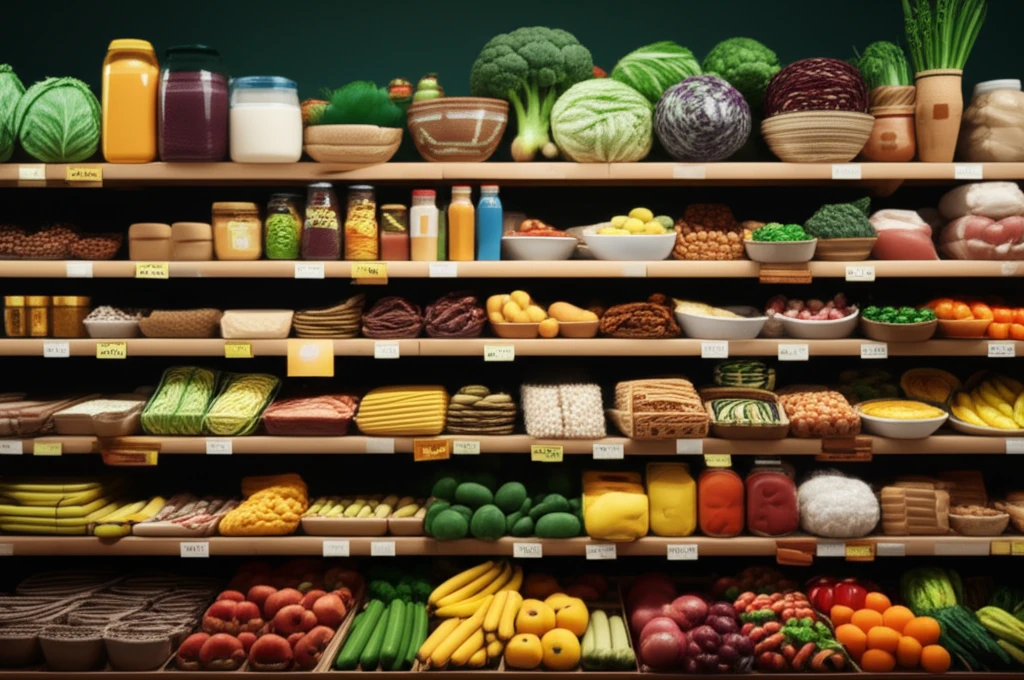
Illustration of diverse healthy food options in a well-organized food shelf.

Decoding Food Shelf Nutrition: How Healthy Eating Indexes Can Help You Make Better Choices

"Navigating nutrition in food shelves can be tricky. Discover how Healthy Eating Indexes (HEI) simplify healthy choices and why they matter for your well-being."


In the realm of nutrition, making informed decisions about the foods we consume is paramount. For individuals and families relying on food shelves, this task can be particularly challenging. Standardized measures of food healthfulness, such as the Healthy Eating Index (HEI), play a crucial role in bridging this gap, offering a means to assess and improve the nutritional quality of available foods.

The Healthy Eating Index (HEI) serves as a yardstick for measuring adherence to the Dietary Guidelines for Americans (DGAs). Updated every five years, the DGAs reflect the latest scientific understanding of nutrition, providing a foundation for promoting public health. The HEI translates these guidelines into actionable metrics, enabling individuals and organizations to evaluate the nutritional content of diets and food environments.

Recent research has delved into the application of HEI in food shelf settings, comparing the HEI-2005 and HEI-2010 versions to identify discrepancies and inform best practices. By examining invoices from Minnesota food banks, researchers have shed light on the nutritional landscape of food assistance programs, offering valuable insights for improving food quality and promoting healthier choices.

Understanding the Healthy Eating Index: Your Guide to Better Nutrition

Illustration of diverse healthy food options in a well-organized food shelf.

The Healthy Eating Index (HEI) is more than just a score; it's a comprehensive tool designed to evaluate how well a set of foods aligns with the Dietary Guidelines for Americans (DGAs). Each component of the HEI assesses different aspects of a diet, assigning points based on specific criteria. These components range from total fruit and whole grains to sodium and saturated fats, providing a holistic view of nutritional quality.

For instance, the HEI considers both “adequacy” and “moderation” components. Adequacy components, like fruits and vegetables, reward higher densities in the diet, encouraging consumption of these nutrient-rich foods. On the other hand, moderation components, such as sodium, assign higher scores for lower densities, promoting mindful consumption of less healthy elements.

  • Adequacy Components: These score higher when there's a greater density of beneficial food groups like vegetables, fruits, and whole grains in the diet.
  • Moderation Components: These reward lower densities of elements like sodium, saturated fats, and refined grains, encouraging moderation.
  • Scoring System: Each component is assigned a score based on set standards that reflect the density of the corresponding food group per 1000 kcal, making it adaptable to individual diets and environmental settings.
By summing up the scores from each component, the HEI provides a single, overall score that reflects the healthfulness of a diet or food environment. This score can then be used to identify areas for improvement and track progress over time. Whether you're an individual seeking to improve your eating habits or an organization working to enhance the nutritional quality of food offerings, the HEI offers a valuable framework for achieving your goals.

Empowering Healthier Choices: The Future of Food Shelf Nutrition

As research continues to evolve and our understanding of nutrition deepens, tools like the Healthy Eating Index will play an increasingly vital role in promoting public health. By providing a standardized and flexible framework for assessing food quality, the HEI empowers individuals, organizations, and policymakers to make informed decisions that support healthier lifestyles. Whether it's guiding food shelf offerings or shaping dietary choices, the HEI serves as a valuable compass in the journey towards better nutrition.

About this Article -

This article was crafted using a human-AI hybrid and collaborative approach. AI assisted our team with initial drafting, research insights, identifying key questions, and image generation. Our human editors guided topic selection, defined the angle, structured the content, ensured factual accuracy and relevance, refined the tone, and conducted thorough editing to deliver helpful, high-quality information.See our About page for more information.

Everything You Need To Know

1

What is the Healthy Eating Index (HEI), and how does it help improve nutrition?

The Healthy Eating Index (HEI) is a comprehensive tool designed to measure how well a set of foods aligns with the Dietary Guidelines for Americans (DGAs). It helps improve nutrition by providing a standardized framework to assess the nutritional quality of diets and food environments. The HEI translates the DGAs into actionable metrics, evaluating components like fruits, vegetables, whole grains (adequacy), and sodium, saturated fats, refined grains (moderation). It offers a single overall score that reflects the healthfulness of a diet or food environment, which can be used to identify areas for improvement and track progress over time. This empowers individuals, organizations, and policymakers to make informed decisions that support healthier lifestyles.

2

How does the Healthy Eating Index (HEI) score different food components, and what is the significance of adequacy and moderation?

The Healthy Eating Index (HEI) scores different food components based on how well they align with the Dietary Guidelines for Americans (DGAs). Each component is assigned a score based on set standards reflecting the density of the corresponding food group per 1000 kcal. Adequacy components, such as fruits, vegetables, and whole grains, score higher when there is a greater density in the diet, thus encouraging the consumption of these nutrient-rich foods. Moderation components, like sodium, saturated fats, and refined grains, reward lower densities, which means they give higher scores for less intake, promoting mindful consumption of less healthy elements. The HEI considers both adequacy and moderation to provide a holistic view of nutritional quality.

3

Can you explain the role of the Dietary Guidelines for Americans (DGAs) in relation to the Healthy Eating Index (HEI)?

The Dietary Guidelines for Americans (DGAs) provide the foundation for public health and are the basis for the Healthy Eating Index (HEI). Updated every five years, the DGAs reflect the latest scientific understanding of nutrition, offering recommendations to promote overall health. The HEI translates these guidelines into actionable metrics. The HEI uses the DGAs as a benchmark to evaluate the nutritional quality of diets and food environments. This means that the HEI's components and scoring system are designed to reflect the principles outlined in the DGAs, making it a practical tool for assessing adherence to these guidelines.

4

In what ways are food shelves utilizing the Healthy Eating Index (HEI), and how does this benefit people relying on them?

Food shelves are increasingly using the Healthy Eating Index (HEI) to improve the nutritional quality of their offerings. By examining invoices from food banks, researchers are able to identify the nutritional landscape of food assistance programs. This helps food shelves make informed decisions about the types of foods they provide. This benefits people relying on food shelves by ensuring that they have access to healthier options. Through the HEI, food shelves can better align their inventories with the Dietary Guidelines for Americans, empowering individuals to make healthier dietary choices, which is crucial for improving overall health and well-being.

5

How does the Healthy Eating Index (HEI) empower individuals and organizations to make informed decisions about nutrition?

The Healthy Eating Index (HEI) empowers individuals and organizations to make informed decisions about nutrition by providing a standardized and flexible framework for assessing food quality. For individuals, the HEI offers a way to evaluate their own eating habits and identify areas for improvement. This could include increasing the intake of fruits and vegetables (adequacy components) or reducing the intake of sodium and saturated fats (moderation components). Organizations, such as food shelves or food assistance programs, can use the HEI to guide their food offerings, ensuring that they provide options that align with the Dietary Guidelines for Americans. By using the HEI, both individuals and organizations can track progress over time and make data-driven decisions that support healthier lifestyles.

Newsletter Subscribe

Subscribe to get the latest articles and insights directly in your inbox.