
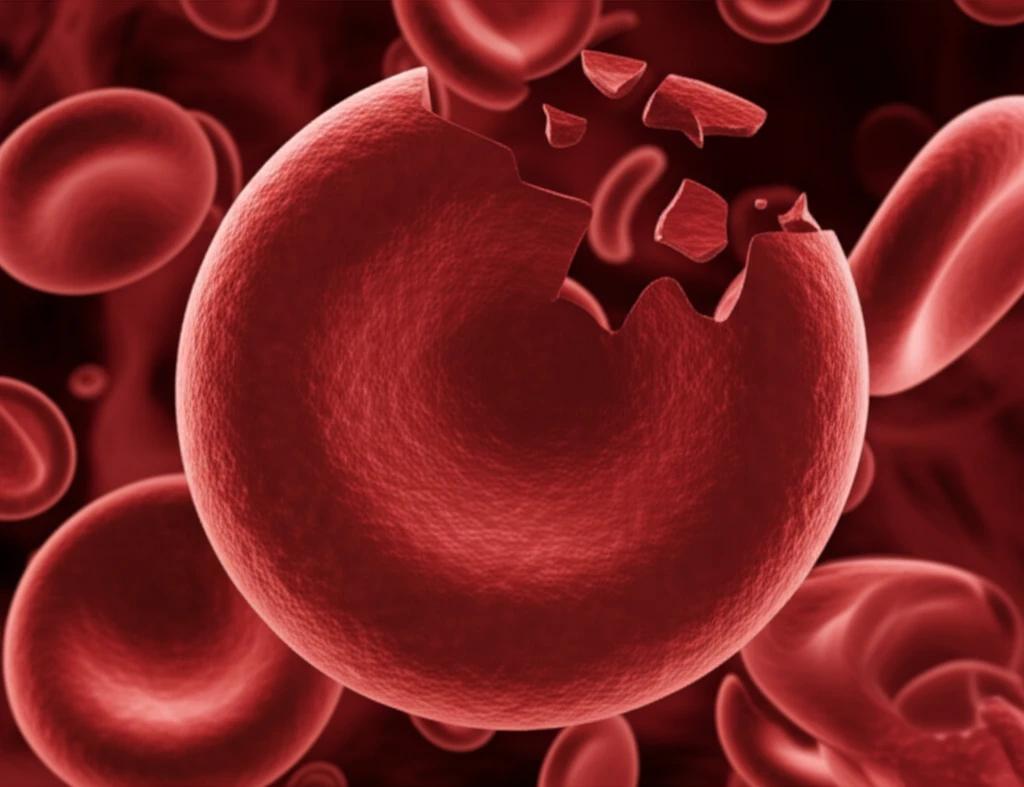
Illustration of a blood clot with a missing piece, symbolizing a genetic mutation.

Decoding Fibrinogen: How a Tiny Mutation Can Cause Big Bleeding Problems

"Unraveling the mystery of a novel genetic mutation and its impact on blood clotting, offering insights for those at risk."


Fibrinogen, a protein produced in the liver, plays a crucial role in blood clot formation. Think of it as the structural backbone of a clot, essential for stopping bleeding and promoting healing. When fibrinogen levels are low or the protein doesn't function correctly, it can lead to bleeding disorders and other health complications.

Congenital hypofibrinogenemia is a rare, inherited condition characterized by low levels of fibrinogen in the blood. This can occur when there are errors in the genes responsible for producing fibrinogen. These errors, or mutations, can disrupt the way fibrinogen is made or secreted into the bloodstream, leading to a deficiency.

Recent research has focused on identifying specific gene mutations that cause congenital hypofibrinogenemia. One such study has uncovered a novel mutation in the fibrinogen gamma-chain, a component of the fibrinogen protein. This mutation, called p.Cys165Arg, disrupts the normal structure of fibrinogen, ultimately leading to reduced levels in the blood and potential bleeding risks.

The Fibrinogen Mutation: A Closer Look

Illustration of a blood clot with a missing piece, symbolizing a genetic mutation.

The study, conducted by researchers at Guangxi Medical University in China, investigated a family affected by congenital hypofibrinogenemia. Through detailed genetic analysis, they identified a novel heterozygous mutation in the fibrinogen gamma-chain gene (FGG), specifically the p.Cys165Arg mutation. This means that one copy of the gene had the mutation, while the other copy was normal.

The p.Cys165Arg mutation involves a change in a single amino acid within the fibrinogen protein. At position 165 of the gamma-chain, a cysteine amino acid is replaced by an arginine amino acid. This seemingly small change can have significant consequences for the structure and function of fibrinogen.

  • Disruption of Disulfide Bond: Cysteine is crucial for forming disulfide bonds, which are like tiny bridges that hold different parts of a protein together. At position 165, cysteine normally forms a disulfide bond with another cysteine amino acid at position 227 on the beta-chain of fibrinogen (Bβ227Cys). The p.Cys165Arg mutation disrupts this bond, destabilizing the fibrinogen molecule.
  • Impaired Secretion: The disrupted disulfide bond hinders the proper folding and assembly of fibrinogen. As a result, the mutated fibrinogen is not efficiently secreted from liver cells into the bloodstream, leading to lower levels of the protein.
  • Smaller Fiber Diameter and Loose Network: Under the microscope, fibrin clots formed with the mutated fibrinogen had a smaller fiber diameter and a looser network structure than normal clots. This altered structure could compromise the clot's ability to effectively stop bleeding.
The study also used a technique called thromboelastography to assess the proband's blood clotting ability. The results showed reduced levels of functional fibrinogen and a slower rate of clot formation, indicating that the p.Cys165Arg mutation impairs the blood clotting process.

What This Means for You

This research provides valuable insights into the genetic basis of congenital hypofibrinogenemia and highlights the importance of the y165Cys–Bẞ227Cys disulfide bond for fibrinogen function. While congenital hypofibrinogenemia is rare, understanding the underlying genetic mutations can help with diagnosis, genetic counseling, and potentially, the development of targeted therapies in the future. If you have a family history of bleeding disorders or suspect you may have a fibrinogen deficiency, talk to your doctor about getting tested.

About this Article -

This article was crafted using a human-AI hybrid and collaborative approach. AI assisted our team with initial drafting, research insights, identifying key questions, and image generation. Our human editors guided topic selection, defined the angle, structured the content, ensured factual accuracy and relevance, refined the tone, and conducted thorough editing to deliver helpful, high-quality information.See our About page for more information.

Everything You Need To Know

1

What exactly is fibrinogen and why is it important for my health?

Fibrinogen is a protein made in the liver that is essential for blood clot formation. It acts as the structural framework of a blood clot, helping to stop bleeding and facilitate healing. When fibrinogen levels are low or not functioning correctly, it can lead to bleeding disorders and other complications.

2

What is congenital hypofibrinogenemia, and how is it related to genetics?

Congenital hypofibrinogenemia is a rare, inherited condition where a person has low levels of fibrinogen in their blood. This occurs due to genetic mutations that affect how fibrinogen is produced. These mutations can disrupt the production or secretion of fibrinogen into the bloodstream, leading to a deficiency. The p.Cys165Arg mutation is one such mutation.

3

Can you explain what the p.Cys165Arg mutation is and how it affects fibrinogen?

The p.Cys165Arg mutation is a specific genetic error in the fibrinogen gamma-chain that disrupts the normal structure of the fibrinogen protein. This mutation involves replacing a cysteine amino acid with an arginine amino acid at position 165 of the gamma-chain. This seemingly small change disrupts a critical disulfide bond, destabilizing the fibrinogen molecule, impairing its secretion from liver cells, and resulting in abnormal clot formation.

4

How does the p.Cys165Arg mutation affect the blood clotting process?

The p.Cys165Arg mutation impairs blood clot formation by disrupting a disulfide bond that is critical for the stability of the fibrinogen molecule. This disruption hinders the proper folding and assembly of fibrinogen, leading to reduced secretion from liver cells into the bloodstream. As a result, any clots that do form have a smaller fiber diameter and a looser network structure, making them less effective at stopping bleeding.

5

Why is it important to research genetic mutations like p.Cys165Arg?

Research into genetic mutations like p.Cys165Arg that cause congenital hypofibrinogenemia is crucial for improving diagnosis, providing genetic counseling, and potentially developing targeted therapies in the future. Understanding these mutations can help identify individuals at risk of bleeding disorders and allow for proactive management. Thromboelastography is one technique that can be used to assess the impact of this mutation on blood clotting ability.

Newsletter Subscribe

Subscribe to get the latest articles and insights directly in your inbox.