
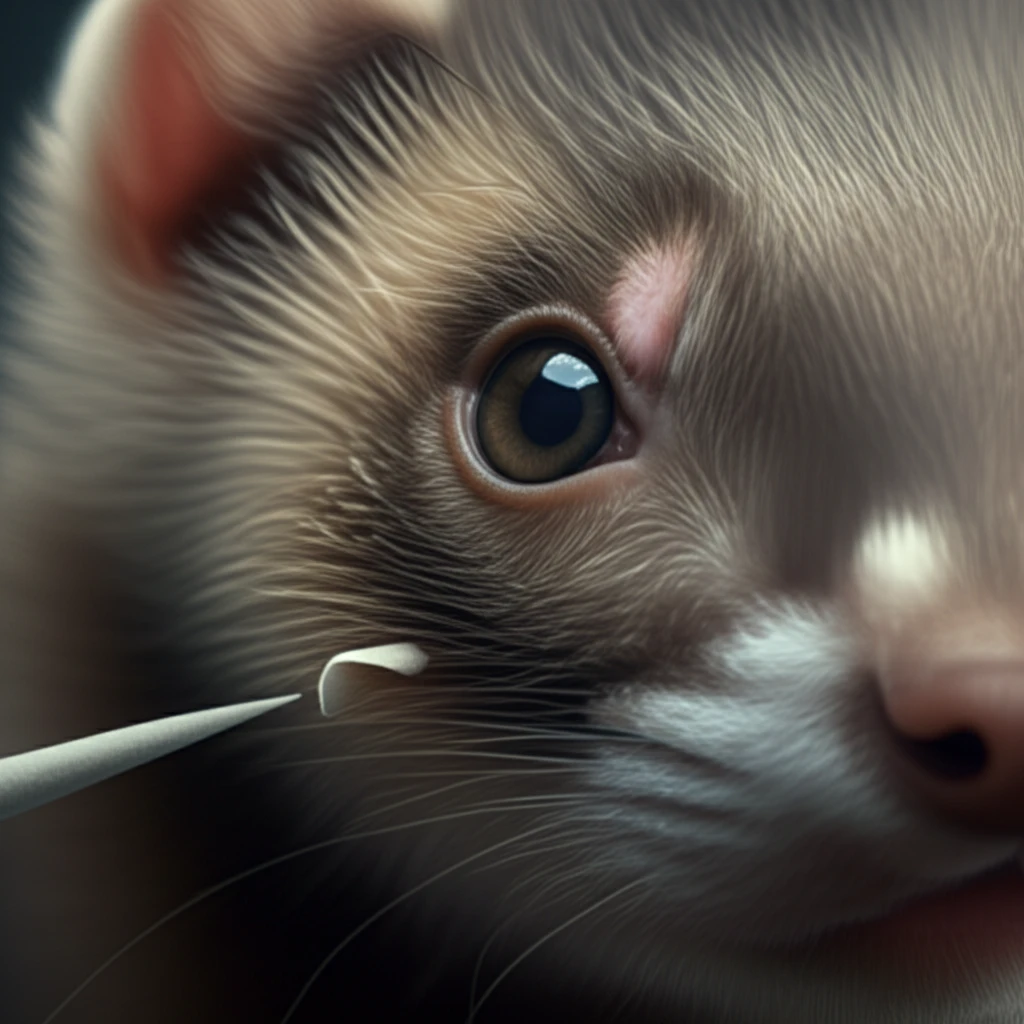
Decoding Ferret Tears: A Guide to Schirmer Tear Tests and Paper Point Alternatives

"Is your ferret's eye health a mystery? Learn how tear tests can reveal crucial clues, and why a new method might offer more accurate results."
Ferrets, with their playful antics and curious nature, have burrowed their way into our hearts as beloved pets and valuable research animals. Like any animal, ferrets are prone to certain health issues, and their eyes are no exception. Conditions like conjunctivitis, keratoconjunctivitis sicca (dry eye), and even retinal degeneration can threaten their vision. That's why understanding how to assess their eye health is crucial for any ferret owner or veterinarian.
One key aspect of eye health is tear production. Tears aren't just for crying; they're essential for lubricating the eye, washing away debris, and maintaining a healthy corneal surface. When tear production is insufficient, it can lead to discomfort, inflammation, and potentially vision-threatening complications. That’s why veterinarians rely on tests to measure tear production, helping them diagnose and manage various eye conditions.
The Schirmer Tear Test (STT) has long been a standard method for assessing tear production in animals, including ferrets. However, a recent study explores a promising alternative: the use of standardized endodontic absorbent paper points. This method, known as the Paper Point Tear Test (PPTT), could offer a more precise and comfortable way to evaluate tear production in these small creatures.
Why Tear Production Matters: Understanding the Tests for Ferrets
Veterinarians employ several methods to gauge tear production, each with its own set of advantages and drawbacks. The Schirmer Tear Test, a commonly used technique, involves placing a specialized paper strip inside the lower eyelid for a minute and then measuring the amount of tear fluid absorbed. While widely accessible, STT can sometimes be influenced by factors like stress or discomfort, potentially affecting the accuracy of the results.
- Schirmer Tear Test (STT): Traditional method using paper strips to measure tear production.
- Paper Point Tear Test (PPTT): A newer technique using endodontic paper points for tear collection.
- Phenol Red Thread Tear Test: Another alternative, but less common in ferrets.
The Future of Ferret Eye Care: Implications and Further Research
The study's findings suggest that PPTT could be a valuable tool for assessing tear production in ferrets, potentially offering a more precise and less stressful alternative to the traditional STT. While both tests provide useful information, PPTT may be particularly beneficial in cases where STT results are inconsistent or when dealing with ferrets that are sensitive to the procedure. Further research is needed to explore the long-term benefits of PPTT and its application in diagnosing and managing various eye conditions in ferrets. By understanding the nuances of tear production and utilizing the most appropriate diagnostic methods, we can ensure the long-term health and well-being of our ferret companions.