
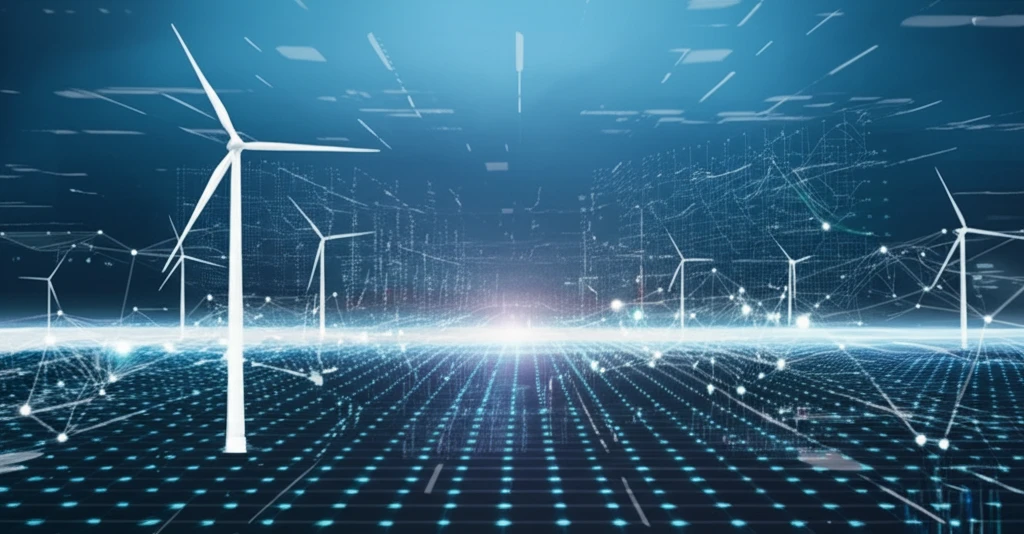
Decoding Energy Demand: How AI and Smart Forecasting Can Power Your Future

"Explore how reconciled boosted models are revolutionizing energy forecasting, enhancing grid reliability, and promoting sustainable energy management."
Imagine a world where energy grids are perfectly in sync with demand, where waste is minimized, and resources are optimized. This isn't a futuristic fantasy; it's a tangible goal being driven by cutting-edge advancements in energy forecasting. Traditional methods are becoming outdated, struggling to keep pace with the complexities of modern energy consumption. Now, enter AI-powered solutions, which are poised to transform how we predict and manage our energy needs.
One of the most promising techniques in this space is the use of reconciled boosted models. These sophisticated algorithms not only predict energy demand with greater precision but also ensure that these predictions are consistent across different levels of the energy distribution network. This consistency, or "reconciliation," is crucial for effective grid management and resource allocation.
This article explores how these models work, why they're a game-changer for the energy industry, and how they can lead to a more sustainable and reliable energy future. We'll break down the science and highlight the real-world benefits of this exciting technological advancement, making it accessible and relevant to everyone.
The Growing Demand for Smart Forecasting
Rising global demand for effective and sustainable energy solutions has driven the integration of advanced AI techniques with conventional methods for predicting energy consumption. AI itself is now emerging as a significant driver of global electricity consumption, yet its long-term energy and emissions implications remain poorly quantified, according to researchers developing scenario-based modeling that links AI computational demand with life-cycle carbon accounting. The IEA has responded by establishing an Energy and AI Observatory to provide regularly updated data on the links between the energy sector and AI and its implications for energy demand. In practical settings, forecasting tools increasingly combine statistical, machine learning, and deep learning models, as demonstrated in day-ahead electricity price forecasting for the Mexican national grid.
From Traditional Models to AI-Based Forecasting
Standard energy forecasting has historically relied on statistical and classical modeling approaches, but systematic reviews show that artificial intelligence-based techniques—particularly machine learning and neural network models—consistently outperform traditional methods in precision and robustness. Accepted research frameworks commonly adopt bottom-up, top-down, and hybrid approaches that leverage machine learning, deep learning, decomposition ensembles, and AI-based optimization. Despite these strengths, the rapid expansion of renewables and their integration into modern grids has intensified the need for accurate, reliable, and interpretable forecasting methods, which classical models struggle to deliver. Reviews now map an evolution from classical models toward more advanced and explainable machine learning solutions.
A Shift Toward Data-Driven Forecasting
Energy demand forecasting has evolved over decades, moving from simple statistical and time-series methods toward increasingly data-driven and automated approaches. The broader progression of computing and analytics has made it possible to process far larger and more dynamic datasets than was feasible in earlier eras of manual estimation. More recently, advances in machine learning have marked a notable milestone, enabling models that can adapt to changing conditions and deliver more accurate predictions. Because no detailed chronological source was located for this subsection, this account is offered as a general characterization of the field's evolution rather than a precise historical record.
The Challenge of Hierarchical Energy Forecasting: Why Traditional Methods Fall Short
Hierarchical time series forecasting comes into play when we need to understand how an energy variable is distributed across different nodes in a hierarchy. Think of it like this: you want to forecast the electricity demand not only for an entire state but also for individual towns within that state. Traditionally, these forecasts are made independently, leading to a significant problem: the forecasts for the towns might not add up to the forecast for the entire state. This inconsistency makes it difficult for energy providers to make informed decisions about resource allocation and grid management.
- Inaccurate Resource Allocation: Without reconciled forecasts, energy providers might over- or under-allocate resources to certain areas, leading to waste or shortages.
- Increased Costs: Inconsistent forecasts can result in higher operational costs due to inefficient grid management and the need for corrective actions.
- Grid Instability: In severe cases, discrepancies between forecasts and actual demand can threaten the stability of the energy grid, potentially leading to outages and disruptions.
AI as a Transformative Force in Energy Transitions
Recent reviews position artificial intelligence as a transformative technology in the global energy transition, offering tools that can enhance each link of the energy system in the push toward decarbonization. Researchers emphasize that AI helps address the technical, economic, and social challenges of reducing reliance on fossil fuels. Within renewable energy, accurate forecasting is considered essential for reliable and efficient energy management, and recent developments in machine learning and deep learning have shown great promise by providing strong and flexible forecasting models. Together this literature reflects a broad consensus that AI is becoming integral to how energy is predicted, managed, and transitioned.
Limitations, Costs, and Open Questions
Despite its promise, AI forecasting in energy faces meaningful challenges, with weather and other highly variable variables frequently cited as among the most difficult inputs to model. A World Economic Forum white paper highlights an inherent energy paradox, noting that AI's benefits come alongside significant energy costs and outlining four interlinked areas for navigating the resulting uncertainty and unlocking sustainable deployment. Reviews also point out that much potential remains untapped, particularly in moving toward real-time, adaptive forecasting models. These counterarguments together suggest that accuracy, cost, and interpretability remain open questions that current techniques have not fully resolved.
Weighing Traditional and AI Approaches
A full side-by-side comparison of the many forecasting techniques in use across the field would require dedicated source material that was not available for this subsection. In general terms, statistical methods are valued for their simplicity and interpretability, while machine learning and deep learning models tend to offer greater accuracy at the cost of more data and computational power. The appropriate choice typically depends on the scale, data availability, and reliability requirements of a given application. This characterization is offered provisionally, as no specific comparative source was located for detailed verification.
Powering the Future with Intelligent Energy Forecasting
Reconciled boosted models represent a significant leap forward in energy forecasting. By providing accurate and consistent predictions across all levels of the energy grid, they enable more efficient resource allocation, reduce costs, and enhance grid stability. As the demand for energy continues to grow, and as we transition to more sustainable energy sources, these AI-powered forecasting techniques will play an increasingly vital role in shaping a reliable and sustainable energy future for all.
A Field in Transition
Taken together, the research reviewed here depicts energy forecasting as a field in transition, moving from classical statistical methods toward AI-driven approaches that promise greater accuracy and adaptability. This shift is motivated both by growing electricity demand, including from AI itself, and by the complexity of grids integrating variable renewables. At the same time, accurate forecasting is increasingly framed as critical for reliability, financial risk reduction, and building a sustainable future. Because no dedicated expert-commentary source was available for this subsection, this synthesis reflects the general themes evident across the broader literature rather than a single authoritative analysis.
Toward Smarter, More Adaptive Forecasting
Accurate, scalable energy forecasting is now considered critical for ensuring reliability, reducing financial risks, and building a sustainable future, with AI and machine learning seen as revolutionizing how tomorrow's grid is managed. In an increasingly electrified world marked by decentralized systems and integrated renewables, traditional models struggle with dynamic complexity, while AI—particularly machine learning and deep learning—offers transformative solutions. At the same time, the accelerated development and uptake of AI has raised pressing questions about its implications for the energy sector. The trajectory points toward forecasting tools that are more adaptive, data-rich, and tightly coupled to real-time grid operations.
Pressures Across the Energy System
Energy forecasting sits within a broader set of systemic pressures facing the energy sector, including electrification, decentralization, and the integration of variable renewable generation. The growth of AI both creates new demand for electricity and contributes tools that could help manage the very grids that must power it. Reliability, cost, and sustainability goals all depend on forecasts that are accurate, scalable, and interpretable. Because no dedicated source was available for this subsection, these points reflect general challenges evident across the field rather than findings from a specific referenced study.
Learning From Real-World Deployments
Beyond theory, the practical value of AI in energy forecasting is demonstrated through real-world case studies spanning commodity market forecasting and smart grid operations. These applied examples show how effective use of AI can improve energy efficiency and reliability in day-to-day operations. Utilities are increasingly adopting AI tools to manage consumption, storage, and grid stability, with documented benefits across multiple use cases. Such deployments illustrate that the impact of smart forecasting is ultimately measured in real, operational improvements on the ground.