
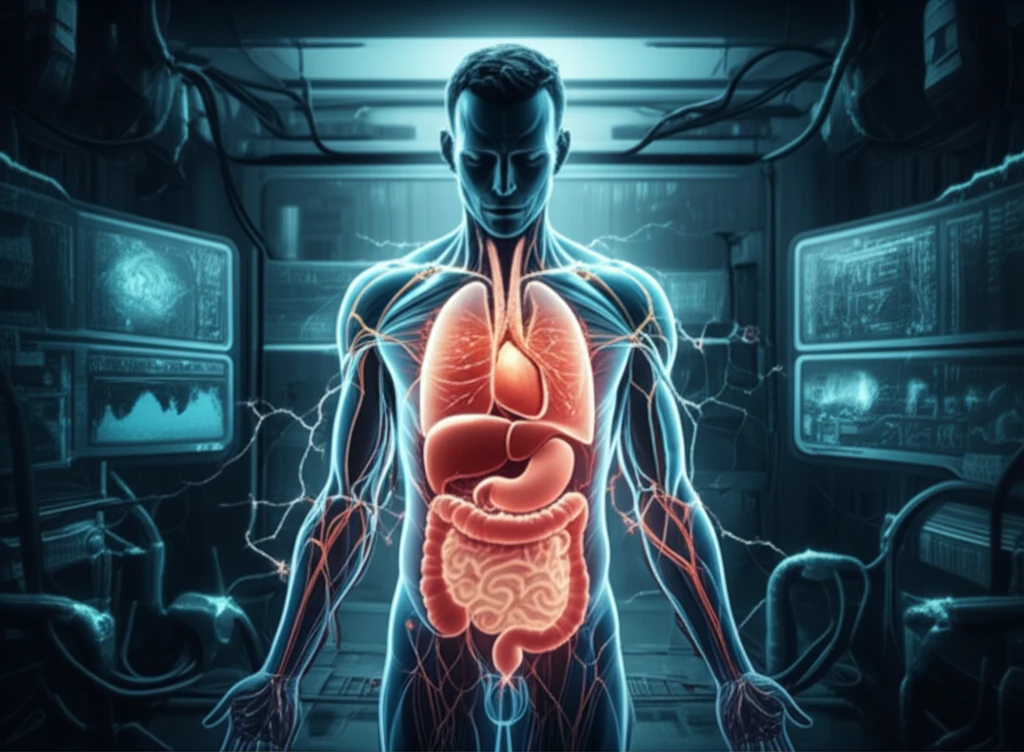
Electrostimulation Model: Visualizing Electrical Currents in the Human Body

Decoding Electrostimulation: How Low-Frequency Modeling is Revolutionizing Medicine

"Unlock the secrets of low-frequency dosimetry and its impact on medical advancements, from induction to electrostimulation."


In the ever-evolving landscape of medical technology, the ability to precisely model and understand the effects of electromagnetic fields (EMFs) on the human body is paramount. This is especially crucial in electrostimulation (ES), where low-frequency electrical currents are used to stimulate tissues for therapeutic purposes. However, accurately predicting how these currents interact with the body's complex biological systems has been a significant challenge.

Recognizing this critical need, the IEEE International Committee on Electromagnetic Safety (ICES) formed Subcommittee 6 (SC6) to address the knowledge gaps in EMF dosimetry modeling. Their initial focus centered on electrostimulation, particularly at frequencies below 100kHz, where the effects on excitable tissues are most pronounced. This focus aimed to reconcile discrepancies in exposure limits recommended by various standards-setting organizations, ensuring safer and more effective medical applications.

This article delves into the recent advancements in low-frequency dosimetry modeling, stemming from the work of ICES SC6 and a collaborative workshop held in Asilomar, California. We will explore how these models are being used to improve medical equipment design, refine diagnostic techniques, and enhance therapeutic interventions, ultimately leading to better patient outcomes.

The Power of Precise Modeling: From Exposure Limits to Medical Breakthroughs

Electrostimulation Model: Visualizing Electrical Currents in the Human Body

The primary goal of ICES SC6's efforts was to facilitate the development of safer human exposure limits for EMFs. However, the insights gained from their research have proven equally valuable in the medical field. Accurate dosimetry models are essential for designing medical devices that deliver electrical energy into the body, ensuring both efficacy and safety. These models also aid medical practitioners in understanding and optimizing the use of such equipment.

While experimental findings remain crucial, numerical models are indispensable for predicting human reactions to applied electrical forces. It's simply impossible to experimentally test every conceivable exposure condition. Models allow researchers to simulate various scenarios, including variations in:

  • Spatial EMF or electric current distributions.
  • Body locations where electrical energy is applied.
  • Temporal patterns (waveforms) of the applied field or current.
  • Individual subject characteristics (body dimensions, posture, physiological factors).
By validating numerical models with limited experimental data, scientists can create powerful tools capable of predicting physical outcomes across a much wider range of hypothetical conditions. This capability is crucial for advancing both EMF safety standards and medical applications of electrostimulation.

Looking Ahead: The Future of Electrostimulation and Dosimetry Modeling

The work initiated by ICES SC6 has laid a strong foundation for future advancements in low-frequency dosimetry modeling. The special section, stemming from the EMF Dosimetry Modeling Workshop, showcases the breadth and depth of ongoing research in this field. The first article, authored by the guest editors, outlines the initial research agenda of SC6, identifying 25 key tasks that were prioritized by its members.

The subsequent papers in this collection address many of these tasks, covering a range of topics including: improved ES models, detailed anatomical models for simulation, advanced dosimetry techniques, refinement of exposure guidelines, and innovative medical applications. These studies exemplify the collaborative spirit and interdisciplinary approach needed to tackle the challenges in this complex field.

As technology continues to evolve, the need for accurate and reliable dosimetry modeling will only increase. By combining experimental research with sophisticated numerical simulations, we can unlock new possibilities for using electrostimulation to improve human health and well-being. This special section serves as a valuable resource for investigators and a testament to the transformative potential of this exciting field.

About this Article -

This article was crafted using a human-AI hybrid and collaborative approach. AI assisted our team with initial drafting, research insights, identifying key questions, and image generation. Our human editors guided topic selection, defined the angle, structured the content, ensured factual accuracy and relevance, refined the tone, and conducted thorough editing to deliver helpful, high-quality information.See our About page for more information.

This article is based on research published under:

DOI-LINK: 10.1088/0031-9155/61/12/e1, Alternate LINK

Title: Special Section: Recent Progress In Low-Frequency Dosimetry Modeling: From Induction To Electrostimulation

Subject: Radiology, Nuclear Medicine and imaging

Journal: Physics in Medicine and Biology

Publisher: IOP Publishing

Authors: Akimasa Hirata, J Patrick Reilly

Published: 2016-05-25

Everything You Need To Know

1

What is Electrostimulation and why is it important?

Electrostimulation (ES) involves using low-frequency electrical currents to stimulate tissues for therapeutic purposes. The significance lies in its potential to revolutionize medical treatments by targeting excitable tissues effectively. The implications include the need for precise modeling to predict how these currents interact with the body, ensuring both safety and efficacy.

2

What is the role of the IEEE International Committee on Electromagnetic Safety (ICES) Subcommittee 6 (SC6)?

The IEEE International Committee on Electromagnetic Safety (ICES) Subcommittee 6 (SC6) focuses on addressing knowledge gaps in EMF dosimetry modeling, particularly for electrostimulation. Its importance is in reconciling discrepancies in exposure limits recommended by various organizations, leading to safer medical applications. The implications involve improving medical equipment design, refining diagnostic techniques, and enhancing therapeutic interventions, ultimately leading to better patient outcomes.

3

Why is low-frequency dosimetry modeling important for medical devices?

Low-frequency dosimetry modeling is essential for designing medical devices that deliver electrical energy into the body. This ensures the devices are effective and safe for patients. It enables medical practitioners to understand and optimize the use of such equipment. The implications are far-reaching, influencing the design of devices, treatment protocols, and ultimately, patient safety and treatment outcomes.

4

How do numerical models contribute to advancements in electrostimulation?

Numerical models predict human reactions to applied electrical forces and are crucial for advancing EMF safety standards and medical applications. They allow for simulating variations in spatial EMF distributions, body locations, temporal patterns, and individual subject characteristics. The implications of using these models are immense because they allow researchers to predict physical outcomes across a much wider range of hypothetical conditions, which is key for developing safer and more effective medical treatments.

5

What is the future of electrostimulation and dosimetry modeling?

The initial research agenda of ICES SC6, identified 25 key tasks that were prioritized. The work initiated has laid a strong foundation for future advancements in low-frequency dosimetry modeling. The implications for the future include ongoing research, special sections, and workshops like the EMF Dosimetry Modeling Workshop, all of which contribute to the ongoing development of new research and advancements in the field.

Newsletter Subscribe

Subscribe to get the latest articles and insights directly in your inbox.