
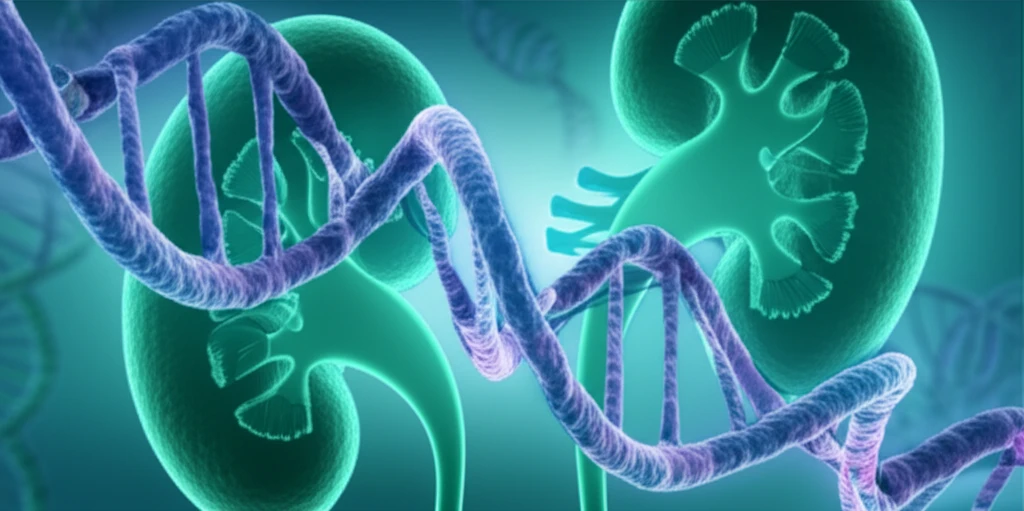
DNA strands intertwined with kidney structures, symbolizing the genetic basis of diabetic nephropathy.

Decoding Diabetic Nephropathy: Is It In Your Genes?

"Unraveling the genetic mysteries of diabetic nephropathy could revolutionize how we predict, prevent, and treat this diabetes complication."


The global rise in diabetes cases brings with it a surge in chronic complications, with diabetic nephropathy (DN) standing out as a major concern. Beyond its high occurrence, DN is linked to significant health issues, particularly heart-related problems, making it a critical area of study and prevention.

Scientists have long suspected that genetics plays a role in who develops DN. The idea is that some individuals are genetically predisposed to DN, and when exposed to certain environmental factors, they are more likely to develop the condition. This makes DN a complex puzzle, influenced by both our genes and our environment.

Researchers are on a quest to pinpoint the specific genes that contribute to DN. By identifying these genes, doctors could potentially screen individuals to determine their risk level and develop more effective, personalized treatment plans. This article explores the strategies researchers are using to find these genes and what the current evidence suggests about the genetic basis of DN.

What Genetic Factors Make Some People More Susceptible to Diabetic Nephropathy?

DNA strands intertwined with kidney structures, symbolizing the genetic basis of diabetic nephropathy.

DN isn't caused by a single gene but likely results from a combination of multiple genes, each with a small effect, interacting with environmental factors. This complex genetic inheritance makes it challenging to identify specific genes and predict who will develop DN. Here are the primary ways scientists are working to unravel this complexity:

The candidate gene approach involves selecting genes known to play a role in processes related to DN, such as blood pressure regulation or insulin resistance, and then examining variations (polymorphisms) within those genes to see if they are more common in people with DN. Genome-wide association studies (GWS) take a broader approach, scanning the entire genome for genetic markers associated with DN, without preselecting specific genes. Each strategy has its own strengths and weaknesses:

  • Candidate Gene Approach: Focuses on specific genes of interest, but can be limited by prior knowledge and may miss novel genes.
  • Genome-Wide Association Studies (GWS): Scans the entire genome, but requires large sample sizes to detect genes with small effects and can produce many false positives.
Despite the challenges, both approaches have yielded some promising leads, with researchers identifying several genes that appear to be associated with DN in certain populations. However, many of these findings have been inconsistent across different studies, highlighting the need for more research to confirm these associations and identify the specific genetic variants that contribute to DN risk.

What's Next for Understanding the Genetics of Diabetic Nephropathy?

Identifying the genes involved in DN is just the first step. The ultimate goal is to use this knowledge to develop new ways to prevent and treat the disease. This could involve screening individuals at high risk, developing personalized therapies based on their genetic profile, or identifying new drug targets that address the underlying causes of DN. While there's still much work to be done, the progress in understanding the genetics of DN offers hope for a future where this serious complication can be better managed and even prevented.

About this Article -

This article was crafted using a human-AI hybrid and collaborative approach. AI assisted our team with initial drafting, research insights, identifying key questions, and image generation. Our human editors guided topic selection, defined the angle, structured the content, ensured factual accuracy and relevance, refined the tone, and conducted thorough editing to deliver helpful, high-quality information.See our About page for more information.

Everything You Need To Know

1

What exactly is diabetic nephropathy, and why is it a problem?

Diabetic nephropathy (DN) is a significant complication of diabetes, characterized by kidney damage. Its importance lies in its high prevalence among diabetes patients and its association with other serious health issues, especially cardiovascular problems. Understanding DN is crucial for developing strategies to prevent and manage the condition, thereby reducing the burden on individuals and healthcare systems. Left unmanaged Diabetic Nephropathy may progress to kidney failure.

2

Why do some people with diabetes develop kidney problems while others don't?

The prevailing understanding suggests that diabetic nephropathy (DN) arises from a combination of genetic predisposition and environmental factors. Individuals may inherit genes that make them more susceptible to kidney damage when exposed to conditions such as high blood sugar levels or high blood pressure. This interplay highlights the complexity of DN, where genetic vulnerability combines with lifestyle and environmental influences to determine disease development. More research is required to understand the relationship of these factors.

3

How are scientists trying to find the genes that cause diabetic kidney disease?

Researchers employ two primary strategies to pinpoint the genes involved in diabetic nephropathy (DN): the candidate gene approach and genome-wide association studies (GWAS). The candidate gene approach focuses on specific genes already known to be involved in kidney function or diabetes-related processes. Genome-wide association studies (GWAS) scan the entire genome to identify genetic markers associated with DN. While both methods have shown promise, challenges remain, and findings often need to be validated across diverse populations.

4

If we find the genes involved in diabetic kidney disease, what good will it do?

Identifying the genes associated with diabetic nephropathy (DN) is a crucial initial step. This knowledge opens avenues for developing new strategies to prevent and treat the disease. It may enable screening individuals at high risk, tailoring treatments based on their genetic makeup, and identifying novel drug targets to address the underlying causes of DN. This understanding may lead to more effective and personalized interventions, ultimately improving patient outcomes.

5

What are the downsides of the research methods being used?

Both the candidate gene approach and genome-wide association studies (GWAS) have limitations. The candidate gene approach is limited by our existing knowledge and may miss novel genes, while genome-wide association studies (GWAS) require large sample sizes and can generate false positives. Despite these challenges, these approaches have identified several genes potentially linked to diabetic nephropathy (DN). Further research is needed to confirm these associations and pinpoint the specific genetic variants that contribute to DN risk. Further studies are also required to understand the interactions between genes and environmental factors.

Newsletter Subscribe

Subscribe to get the latest articles and insights directly in your inbox.