
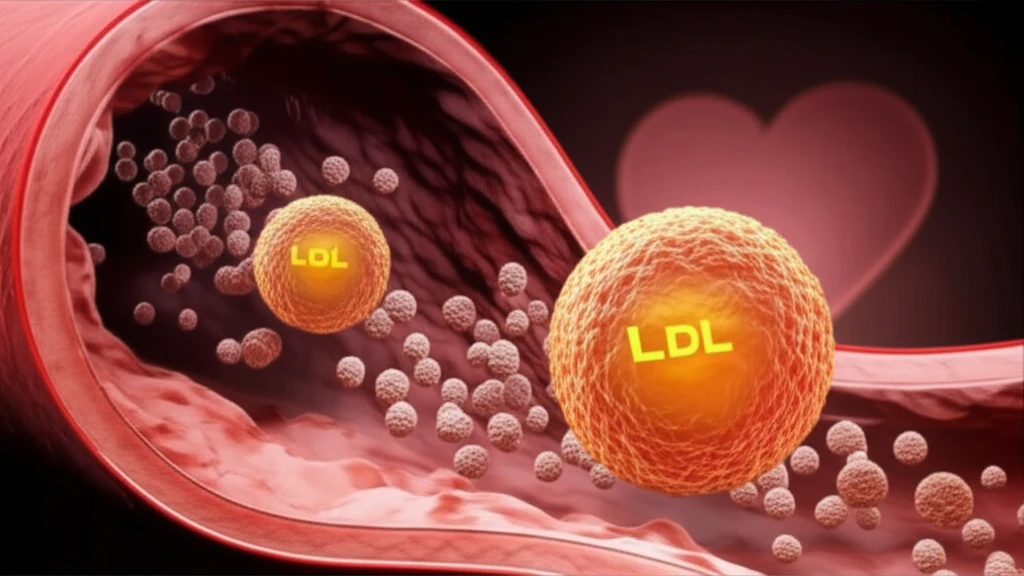
Illustration of small, dense LDL particles contributing to artery damage.

Decoding Diabetes: Why LDL Particle Size Matters for Your Heart

"New research reveals the critical role of LDL particle size in assessing heart disease risk for those with type 2 diabetes. Learn how to optimize your health."


For individuals managing type 2 diabetes, heart health is often a top concern. Coronary heart disease (CHD) is a leading cause of death in this population, with diabetics facing a significantly higher risk compared to their non-diabetic counterparts. Understanding the nuances of this risk is crucial for proactive health management.

Traditionally, LDL cholesterol levels have been a primary focus in assessing heart disease risk. However, standard LDL measurements don't tell the whole story. Emerging research highlights the importance of LDL particle size, particularly the presence of small dense LDL (sdLDL), as a key factor in predicting cardiovascular issues.

This article dives into the significance of LDL particle size for individuals with type 2 diabetes, drawing insights from a study on Korean patients. We'll explore how sdLDL impacts heart health and what steps you can take to mitigate your risk.

What Makes Small Dense LDL (sdLDL) So Risky?

Illustration of small, dense LDL particles contributing to artery damage.

Small dense LDL particles are more atherogenic, meaning they are more likely to contribute to the formation of plaque in the arteries. Several factors contribute to this increased risk:

Compared to larger, more buoyant LDL particles, sdLDL has several dangerous properties:

  • Easier Penetration: sdLDL particles can more easily penetrate the subendothelial spaces of arterial walls, initiating plaque formation.
  • Enhanced Binding: They exhibit increased binding to intimal proteoglycans, further promoting their accumulation in the arterial walls.
  • Increased Oxidation: sdLDL is more susceptible to oxidation, a process that triggers inflammation and accelerates plaque development.
  • Reduced Receptor Recognition: These particles are less efficiently recognized by LDL receptors, leading to a longer lifespan in the bloodstream and increased opportunities to damage arterial walls.
  • Fibrinogen Elevation: sdLDL is associated with elevated fibrinogen levels, a factor that promotes blood clot formation and further increases cardiovascular risk.
Essentially, sdLDL particles are smaller, denser, and stickier, making them more likely to get trapped in artery walls and cause damage. The study on Korean type 2 diabetics confirmed that these patients had a significantly smaller mean LDL particle size and a higher percentage of sdLDL compared to non-diabetic individuals.

Taking Control of Your Heart Health

While the study couldn't definitively link LDL particle size to vascular complications, it did highlight the increased risk of atherogenic sdLDL in obese diabetic patients with hypertriglyceridemia. By understanding the role of sdLDL and adopting a healthy lifestyle, you can take proactive steps to protect your heart and manage your diabetes effectively. Regular monitoring and personalized advice from your healthcare provider are essential for staying on the right track.

About this Article -

This article was crafted using a human-AI hybrid and collaborative approach. AI assisted our team with initial drafting, research insights, identifying key questions, and image generation. Our human editors guided topic selection, defined the angle, structured the content, ensured factual accuracy and relevance, refined the tone, and conducted thorough editing to deliver helpful, high-quality information.See our About page for more information.

This article is based on research published under:

DOI-LINK: 10.4093/dmj.2011.35.5.536, Alternate LINK

Title: Smaller Mean Ldl Particle Size And Higher Proportion Of Small Dense Ldl In Korean Type 2 Diabetic Patients

Subject: Endocrinology, Diabetes and Metabolism

Journal: Diabetes & Metabolism Journal

Publisher: Korean Diabetes Association

Authors: Sunghwan Suh, Hyung-Doo Park, Se Won Kim, Ji Cheol Bae, Alice Hyun-Kyung Tan, Hye Soo Chung, Kyu Yeon Hur, Jae Hyeon Kim, Kwang-Won Kim, Moon-Kyu Lee

Published: 2011-01-01

Everything You Need To Know

1

Why is small dense LDL (sdLDL) considered more dangerous than other types of LDL?

Small dense LDL (sdLDL) particles are more dangerous because they are smaller, denser, and stickier than larger LDL particles. This allows them to more easily penetrate the arterial walls, bind more readily, and undergo oxidation, leading to plaque formation and cardiovascular issues. Moreover, sdLDL particles have a longer lifespan in the bloodstream and are associated with elevated fibrinogen levels, further increasing the risk of blood clots. This is particularly important for individuals with type 2 diabetes because they are at a higher risk of developing Coronary Heart Disease (CHD), and sdLDL exacerbates this risk.

2

What is the significance of LDL particle size?

The size of LDL particles is significant because traditional LDL cholesterol tests do not reveal the whole story. While these tests measure the overall amount of LDL cholesterol, they do not distinguish between the different sizes of LDL particles. The presence of small dense LDL (sdLDL) is a key factor in predicting cardiovascular issues. The study on Korean type 2 diabetics showed a smaller mean LDL particle size and a higher percentage of sdLDL compared to non-diabetic individuals. This increased presence of sdLDL directly contributes to a higher risk of heart disease.

3

How do small dense LDL (sdLDL) particles contribute to heart disease?

Small dense LDL (sdLDL) particles increase the risk of heart disease in several ways. They can more easily penetrate the arterial walls, leading to plaque formation, due to their small size. They also bind more effectively to the arterial walls, enhancing their accumulation. Additionally, sdLDL particles are more susceptible to oxidation, which triggers inflammation and accelerates plaque development. They have a reduced recognition by LDL receptors, which means they stay in the bloodstream longer, and sdLDL is associated with elevated fibrinogen levels, promoting blood clot formation. All these factors combined significantly increase the risk of cardiovascular issues, especially for people with type 2 diabetes.

4

Why should someone with type 2 diabetes be concerned about LDL particle size?

Individuals with type 2 diabetes should be concerned about LDL particle size because they are at a significantly higher risk of developing heart disease. Studies show that these patients often have a higher percentage of small dense LDL (sdLDL) particles, which are more atherogenic, leading to increased plaque formation in the arteries. Understanding and managing LDL particle size is crucial for proactive health management and can help mitigate the elevated cardiovascular risk associated with diabetes. Therefore, monitoring LDL particle size is a critical step in managing their heart health.

5

What steps can I take to manage my heart health considering the information about LDL particle size?

While the study couldn't definitively link LDL particle size to vascular complications, it did highlight the increased risk of atherogenic sdLDL in obese diabetic patients with hypertriglyceridemia. Taking control of your heart health involves several proactive steps. This includes adopting a healthy lifestyle, such as a balanced diet and regular exercise. Regular monitoring of your health metrics, including LDL particle size, and seeking personalized advice from your healthcare provider are essential for managing your diabetes effectively and staying on the right track to prevent or manage cardiovascular complications. Understanding the significance of LDL particle size empowers individuals to make informed decisions about their health.

Newsletter Subscribe

Subscribe to get the latest articles and insights directly in your inbox.