
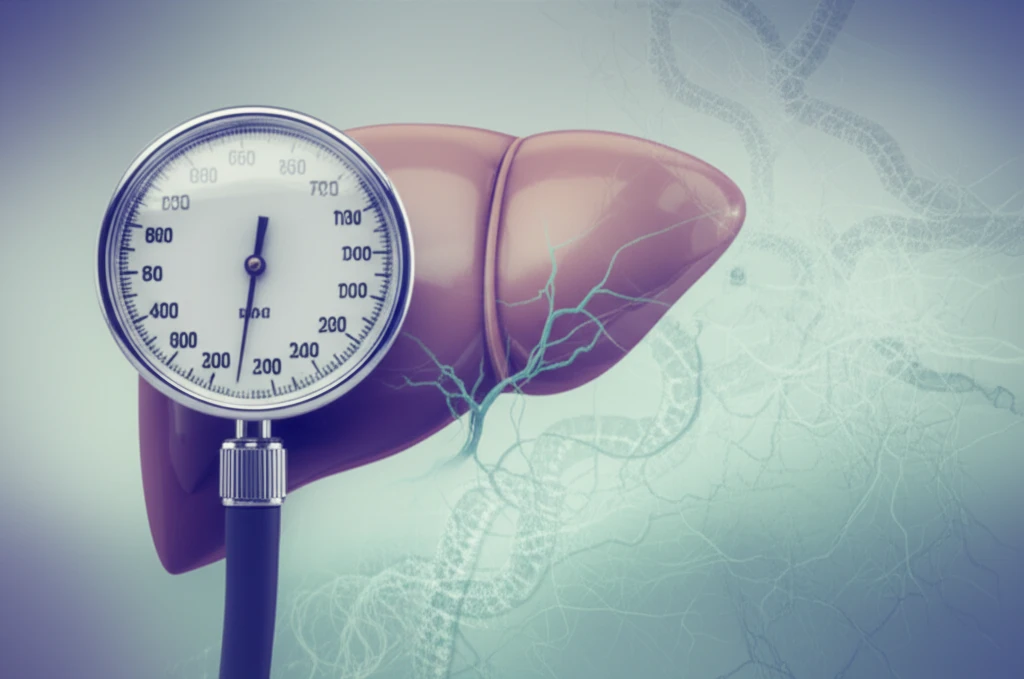
Surreal illustration linking liver health, peptide levels, and metabolic balance.

Decoding Diabetes: How Low Peptide Levels Could Signal Liver Trouble

"Emerging research unveils a surprising connection between low levels of a specific protein and increased risk of non-alcoholic fatty liver disease (NAFLD) in type 2 diabetes patients."


Non-alcoholic fatty liver disease (NAFLD), characterized by increased liver fat content, is a prevalent condition among individuals with type 2 diabetes (T2D). Beyond the discomfort and potential complications directly affecting the liver, NAFLD significantly elevates the risk of cardiovascular disease (CVD). This connection makes early detection and management of NAFLD crucial for improving the overall health outcomes of those with T2D.

The increased risk of CVD in NAFLD patients is linked to several factors. These include myocardial insulin resistance, reduced heart perfusion, and the accumulation of fat in the heart. However, a central component to NAFLD development stems from dysfunctional adipose tissue. When fat cells are overwhelmed, they can spill excess fatty acids into the liver, leading to NAFLD. Understanding this process helps researchers and healthcare providers find better ways to diagnose and manage the condition.

Recent studies suggest that natriuretic peptides (NPs), hormones known for regulating fluid balance and blood pressure, may also play a vital role in how the body handles fats. Lower levels of NPs have been observed in obese individuals and those with type 2 diabetes. This deficiency could affect fat distribution, potentially increasing the risk of NAFLD. Researchers are actively exploring the relationship between NP levels and liver health in diabetic patients.

The NP-Liver Connection: Unpacking the Research

Surreal illustration linking liver health, peptide levels, and metabolic balance.

A new study has investigated the link between N-terminal pro-B-type natriuretic peptide (NT-proBNP) levels and liver fat content in 120 patients with type 2 diabetes. The research, utilizing magnetic resonance spectroscopy to quantify liver fat, revealed a significant association between lower NT-proBNP levels and the presence of NAFLD.

Here's a breakdown of the study's key methods and findings:

  • Participants: 120 patients with type 2 diabetes.
  • Assessment: Liver fat content measured via magnetic resonance spectroscopy.
  • Key Finding: 48% of participants had NAFLD, showing significantly lower NT-proBNP levels.
  • Statistical Significance: After adjustments for factors such as age, gender, and kidney function, low NT-proBNP levels were associated with a higher likelihood of NAFLD.
The study revealed that reduced plasma NT-proBNP levels are independently associated with high liver fat content in patients with T2D. This suggests that NP deficiency may play a crucial role in the development of NAFLD in T2D patients. These finding highlights a novel area for potential therapeutic intervention.

What This Means for You

While this study provides valuable insights, further research is needed to fully understand the role of natriuretic peptides in NAFLD development. However, this finding emphasizes the importance of regular check-ups and monitoring of metabolic health, particularly for individuals with type 2 diabetes. Consulting with your healthcare provider about your risk factors and potential screening for NAFLD is a proactive step toward maintaining your liver health.

About this Article -

This article was crafted using a human-AI hybrid and collaborative approach. AI assisted our team with initial drafting, research insights, identifying key questions, and image generation. Our human editors guided topic selection, defined the angle, structured the content, ensured factual accuracy and relevance, refined the tone, and conducted thorough editing to deliver helpful, high-quality information.See our About page for more information.

Everything You Need To Know

1

What exactly is non-alcoholic fatty liver disease (NAFLD) and why should I be concerned about it if I have type 2 diabetes?

Non-alcoholic fatty liver disease (NAFLD) is a condition where there's an increased amount of fat in the liver, especially common in people with type 2 diabetes (T2D). It's important because, besides liver issues, it significantly raises the risk of cardiovascular disease (CVD). This happens due to factors like myocardial insulin resistance and fat accumulation in the heart, often stemming from dysfunctional adipose tissue that spills excess fatty acids into the liver. Early detection and management of NAFLD are crucial for better health outcomes in individuals with T2D.

2

What are natriuretic peptides (NPs), and how are they connected to diabetes and liver health?

Natriuretic peptides (NPs) are hormones that regulate fluid balance and blood pressure but are now found to also affect how the body handles fats. Lower levels of NPs have been seen in obese individuals and those with type 2 diabetes. This deficiency can impact fat distribution, potentially increasing the risk of NAFLD. Researchers are actively investigating how NP levels relate to liver health, particularly in diabetic patients.

3

What is N-terminal pro-B-type natriuretic peptide (NT-proBNP), and why is it being researched in relation to liver disease?

N-terminal pro-B-type natriuretic peptide (NT-proBNP) is a specific type of natriuretic peptide that has been studied in relation to liver fat content in individuals with type 2 diabetes. A study showed that lower levels of NT-proBNP are associated with a higher likelihood of having NAFLD. This suggests that NT-proBNP levels could serve as an indicator of liver health in T2D patients. Monitoring NT-proBNP levels might help identify those at risk of developing NAFLD.

4

What did the study reveal about the relationship between NT-proBNP levels and liver fat content in people with type 2 diabetes, and why is this significant?

The study showed that reduced plasma NT-proBNP levels are independently associated with high liver fat content in patients with T2D. This suggests that NP deficiency may play a crucial role in the development of NAFLD in T2D patients. It's significant because it points to a potential new target for therapies aimed at preventing or treating NAFLD in individuals with type 2 diabetes. Further research is needed to fully understand how NPs influence NAFLD development.

5

What is adipose tissue dysfunction, and how does it relate to liver health and type 2 diabetes?

Adipose tissue dysfunction is when fat cells become overwhelmed and spill excess fatty acids into the liver. This can lead to non-alcoholic fatty liver disease (NAFLD). This process is important because it connects how fat is stored in the body to liver health, especially in people with type 2 diabetes. Problems with adipose tissue can contribute to the development and progression of NAFLD, increasing the risk of cardiovascular disease.

Newsletter Subscribe

Subscribe to get the latest articles and insights directly in your inbox.