
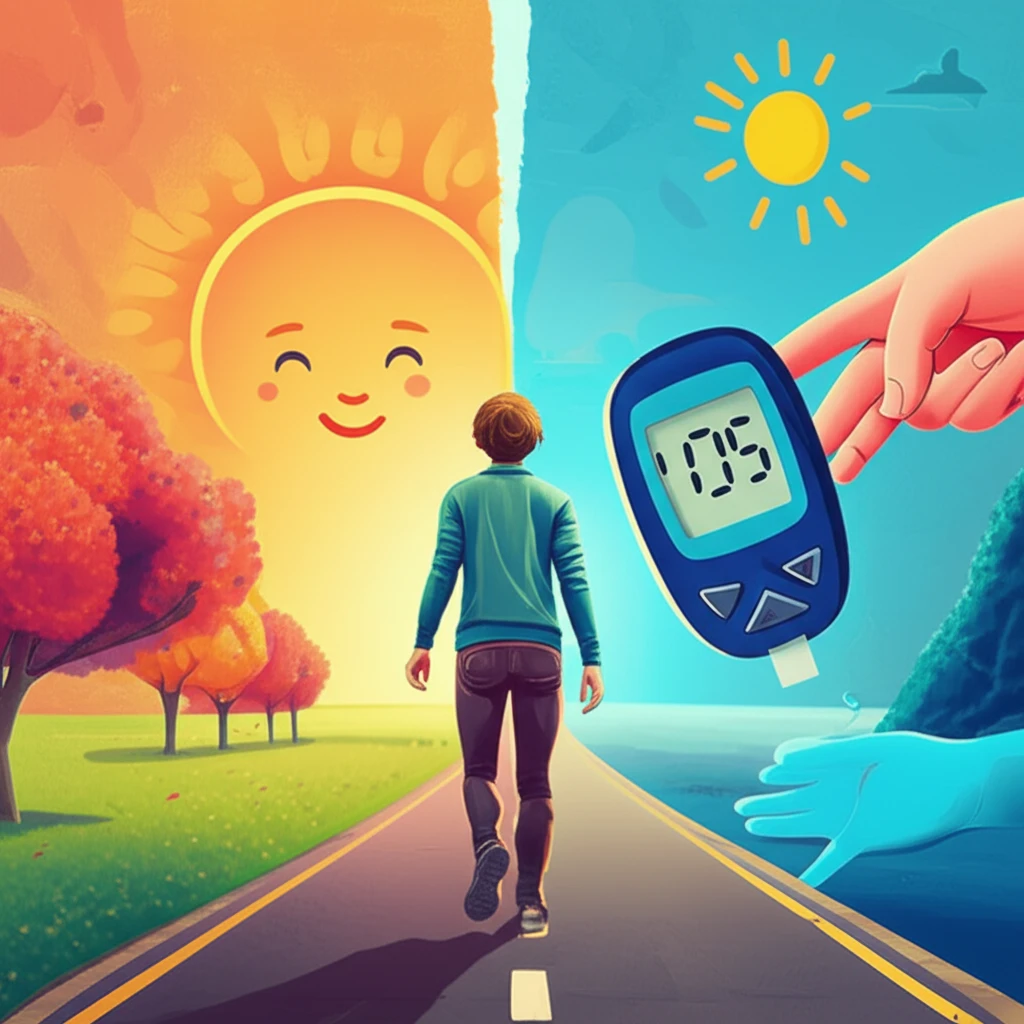
Digital illustration of a person walking on a path split in two, one side has a cheerful and colorful scene, the other side represents daily challenges, a glucose monitor, and a supportive hand, a symbol of hope.

Decoding Diabetes & Depression: Understanding the Hidden Link and Finding Hope

"Exploring the Connection Between Diabetes, Mental Health, and How to Seek Help"


In the intricate dance of our physical and mental health, sometimes the steps become tangled. One such complex choreography involves diabetes and depression, two conditions that frequently intertwine, creating a challenging landscape for those affected. While diabetes is a well-known metabolic disorder, its impact often extends beyond the physical, touching upon mental well-being in profound ways. Similarly, the weight of depression can influence the management and progression of diabetes. This article aims to shed light on this often-overlooked connection, offering a clearer understanding of the risks, the challenges, and most importantly, the pathways toward hope and improved quality of life.

The prevalence of depression among individuals with diabetes is significantly higher than in the general population. This isn't merely a coincidence; various factors contribute to this elevated risk. The chronic nature of diabetes, the demands of daily self-care, the potential for complications, and the emotional toll of managing a complex condition can all contribute to the development of depressive symptoms. Understanding these factors is the first step toward recognizing the problem and seeking appropriate support.

This article will explore the complex interplay between diabetes and depression. We will examine the scientific evidence, discuss the impact of this dual diagnosis on daily life, and highlight strategies for managing both conditions effectively. We'll also delve into the importance of seeking professional help, exploring available resources, and fostering a supportive environment. Our goal is to empower you with knowledge, providing a roadmap for navigating the challenges and finding renewed hope and well-being.

The Science Behind the Connection: Understanding the Risk Factors

Digital illustration of a person walking on a path split in two, one side has a cheerful and colorful scene, the other side represents daily challenges, a glucose monitor, and a supportive hand, a symbol of hope.

The link between diabetes and depression is not arbitrary; it's rooted in a complex web of biological, psychological, and social factors. Firstly, the physiological changes associated with diabetes, such as fluctuating blood sugar levels, can directly impact mood and cognitive function. These fluctuations can lead to feelings of irritability, fatigue, and difficulty concentrating—all symptoms of depression. Secondly, the stress of managing diabetes—including the constant need for monitoring, medication, and lifestyle adjustments—can be overwhelming, contributing to the development of depressive symptoms.

Beyond the physiological and psychological factors, there are also socio-economic and environmental considerations. People with diabetes often face increased financial burdens due to medical expenses and may experience social isolation due to the demands of their condition. Furthermore, the risk of developing complications, such as heart disease, nerve damage, and vision problems, can be a source of significant anxiety and depression. Genetic predisposition and family history can also play a role.

  • Biochemical Imbalance: Fluctuations in blood sugar levels and hormonal imbalances affect mood and cognitive function.
  • Chronic Stress: The constant demands of diabetes management can lead to chronic stress, increasing the risk of depression.
  • Social Isolation: Financial and social burdens can lead to isolation, impacting mental well-being.
  • Complications: The fear and reality of diabetes-related complications heighten anxiety and depression.
  • Family History and Genetics: A family history of diabetes or depression can increase your risk.
Recognizing these risk factors is important. If you or a loved one has diabetes and is experiencing symptoms of depression, understanding these connections can help you seek the right support and address the underlying issues.

Taking Charge: Empowering Yourself and Seeking Support

Living with diabetes and depression doesn't mean you have to navigate these challenges alone. Seeking professional help is a crucial step. This could involve a primary care physician, a mental health professional (therapist or psychiatrist), or a diabetes educator. They can help you develop a tailored treatment plan, which may include medication, therapy, and lifestyle adjustments. Support groups, online forums, and community organizations are also valuable resources, offering a space to share experiences, learn from others, and build a supportive network. Remember, there is hope, and with the right support, it's possible to live a fulfilling life while managing both diabetes and depression.

About this Article -

This article was crafted using a human-AI hybrid and collaborative approach. AI assisted our team with initial drafting, research insights, identifying key questions, and image generation. Our human editors guided topic selection, defined the angle, structured the content, ensured factual accuracy and relevance, refined the tone, and conducted thorough editing to deliver helpful, high-quality information.See our About page for more information.

This article is based on research published under:

DOI-LINK: 10.1016/j.ando.2018.06.900, Alternate LINK

Title: Dépistage De La Dépression Chez Les Patients Diabétiques Par Le Hospital Anxiety And Depression Scale : Étude Prospective De 90 Patients

Subject: Endocrinology

Journal: Annales d'Endocrinologie

Publisher: Elsevier BV

Authors: S. Bejaoui, S. Safi, I. Jemai, L. Affes

Published: 2018-09-01

Everything You Need To Know

1

Why are individuals with diabetes more prone to depression?

Individuals with diabetes face a higher risk of depression due to a combination of factors. The chronic nature of diabetes, the daily demands of self-care, potential complications like heart disease and nerve damage, and the emotional toll of managing a complex condition can all contribute to depressive symptoms. Physiological changes, such as fluctuating blood sugar levels, can also directly impact mood and cognitive function. The constant need for monitoring, medication, and lifestyle adjustments inherent in diabetes management can lead to chronic stress, further elevating the risk of depression.

2

How do fluctuating blood sugar levels affect mood and cognitive function in people with diabetes?

Fluctuating blood sugar levels, a common occurrence in diabetes, can significantly affect mood and cognitive function. These fluctuations can lead to feelings of irritability, fatigue, and difficulty concentrating – all symptoms associated with depression. The instability in glucose levels can disrupt the delicate balance of neurotransmitters in the brain, impacting emotional regulation and cognitive processes. Maintaining stable blood sugar levels through careful management of diabetes is therefore crucial for both physical and mental well-being.

3

What role does social isolation play in the connection between diabetes and depression?

Social isolation can exacerbate the risk of depression in individuals with diabetes. The financial burdens associated with medical expenses and the lifestyle restrictions required for managing the condition can lead to reduced social engagement and feelings of isolation. This lack of social support can negatively impact mental well-being, increasing vulnerability to depressive symptoms. Building a supportive network through support groups, online forums, and community organizations is essential to combat the effects of social isolation.

4

Besides therapy and medication, what lifestyle adjustments can help in managing both diabetes and depression?

Beyond therapy and medication, several lifestyle adjustments can significantly aid in managing both diabetes and depression. Regular physical activity helps regulate blood sugar levels and releases endorphins, which have mood-boosting effects. A balanced diet, rich in nutrients and low in processed foods, supports both physical and mental health. Practicing stress-reduction techniques such as mindfulness, meditation, or yoga can help manage the chronic stress associated with diabetes. Establishing a consistent sleep schedule and prioritizing adequate rest is also crucial for regulating mood and energy levels.

5

What specific types of professional help are available for individuals dealing with both diabetes and depression, and how do these resources contribute to overall well-being?

Individuals facing both diabetes and depression have access to various types of professional help tailored to address their unique needs. A primary care physician can provide initial assessment and coordinate care. Mental health professionals, including therapists and psychiatrists, offer counseling, therapy, and medication management for depression. Diabetes educators provide guidance on managing blood sugar levels, diet, and lifestyle adjustments. Support groups, online forums, and community organizations offer valuable peer support and a sense of community. These resources contribute to overall well-being by providing comprehensive care that addresses both the physical and mental aspects of these interconnected conditions, fostering empowerment and improved quality of life.

Newsletter Subscribe

Subscribe to get the latest articles and insights directly in your inbox.