
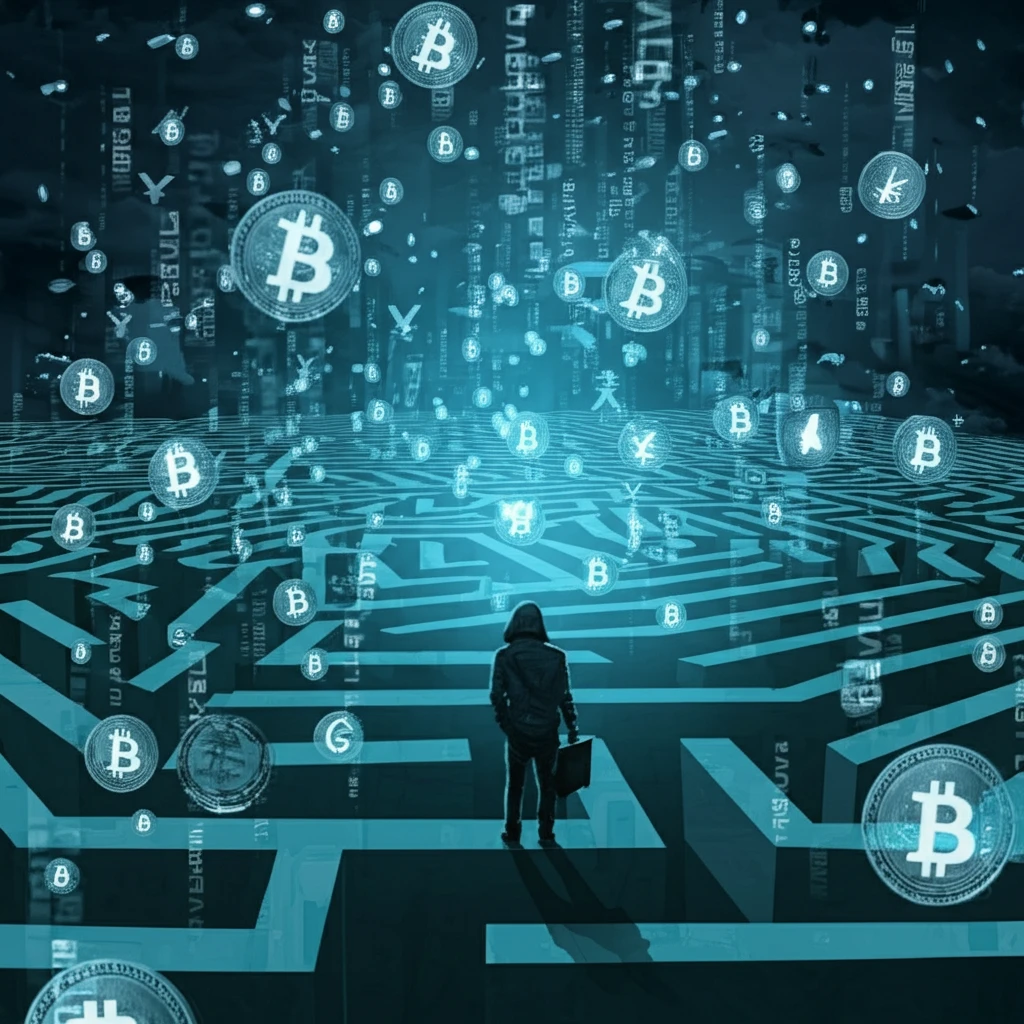
Decoding DEX Costs: How to Avoid Slippage on Uniswap

"A deep dive into the hidden costs of decentralized exchange trading and how to navigate them for better returns."
Decentralized exchanges (DEXs) like Uniswap have revolutionized the way we trade digital assets, offering a 'trustless' alternative to traditional exchanges. By using cryptography and blockchain technology, DEXs allow users to transact without intermediaries, theoretically lowering barriers to participation and making trading fairer and more efficient. However, the reality of trading on DEXs isn't always as straightforward as it seems.
While DEXs eliminate the need for a central authority, they introduce a unique set of costs and complexities that traders need to understand to maximize their profitability. Unlike traditional exchanges, DEXs operate on a public mempool of pending transactions, making them susceptible to issues like slippage and Miner Extractable Value (MEV). These factors can significantly impact the final execution price of a trade, turning what appears to be a simple swap into a costly endeavor.
This article will delve into the hidden costs of trading on Uniswap, focusing on slippage, its causes, and how traders can minimize its impact. We'll break down the components of transaction costs, compare trading efficiency across different pools, and explore strategies to avoid common pitfalls. Whether you're a seasoned DeFi user or just starting, this guide will equip you with the knowledge to navigate the DEX landscape with confidence.
Understanding Slippage: The Key to DEX Trading Efficiency
Slippage is the difference between the expected price of a trade and the actual price at which the trade is executed. It occurs because the price of an asset can change between when a transaction is submitted and when it's processed on the blockchain. This is especially true for DEXs like Uniswap, where transaction speeds and network congestion can cause delays.
- Benign Slippage: This is due to normal market fluctuations and the time it takes for a transaction to be processed.
- Adversarial Slippage: This is caused by malicious actors who exploit the transparent nature of the mempool to front-run or sandwich transactions, extracting value at the expense of other traders.
The Future of DEX Trading: Transparency and Efficiency
As the DeFi ecosystem continues to evolve, DEXs like Uniswap hold immense promise for democratizing access to financial markets. By understanding the hidden costs of trading, particularly slippage, and adopting strategies to mitigate its impact, traders can unlock the full potential of these platforms. Further advancements in protocol design and MEV infrastructure will pave the way for a more transparent, efficient, and equitable trading experience for all.