
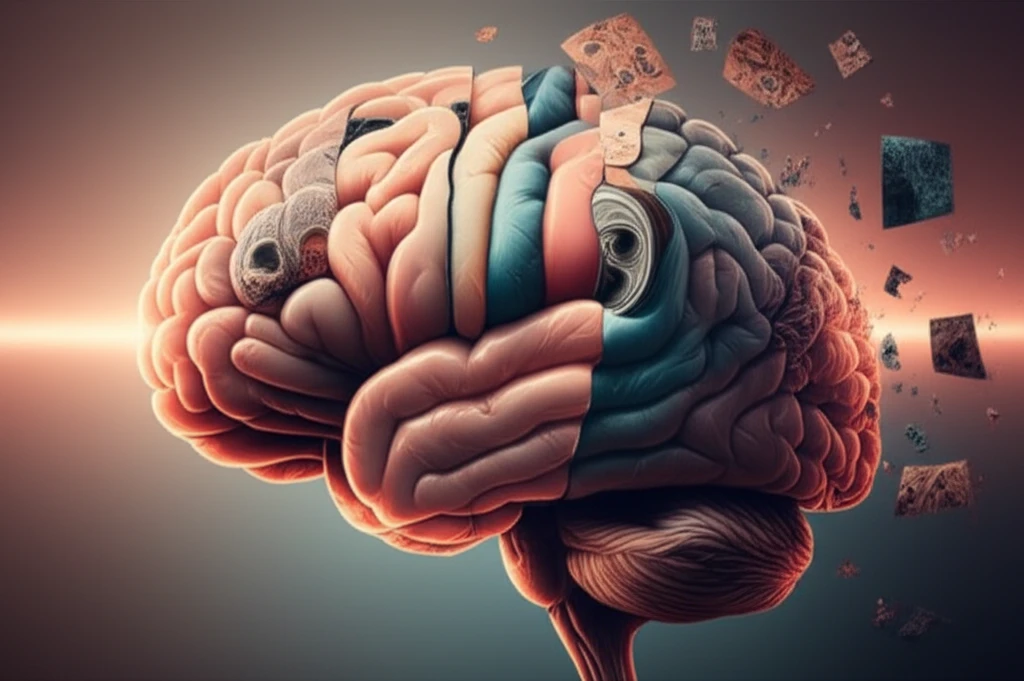
Decoding Depression: How Cortisol Sensitivity Impacts Your Mental Health

"Research reveals a surprising link between cortisol insensitivity, memory bias, and the potential for innovative depression treatments."
For decades, scientists have explored the connection between cortisol, a key stress hormone, and depression. While it's known that depressed individuals often exhibit cortisol insensitivity, meaning their bodies don't respond to cortisol as effectively, the precise implications for mental health, especially regarding emotional processing and memory, have remained unclear. Recent research is shedding light on this complex relationship, opening doors to new understandings and potential treatments.
Cortisol is far from a villain; it's essential for regulating various bodily functions, including managing stress, controlling blood sugar levels, and reducing inflammation. It interacts with receptors throughout the body, including the brain, influencing mood, memory, and overall cognitive function. When the body becomes less sensitive to cortisol's signals, this delicate balance is disrupted. This disruption is where the connection to depression emerges.
This article will delve into a study that investigated how cortisol insensitivity affects emotional memory bias in women with varying levels of depression. We'll explore how systemic cortisol insensitivity, measured through a dexamethasone suppression test (DST), relates to cognitive sensitivity to cortisol, specifically changes in how individuals form negatively biased memories.
Cortisol, Memory, and the Depressed Brain: Unpacking the Research
The study, involving sixty-five pre-menopausal women, used a combination of the at-home DST and experimental sessions involving memory encoding and recall. Participants were given either cortisol or a placebo before encoding emotional pictures, and their memory recall was tested 48 hours later. Researchers then analyzed whether systemic cortisol insensitivity, as indicated by the DST, predicted how their memory formation changed under the influence of cortisol versus the placebo.
- Cortisol insensitivity was associated with more severe depression.
- Cortisol insensitivity was linked to flatter diurnal cortisol rhythms (less variation in cortisol levels throughout the day).
- Cortisol insensitivity predicted a greater negative memory bias for pictures encoded during the placebo sessions.
- Cortisol insensitivity predicted a reduction in negative memory bias for pictures encoded during the cortisol sessions.
New Avenues for Understanding and Treating Depression
This research reinforces the idea that cortisol insensitivity is a significant factor in depression, connecting it to both the severity of depressive symptoms and the dysregulation of the body's stress response system. Furthermore, the novel finding that cortisol insensitivity relates to negative memory bias and its potential alleviation through cortisol administration opens exciting possibilities.
While chronically elevated levels of cortisol can be harmful, the study hints that carefully timed interventions to boost cortisol signals could be cognitively beneficial for specific individuals. This could lead to personalized treatments that target the underlying mechanisms of cortisol insensitivity, potentially improving emotional processing and reducing negative biases.
Future research should investigate the potential benefits of therapies that target cortisol signaling, explore the role of early life experiences in shaping cortisol sensitivity, and further examine the complex interplay between stress hormones and cognitive function in depression. By continuing to unravel these connections, we can pave the way for more effective and targeted interventions for this widespread and debilitating condition.