
Decoding Colon Health: How Oxidative Stress and Fas Ligand Impact Your Gut

"A closer look at how azoxymethane affects the colon and the critical role of Fas ligand in maintaining gut health."
Maintaining a healthy colon is vital for overall well-being, influencing everything from nutrient absorption to immune function. Recent research has begun to unravel the complex interplay of factors that contribute to colon health, including the impact of oxidative stress and the role of specific proteins like Fas ligand (FasL). Understanding these elements is key to preventing diseases and promoting a balanced gut.
Apoptosis, or programmed cell death, is a crucial process in maintaining tissue homeostasis. It eliminates damaged or unnecessary cells, preventing them from causing harm. In the colon, apoptosis helps regulate the balance of cell growth and death, ensuring the lining of the colon remains healthy. Disruptions in this process can lead to various health issues, including cancer.
Oxidative stress, caused by an imbalance between free radicals and antioxidants, can significantly disrupt cellular functions. This imbalance can be triggered by various factors, including environmental toxins and certain chemicals. One such chemical, azoxymethane (AOM), has been shown to induce oxidative stress in the colon, affecting the normal apoptotic processes and potentially leading to the development of abnormal cell growth. Understanding how AOM affects the colon and the body's defense mechanisms is vital for developing preventative strategies.
Why Colon Health Matters
Colon health is an important part of overall digestive well-being, but the specific impact of oxidative stress and Fas ligand requires careful interpretation. Available evidence may vary by condition, population, and research method. Readers should therefore treat broad claims about these mechanisms as areas of ongoing medical investigation rather than settled conclusions.
Current Approaches
Standard colon-health guidance generally emphasizes routine medical care, attention to symptoms, and healthy lifestyle habits. These approaches can support general well-being but may not fully explain the biological roles of oxidative stress or Fas ligand. Their effectiveness and limitations can differ among individuals, so professional evaluation remains important.
From Anatomy to Function
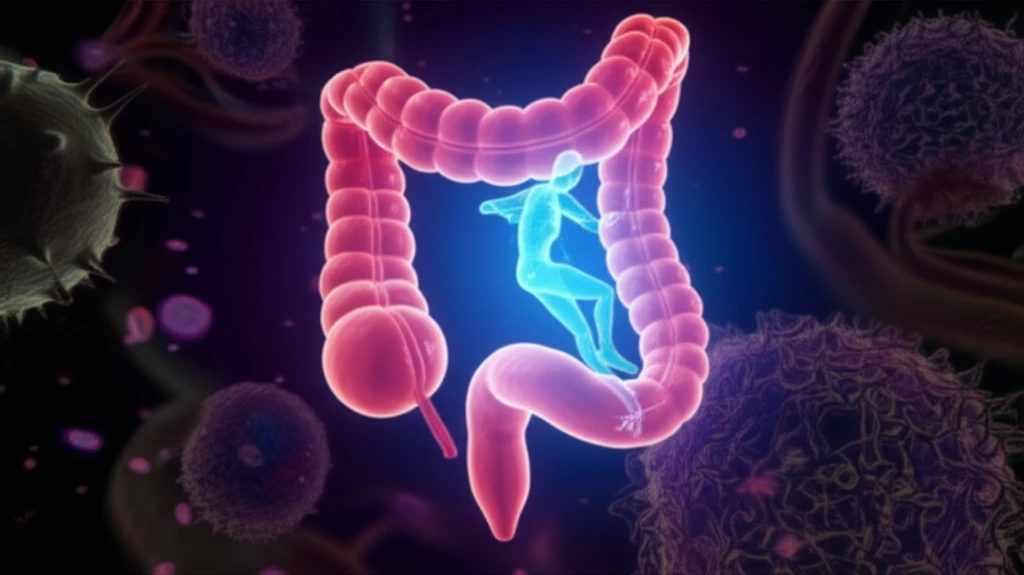
The large intestine includes the cecum, colon, rectum, and anus, forming a tube that runs from the small intestine to the anal canal. The colon ascends through the abdomen, crosses it as the transverse colon, and descends toward the rectum. In humans, the large intestine is about 1.5 metres, or 5 feet, long, and its role includes turning food waste into stool. The punctuation mark called a colon is a separate subject from the anatomical organ.
Fas Ligand: Your Gut's Guardian Angel?
Fas ligand (FasL) is a protein that plays a pivotal role in the regulation of apoptosis. It belongs to the tumor necrosis factor (TNF) family and is involved in initiating cell death pathways when it binds to its receptor, Fas, on the cell surface. This interaction is critical for maintaining immune system balance and preventing the proliferation of cancerous cells. In the context of colon health, FasL helps ensure that damaged or mutated cells are eliminated, thus preventing them from contributing to tumor development.
- The study involved two groups of rats: a control group and a group treated with AOM.
- Colon samples were collected to quantify FasL expression in different regions of the colon crypts—specifically, the top (luminal surface) and base (stem cell niche).
- The results showed that AOM significantly decreased FasL expression in both the top and base of the colon crypts compared to the control group.
- Interestingly, within the AOM-treated group, there was no significant difference in FasL expression between the top and base of the crypts.
An Evolving Research Area
Research into colon biology continues to examine how cellular processes may influence gut health. Oxidative stress and Fas ligand are topics that require interpretation within specific experimental and clinical contexts. Because findings may be preliminary or condition-specific, new studies and reviews are needed before broad conclusions can be drawn.
Limits of Current Evidence
Explanations that attribute colon problems to a single biological mechanism may oversimplify a complex organ system. Evidence can be limited by differences in study design, patient populations, and measured outcomes. Claims about oxidative stress or Fas ligand should therefore be assessed cautiously rather than treated as universally applicable.
Interpreting Different Perspectives
Comparing approaches to colon health requires distinguishing general wellness advice from mechanistic research. Lifestyle guidance may address broad health goals, while laboratory studies may focus on specific cellular pathways. These forms of evidence can inform one another, but they should not automatically be treated as equivalent.
What This Means for You
Understanding the interplay between oxidative stress, FasL, and colon health can empower you to make informed decisions about your lifestyle and diet. While more research is needed, the current findings highlight the importance of minimizing exposure to oxidative stress and supporting the body's natural defense mechanisms. Adopting a balanced diet rich in antioxidants, managing stress levels, and avoiding environmental toxins can contribute to a healthier colon and overall well-being.
Practical Colon Support
The colon is part of the large intestine and helps turn food waste into stool. Health.com reports that drinking water, eating fiber, and getting exercise can support a healthy colon. These measures are general wellness guidance and do not by themselves establish how oxidative stress or Fas ligand affect an individual’s gut. Medical concerns should be discussed with a qualified clinician.
Where Research May Lead
Future work may clarify how oxidative stress and Fas ligand relate to different colon conditions and whether they can guide prevention or treatment. Progress will depend on well-designed studies that connect molecular findings with meaningful clinical outcomes. Until then, these mechanisms should be viewed as promising but not definitive explanations of colon health.
A Wider Health Context
Colon health exists within a broader system that includes diet, activity, access to care, and individual medical history. Biological mechanisms alone cannot capture all of the factors that shape digestive health. A balanced perspective should combine scientific research with practical care and attention to the person’s circumstances.
Personal Health Decisions
People experience colon-health concerns differently, and general information cannot replace individualized medical advice. Paying attention to symptoms and discussing persistent concerns with a healthcare professional can help guide appropriate evaluation. Healthy habits may support general well-being, but they should not be presented as a guaranteed solution for every colon condition.