
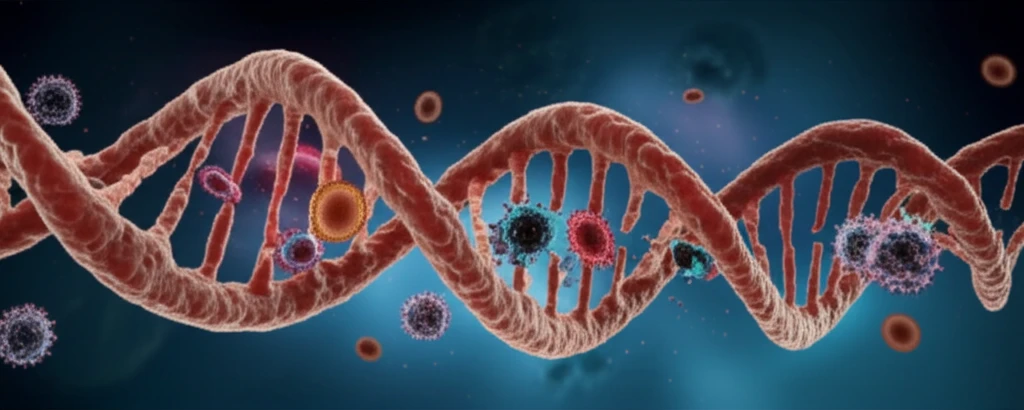
A digital illustration depicting the DNA double helix unraveling, with colon cancer cells visible, representing genetic research into colorectal cancer.

Decoding Colon Cancer: Unraveling the Genetic Secrets Behind This Silent Threat

"A Deep Dive into the Genetic Mutations Fueling Colorectal Cancer and What It Means for You"


Colon cancer, also known as colorectal cancer, is a significant global health concern, affecting millions of people each year. While advancements in treatment and early detection have improved survival rates, the disease remains complex, with many aspects still shrouded in mystery. Recent studies have illuminated the critical role of genetics in the development and progression of colon cancer, offering new avenues for understanding, diagnosing, and treating this disease. This article delves into the groundbreaking research exploring the genetic underpinnings of colon cancer, offering a comprehensive overview of the key findings and their implications.

At the heart of this research lies the investigation of specific genes and their mutations. Scientists are uncovering how changes in these genes can lead to the uncontrolled growth of cells, a hallmark of cancer. One critical area of focus is microsatellite instability (MSI), a genetic characteristic that plays a role in many cancers, including colon cancer. This article provides a detailed exploration of the genes affected, the types of mutations observed, and how these findings are shaping our understanding of colon cancer.

This article is designed for a broad audience, including those with no prior scientific background. We aim to present this complex information in an accessible and engaging way, breaking down the science into easily digestible components. Our goal is to empower you with knowledge, offering insights into the latest research and its potential impact on early detection, prevention, and treatment. Whether you are a patient, a caregiver, or simply someone interested in health and wellness, this article will provide valuable information and promote awareness about colon cancer.

Unmasking the Culprits: Key Genes and Their Role in Colon Cancer

A digital illustration depicting the DNA double helix unraveling, with colon cancer cells visible, representing genetic research into colorectal cancer.

Several genes have been identified as key players in colon cancer. These genes, when mutated, can disrupt normal cellular processes and contribute to tumor development. The research highlights several genes of interest, including ANK3, HACD4, TP53BP1, MFN1, LCMT2, RNMT, TRMT6, METTL8, and METTL16. Each of these genes has a specific function within the cell, and mutations can lead to a variety of consequences, such as uncontrolled cell growth, resistance to programmed cell death (apoptosis), and disruptions in DNA repair mechanisms.

The study’s primary focus was on frameshift mutations. Frameshift mutations are changes that occur when DNA sequences are altered, leading to a shift in the way the genetic code is read. These changes can cause a protein to be non-functional or altered, leading to tumor development. The researchers examined the presence of these mutations in a group of patients with and without MSI, a characteristic that makes some tumors more susceptible to mutations.

  • ANK3 (Ankyrin 3): Involved in cell structure and survival, its mutations can promote cancer cell growth.
  • HACD4: Plays a role in fatty acid synthesis; mutations may disrupt metabolic pathways.
  • TP53BP1: Essential for DNA repair and tumor suppression; its inactivation can lead to genomic instability.
  • MFN1 (Mitofusin 1): Regulates mitochondrial function; mutations can affect cell death pathways.
  • LCMT2, RNMT, TRMT6, METTL8, and METTL16: These genes are involved in DNA methylation and RNA modifications.
The research observed that these genes harbored mononucleotide repeats in their coding sequences, which are prone to frameshift mutations in cancers with high MSI. By studying 124 cases of colon cancer, the team discovered frameshift mutations in several of these genes within tumors with MSI-H, but not in tumors that were microsatellite stable. The findings offer important insights into how these genetic changes drive colon cancer development and progression.

Looking Ahead: The Future of Colon Cancer Research and Treatment

The study’s findings provide a crucial foundation for future research. By pinpointing the key genes and mutations involved in colon cancer, scientists can develop targeted therapies, more effective screening methods, and personalized treatment plans. The ongoing research into the role of genetics in colon cancer is offering new hope for improved outcomes and a better quality of life for those affected by this disease. As our understanding of colon cancer evolves, so too will our ability to fight this disease effectively.

About this Article -

This article was crafted using a human-AI hybrid and collaborative approach. AI assisted our team with initial drafting, research insights, identifying key questions, and image generation. Our human editors guided topic selection, defined the angle, structured the content, ensured factual accuracy and relevance, refined the tone, and conducted thorough editing to deliver helpful, high-quality information.See our About page for more information.

Everything You Need To Know

1

What is the significance of the genes ANK3, HACD4, TP53BP1, MFN1, LCMT2, RNMT, TRMT6, METTL8, and METTL16 in colon cancer?

These genes play crucial roles in cellular processes, and their mutations can contribute to colon cancer development. ANK3 is involved in cell structure and survival; HACD4 participates in fatty acid synthesis; TP53BP1 is essential for DNA repair; MFN1 regulates mitochondrial function; and LCMT2, RNMT, TRMT6, METTL8, and METTL16 are involved in DNA methylation and RNA modifications. Mutations in these genes, particularly frameshift mutations, can disrupt these functions, leading to uncontrolled cell growth, genomic instability, and disruptions in metabolic pathways, ultimately promoting tumor development.

2

What is microsatellite instability (MSI) and how does it relate to the genetic mutations observed in colon cancer?

Microsatellite instability (MSI) is a genetic characteristic where there are errors in the DNA replication process, especially in repetitive DNA sequences called microsatellites. MSI is a feature of some colon cancers, making them more prone to mutations. The research found that tumors with high MSI (MSI-H) were more likely to have frameshift mutations in genes such as ANK3, HACD4, TP53BP1, MFN1, LCMT2, RNMT, TRMT6, METTL8, and METTL16, because MSI increases the likelihood of errors during DNA replication within the mononucleotide repeats found in these genes.

3

How do frameshift mutations contribute to the development of colon cancer?

Frameshift mutations are changes in the DNA sequence that alter how the genetic code is read. These mutations occur when DNA sequences are altered, shifting the reading frame. This can result in a protein that is non-functional or has altered function. In the context of colon cancer, frameshift mutations in genes like ANK3, HACD4, TP53BP1, MFN1, LCMT2, RNMT, TRMT6, METTL8, and METTL16 can disrupt their normal cellular functions. For instance, a frameshift mutation in TP53BP1, which is essential for DNA repair, can lead to genomic instability. This instability promotes tumor development and progression.

4

What are the implications of identifying specific genetic mutations in colon cancer, such as those in ANK3, HACD4, TP53BP1, MFN1, LCMT2, RNMT, TRMT6, METTL8, and METTL16?

Identifying specific genetic mutations offers several key implications. First, it deepens our understanding of the molecular mechanisms driving colon cancer, including genes like ANK3, HACD4, TP53BP1, MFN1, LCMT2, RNMT, TRMT6, METTL8, and METTL16. Second, it can lead to the development of targeted therapies designed to address the specific mutations found in a patient's tumor. Third, it can improve screening methods by allowing for earlier detection of mutations. Finally, it paves the way for personalized treatment plans that are tailored to an individual's genetic profile, potentially improving outcomes and quality of life.

5

How does the study of genes like ANK3, HACD4, TP53BP1, MFN1, LCMT2, RNMT, TRMT6, METTL8, and METTL16 influence the future of colon cancer research and treatment?

The identification and study of genes such as ANK3, HACD4, TP53BP1, MFN1, LCMT2, RNMT, TRMT6, METTL8, and METTL16 significantly influence the future of colon cancer research and treatment. The findings provide a foundation for developing targeted therapies that specifically address mutations in these genes. This knowledge allows for the creation of more effective screening methods to detect these mutations early on. This research opens avenues for personalized treatment plans that tailor interventions based on an individual's genetic makeup. Furthermore, as our understanding of these genetic factors deepens, it will drive advancements in prevention strategies and improve the overall outcomes for individuals affected by this disease.

Newsletter Subscribe

Subscribe to get the latest articles and insights directly in your inbox.