
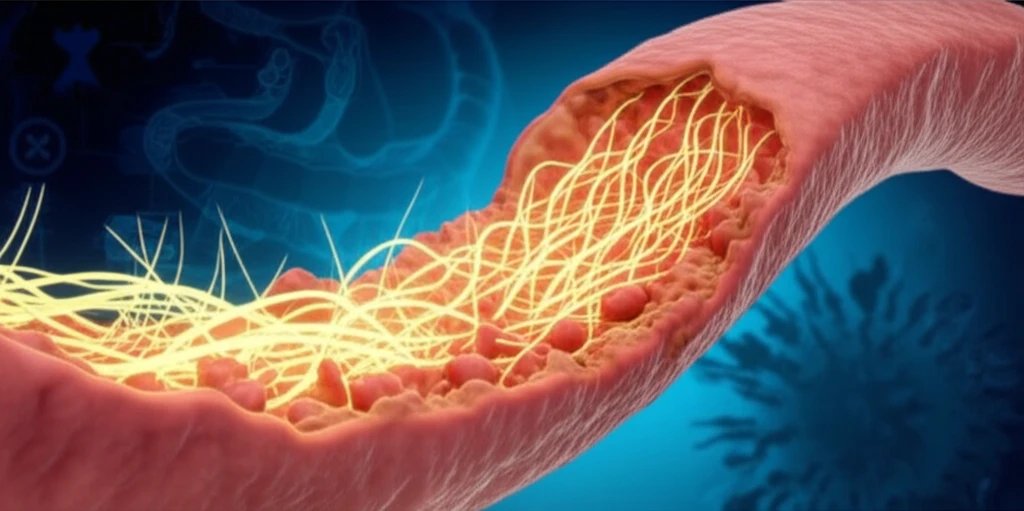
Decoding Colitis: Can Keratin Levels Predict Cancer Risk?

"New research suggests that monitoring keratin regulation during colitis remission may be key to assessing future cancer risk, offering a potential new avenue for preventative strategies."
Ulcerative colitis (UC) is a chronic inflammatory bowel disease that increases the risk of developing colorectal cancer. While the severity and duration of inflammation are known risk factors, new research is uncovering the importance of cellular changes during periods of remission. These changes within the cells lining the colon could provide clues about future cancer development.
Keratins, essential proteins that form the structural framework of these cells, are now under the spotlight. A recent study published in BMJ Open Gastroenterology investigates how keratin levels and their modifications fluctuate in UC patients with varying degrees of cancer risk. The study's findings suggest that the way keratin levels are restored during remission may significantly influence subsequent cancer risk.
This article will explore the key findings of this research, explaining how inflammation impacts keratin levels, why their restoration during remission matters, and how this knowledge could potentially lead to new strategies for assessing and mitigating cancer risk in UC patients. We'll translate the complex science into understandable insights, offering a glimpse into the future of personalized preventative care.
Keratins: The Unsung Heroes of Gut Health
Keratins are the major structural proteins in epithelial cells, like those lining the colon. They're not just passive building blocks; they actively maintain the integrity of the intestinal lining, protecting it from damage and regulating cell signaling pathways. Think of them as the scaffolding that keeps everything in order, allowing the cells to function correctly.
- Acute Inflammation: Active inflammation significantly reduces keratin levels (K8, K18, K19) and vimentin in the colonic mucosa.
- Remission Matters: In patients with long-standing UC who are in remission, keratin levels tend to be higher compared to controls, suggesting a restoration process.
- Dysplasia Danger: However, in patients with dysplasia (precancerous changes), this restoration of keratin levels appears inadequate, indicating a potential link to increased cancer risk.
Keratin Regulation: A New Frontier in Colitis Management
This study sheds light on the dynamic changes in keratin levels during the course of ulcerative colitis and suggests that monitoring these changes, especially during remission, could offer a new way to assess cancer risk. It appears that merely achieving remission is not enough; the way the body restores its cellular infrastructure, specifically keratin networks, matters too.
While more research is needed, the findings suggest that measuring vimentin to K8 ratios, phosphorylated K8 levels, or even identifying novel keratin forms could serve as potential biomarkers for aggressive disease phenotypes. Further studies will determine whether repeated inflammation hinders keratin recovery, increasing cancer risk.
Ultimately, understanding how to modulate keratin expression could lead to targeted strategies for preventing colitis-associated cancer. This research paves the way for a future where personalized interventions, focused on optimizing cellular recovery, improve long-term outcomes for UC patients.