
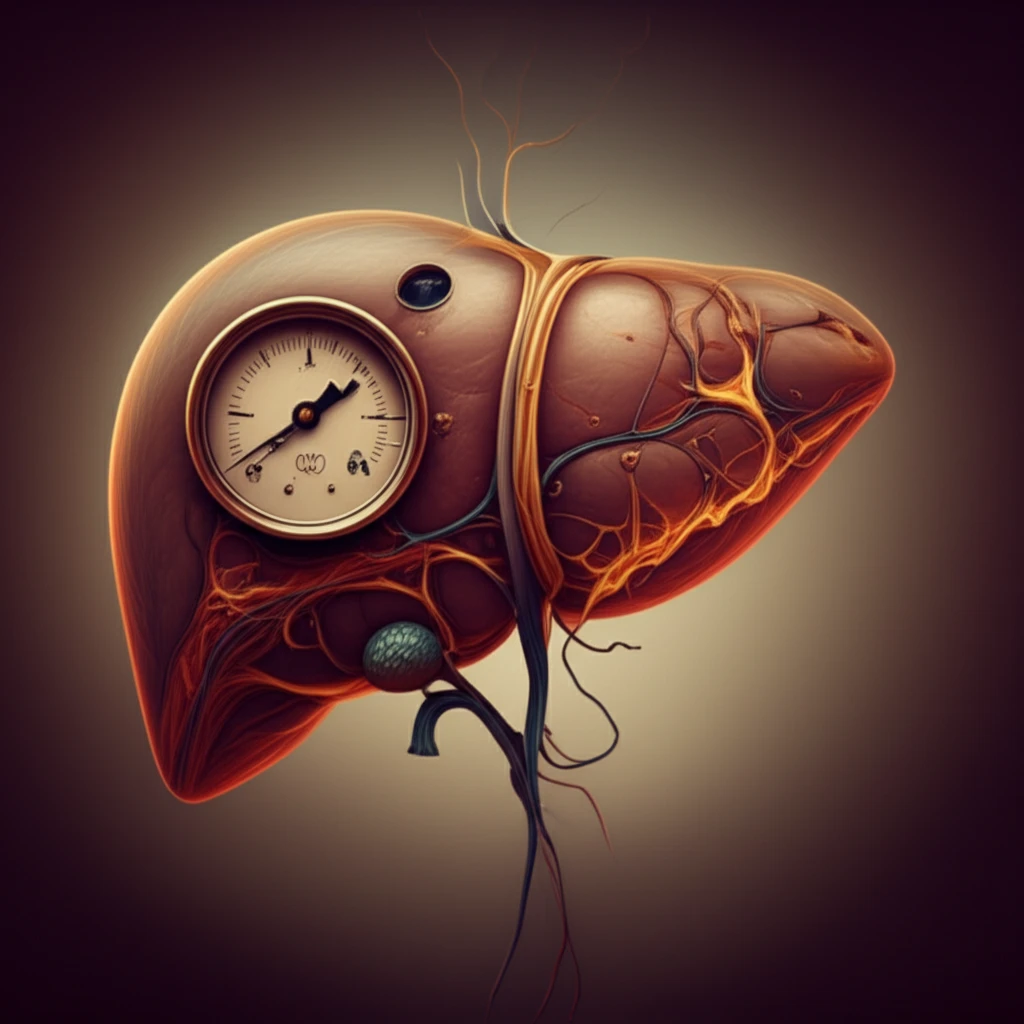
Stylized liver with interconnected pathways and pressure gauge

Decoding Cirrhosis: How Understanding Portal Hypertension Can Save Your Liver

"A new approach to risk stratification emphasizes the critical role of Hepatic Venous Pressure Gradient (HVPG) in managing cirrhosis and improving patient outcomes."


Cirrhosis, once viewed as an end-stage liver disease, is now understood as a dynamic, multi-stage condition. Recent advancements in antiviral drugs and treatment strategies for portal hypertension complications have transformed our perception, making tailored risk management a reality. But navigating this landscape requires a deeper understanding of the underlying mechanisms, particularly the role of portal hypertension.

At the heart of cirrhosis lies architectural changes within the liver – the development of regenerative nodules and fibrotic septa. These alterations increase resistance to blood flow, leading to portal hypertension, a major prognostic factor. Experts now advocate for a classification system that considers both structural and functional changes in the liver, moving beyond traditional staging methods.

This article explores the critical role of Hepatic Venous Pressure Gradient (HVPG) measurement in assessing the severity of portal hypertension. It will explain how HVPG, as a gold standard assessment tool, correlates with structural and functional changes in cirrhosis, providing valuable prognostic information for risk stratification and ultimately, improved patient care.

HVPG: Your Key to Unlocking Accurate Cirrhosis Risk Assessment

Stylized liver with interconnected pathways and pressure gauge

Experts are encouraging a shift towards classifying cirrhosis based on its underlying pathophysiology. Among available tools, Hepatic Venous Pressure Gradient (HVPG) measurement stands out as the most reliable method for estimating the severity of portal hypertension. Although methodological challenges have historically limited its widespread use, understanding HVPG's value is crucial.

HVPG directly reflects the pressure gradient in the liver, offering a window into the structural and functional changes that define cirrhosis. This measurement is invaluable because:

  • Objective Assessment: HVPG provides an objective, continuous variable for assessing portal hypertension.
  • Therapeutic Monitoring: Changes in HVPG reflect the effectiveness of specific treatments and improvements in liver function.
  • Strong Research Support: Extensive studies confirm HVPG's reliability as a surrogate marker for clinical outcomes in hepatology.
By integrating HVPG measurements into the assessment, clinicians gain a more precise understanding of a patient's risk profile. This improved risk stratification empowers more informed decisions about treatment strategies, ultimately leading to better outcomes and improved survival rates.

The Future of Cirrhosis Care: Personalized Treatment Based on HVPG

The integration of potent antiviral drugs and refined treatment algorithms has revolutionized cirrhosis management. Moving forward, the key lies in recognizing cirrhosis as a multi-stage disease, tailoring interventions to each patient's specific risk profile. HVPG measurement is at the forefront of this personalized approach.

While newer non-invasive tools like liver and spleen stiffness measurements show promise, they currently lack the comprehensive data and proven reliability of HVPG. Further research is needed to validate these techniques and determine their role in clinical practice.

Ultimately, the goal is to move towards a future where a non-invasive "portal sphygmomanometer" can provide accessible and reliable assessments of portal hypertension. Until then, HVPG remains the gold standard, empowering clinicians to make informed decisions, optimize treatment strategies, and improve the lives of patients with cirrhosis.

About this Article -

This article was crafted using a human-AI hybrid and collaborative approach. AI assisted our team with initial drafting, research insights, identifying key questions, and image generation. Our human editors guided topic selection, defined the angle, structured the content, ensured factual accuracy and relevance, refined the tone, and conducted thorough editing to deliver helpful, high-quality information.See our About page for more information.

This article is based on research published under:

DOI-LINK: 10.4254/wjh.v7.i4.688, Alternate LINK

Title: Cirrhosis And Portal Hypertension: The Importance Of Risk Stratification, The Role Of Hepatic Venous Pressure Gradient Measurement

Subject: Hepatology

Journal: World Journal of Hepatology

Publisher: Baishideng Publishing Group Inc.

Authors: Vincenzo La Mura

Published: 2015-01-01

Everything You Need To Know

1

How has the understanding of Cirrhosis changed?

Cirrhosis is no longer considered solely an end-stage condition. Recent advancements, including antiviral drugs and treatments for portal hypertension complications, have reshaped our understanding. This shift emphasizes managing the disease across multiple stages through tailored risk management.

2

What is the role of portal hypertension in Cirrhosis?

Portal hypertension is a critical factor in cirrhosis. It arises from architectural changes within the liver, specifically regenerative nodules and fibrotic septa, which increase resistance to blood flow. This elevated pressure impacts the liver's function and overall prognosis, making it a key area of focus in managing the condition.

3

Why is measuring Hepatic Venous Pressure Gradient (HVPG) so important?

HVPG, or Hepatic Venous Pressure Gradient, is a crucial measurement because it directly reflects the pressure gradient within the liver. This provides an objective assessment of portal hypertension severity. Moreover, changes in HVPG indicate the effectiveness of treatments and improvements in liver function. Extensive research supports HVPG's reliability as a marker for clinical outcomes in hepatology.

4

How does HVPG measurement help with risk stratification?

HVPG measurement is important for risk stratification because it offers a precise understanding of a patient's risk profile, enabling clinicians to make informed decisions about treatment strategies. It allows for the development of tailored interventions based on the individual's disease stage and severity.

5

How is HVPG measurement used in a personalized treatment approach?

HVPG measurement is at the forefront of this personalized approach. By integrating HVPG measurements, clinicians can tailor interventions to each patient's specific risk profile. It allows clinicians to monitor treatment effectiveness and adjust strategies to optimize outcomes and improve survival rates for individuals with cirrhosis.

Newsletter Subscribe

Subscribe to get the latest articles and insights directly in your inbox.