
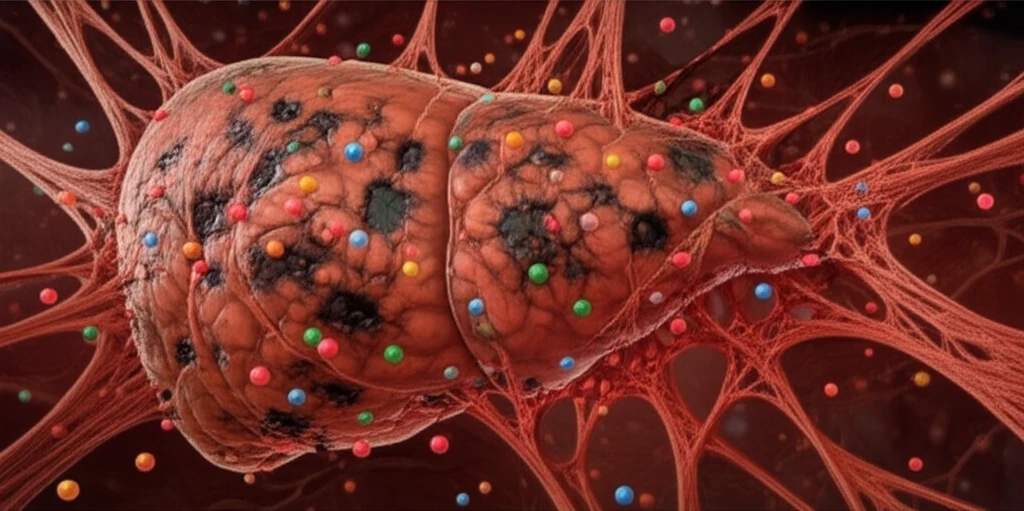
Illustration of altered fibrinogen in cirrhosis, showing sugar molecules and oxidative damage.

Decoding Cirrhosis: How Liver Damage Changes Blood Clotting

"New research reveals structural changes in fibrinogen, a key protein in blood clot formation, offering potential insights into managing bleeding and thrombosis in cirrhosis patients."


Cirrhosis, a late stage of liver disease, isn't just about liver cells. It triggers a cascade of complications, one of the most serious being impaired blood clotting. This can manifest as both excessive bleeding and the formation of dangerous blood clots (thrombosis). Understanding why this happens is crucial for developing effective treatments.

At the heart of blood clotting lies fibrinogen, a protein produced by the liver. Think of it as the building block for forming a stable clot. In individuals with cirrhosis, fibrinogen's structure and function are altered, disrupting the delicate balance needed for proper coagulation. Researchers have been digging deeper into these alterations to understand the underlying mechanisms.

This article will explore the findings of a recent study that analyzed the specific changes occurring in fibrinogen due to cirrhosis. The study dives into the glycosylation pattern (sugar attachments), carbonylation (oxidative damage), structural changes, and reactivity of fibrinogen, offering clues to how cirrhosis disrupts the blood clotting process and, potentially, targets for future therapies.

Fibrinogen's Makeover: Glycosylation and Carbonylation in Cirrhosis

Illustration of altered fibrinogen in cirrhosis, showing sugar molecules and oxidative damage.

The study used lectin-based protein microarray to analyze glycosylation patterns in fibrinogen from patients with cirrhosis and healthy individuals. Glycosylation, the addition of sugar molecules to a protein, is critical for its function and interaction with other molecules. The researchers discovered significant differences in the types and amounts of sugar molecules attached to fibrinogen in cirrhosis patients.

Here's a breakdown of the key glycosylation changes observed:

  • Increased tri/tetra-antennary structures, Gal β-1,4 GlcNAc, terminal a-2,3 Sia, and a-1,3 Man. These indicate more complex branching of sugar chains on the fibrinogen molecule.
  • Decreased core a-1,6 Fuc and bi-antennary galactosylated N-glycans with bisecting GlcNAc. This suggests a reduction in certain types of sugar modifications.
In addition to glycosylation, the study examined carbonylation, a process where proteins are damaged by oxidation. They found that fibrinogen, especially the Aa chain, was more carbonylated in cirrhosis patients. This oxidative damage can further alter the protein's structure and function, impacting its ability to form stable clots.

What Does This Mean for Cirrhosis Treatment?

This research sheds light on the specific ways cirrhosis alters fibrinogen, leading to impaired blood clotting. By understanding these changes, researchers can potentially develop targeted therapies to address the bleeding and thrombosis risks associated with the disease.

Potential avenues for future research and treatment include:

Developing strategies to prevent or reduce carbonylation of fibrinogen.<li>Targeting specific glycosylation patterns to restore normal fibrinogen function.</li><li>Creating therapies that enhance the interaction of modified fibrinogen with other clotting factors.</li><li>This study provides a crucial step forward in understanding the complexities of cirrhosis and its impact on blood coagulation, potentially leading to improved outcomes for patients.

About this Article -

This article was crafted using a human-AI hybrid and collaborative approach. AI assisted our team with initial drafting, research insights, identifying key questions, and image generation. Our human editors guided topic selection, defined the angle, structured the content, ensured factual accuracy and relevance, refined the tone, and conducted thorough editing to deliver helpful, high-quality information.See our About page for more information.

This article is based on research published under:

DOI-LINK: 10.1016/j.thromres.2018.04.005, Alternate LINK

Title: Structural Changes Of Fibrinogen As A Consequence Of Cirrhosis

Subject: Hematology

Journal: Thrombosis Research

Publisher: Elsevier BV

Authors: Nikola Gligorijević, Simeon Minić, Martina Križáková, Jaroslav Katrlík, Olgica Nedić

Published: 2018-06-01

Everything You Need To Know

1

How does liver damage from cirrhosis change blood clotting?

In cirrhosis, blood clotting is affected due to changes in fibrinogen, a crucial protein produced by the liver. These changes include altered glycosylation patterns and increased carbonylation, which disrupt the normal blood clotting process, leading to both excessive bleeding and thrombosis. The study highlights how these modifications impact fibrinogen's structure and function, which is vital for understanding and managing coagulation issues in cirrhosis.

2

What exactly is glycosylation and how does it affect fibrinogen in cirrhosis?

Glycosylation is the process of adding sugar molecules to a protein, which is critical for its function and interaction with other molecules. In cirrhosis patients, there are significant differences in the types and amounts of sugar molecules attached to fibrinogen. Key changes include increased tri/tetra-antennary structures, Gal β-1,4 GlcNAc, terminal a-2,3 Sia, and a-1,3 Man, indicating more complex branching of sugar chains, along with decreased core a-1,6 Fuc and bi-antennary galactosylated N-glycans with bisecting GlcNAc, suggesting a reduction in certain types of sugar modifications.

3

What is carbonylation, and how does it affect fibrinogen in cirrhosis patients?

Carbonylation is a process where proteins are damaged by oxidation. Research indicates that in cirrhosis patients, fibrinogen, especially the Aa chain, becomes more carbonylated. This oxidative damage can alter the protein's structure and function, impacting its ability to form stable clots. This is significant because it directly affects the protein's stability and reactivity, contributing to the impaired blood clotting seen in cirrhosis.

4

How could understanding changes to fibrinogen lead to better treatments for cirrhosis?

The research findings suggest that by understanding the specific alterations in fibrinogen's glycosylation and carbonylation patterns in cirrhosis, targeted therapies can be developed. These therapies could aim to correct or compensate for the structural and functional changes in fibrinogen, potentially reducing the risks of both bleeding and thrombosis associated with the disease. Future treatments might focus on modulating glycosylation pathways or reducing oxidative damage to improve blood clot formation.

5

What methods were used to study the changes in fibrinogen, and what do they reveal?

The study utilized a lectin-based protein microarray to analyze glycosylation patterns in fibrinogen from cirrhosis patients and healthy individuals. This method allows researchers to identify and quantify the different types of sugar molecules attached to fibrinogen. By comparing these patterns, they can pinpoint specific glycosylation changes associated with cirrhosis, which provides insights into how the disease alters fibrinogen's structure and function. Additionally, assessing carbonylation levels helps to understand the extent of oxidative damage affecting the protein.

Newsletter Subscribe

Subscribe to get the latest articles and insights directly in your inbox.