
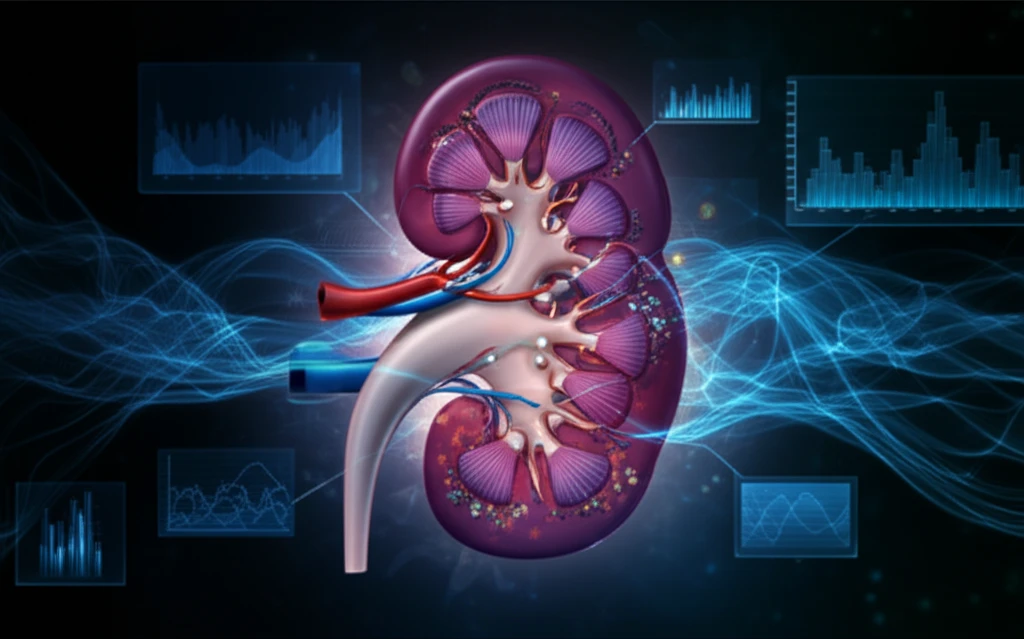
Stylized kidney intertwined with data streams and charts, symbolizing data analysis for kidney health.

Decoding Chronic Kidney Disease: How Routine Data Can Improve Outcomes

"Learn how analyzing existing health data can lead to better prevention and treatment strategies for chronic kidney disease."


Chronic diseases pose a significant and growing challenge to healthcare systems worldwide. Effectively managing these conditions requires innovative strategies that can streamline care, target resources efficiently, and improve patient outcomes. Traditionally, research for conditions such as cardiovascular disease has led the way in developing prognostic tools and targeted interventions.

Now, researchers are exploring how similar approaches can be applied to other chronic conditions, with a focus on Chronic Kidney Disease (CKD). CKD represents a particularly compelling case study, as it often precedes the need for renal replacement therapy (RRT), such as dialysis or kidney transplantation. By identifying patients at risk and intervening early, healthcare providers can potentially delay disease progression and improve overall quality of life.

A recent study delved into the potential of using routinely collected clinical data to understand and manage CKD more effectively. By analyzing data on kidney function, RRT initiation, and mortality, researchers aimed to identify patterns and risk factors associated with CKD progression. This approach offers a cost-effective way to gain insights into the disease and inform the development of targeted interventions.

Unlocking Insights: How Routine Data Can Transform CKD Management

Stylized kidney intertwined with data streams and charts, symbolizing data analysis for kidney health.

The study, led by Marks, Fluck, Prescott, MacLeod, Smith, and Black, utilized data from the Aberdeen Applied Renal Research Collaboration (ARRC) at the University of Aberdeen and NHS Grampian in Scotland. The researchers focused on identifying a cohort of patients with CKD using routine clinical data, including serum creatinine levels (a measure of kidney function), RRT initiation records, and death registrations. This allowed them to track the progression of the disease and identify factors associated with mortality over a six-year period.

The researchers compared the mortality rates of the CKD cohort to those of the general population to assess the impact of the disease. They identified 3,426 individuals with CKD, with a median age of 79 years, and 56% were female. Key findings from the study include:

  • Age-Related RRT Initiation: RRT initiation rates decreased with age, from 14.3 per 100 person-years among those aged 15–25 to just 0.7 per 100 person-years among those aged 75–85 at baseline.
  • Age-Related Mortality: Mortality rates increased with age, ranging from 1.9 per 100 person-years for those aged 15–45 to 33.8 per 100 person-years for those over 85 at baseline.
  • Increased Mortality Risk: Compared to the general population, individuals with CKD faced a significantly elevated mortality risk, with a 19-fold increase for those aged 15-45 and a 2-fold increase for those over 85.
These results underscore the significant burden of CKD, particularly among older adults. The study highlights the importance of early detection and intervention to mitigate the risk of adverse outcomes.

The Path Forward: Using Data to Drive Better CKD Care

This study demonstrates the potential of leveraging routinely collected data to gain valuable insights into CKD and improve patient outcomes. By identifying risk factors and patterns associated with disease progression, healthcare providers can develop targeted interventions to delay the need for RRT and reduce mortality. Further research is needed to explore the optimal strategies for utilizing routine data to inform clinical decision-making and improve the lives of individuals living with CKD.

About this Article -

This article was crafted using a human-AI hybrid and collaborative approach. AI assisted our team with initial drafting, research insights, identifying key questions, and image generation. Our human editors guided topic selection, defined the angle, structured the content, ensured factual accuracy and relevance, refined the tone, and conducted thorough editing to deliver helpful, high-quality information.See our About page for more information.

Everything You Need To Know

1

What exactly is Chronic Kidney Disease, and why should I be concerned about it?

Chronic Kidney Disease (CKD) is a condition where the kidneys are damaged and cannot filter blood as well as they should. This can lead to a buildup of waste products in the body. It's a major healthcare challenge because it can lead to serious complications, including the need for renal replacement therapy (RRT) such as dialysis or a kidney transplant. Early identification and management of CKD are essential to slow its progression and improve patient outcomes. Understanding risk factors by utilizing clinical data helps improve treatment.

2

How is routine clinical data being used to improve the management of Chronic Kidney Disease?

Researchers are using routine clinical data, such as serum creatinine levels (a measure of kidney function), RRT initiation records, and death registrations, to study Chronic Kidney Disease (CKD). By analyzing this data, they can identify patterns and risk factors associated with the disease's progression. This helps in developing better diagnostic and treatment approaches, potentially reducing mortality and improving patient outcomes. This method also offers a cost-effective way to gain insights and inform targeted interventions.

3

What is Renal Replacement Therapy, and when does it become necessary for people with Chronic Kidney Disease?

Renal Replacement Therapy (RRT), like dialysis or kidney transplantation, becomes necessary when Chronic Kidney Disease (CKD) progresses to a point where the kidneys can no longer function adequately. By identifying patients at risk of CKD early and intervening, healthcare providers can potentially delay the need for RRT. This is significant because RRT can be burdensome and costly, and delaying it can improve a patient's quality of life and reduce the strain on healthcare resources.

4

What did the study reveal about the mortality rates of people with Chronic Kidney Disease compared to the general population?

The study compared mortality rates of individuals with Chronic Kidney Disease (CKD) to those of the general population. The results showed that individuals with CKD faced a significantly elevated mortality risk. Mortality rates increased with age. Specifically, there was a 19-fold increase for those aged 15-45 and a 2-fold increase for those over 85 compared to the general population. This highlights the importance of early detection and intervention to mitigate the risk of adverse outcomes in people with CKD.

5

How can the insights gained from analyzing routine data be used to improve the care and outcomes for individuals with Chronic Kidney Disease?

By leveraging routinely collected data, healthcare providers can develop targeted interventions to delay the need for Renal Replacement Therapy (RRT) and reduce mortality associated with Chronic Kidney Disease (CKD). The study identified patterns associated with disease progression using data from the Aberdeen Applied Renal Research Collaboration (ARRC). However, further research is needed to explore the optimal strategies for utilizing routine data to inform clinical decision-making and improve the lives of individuals living with CKD. Additional studies would look at the effects of different drugs or lifestyle changes.

Newsletter Subscribe

Subscribe to get the latest articles and insights directly in your inbox.