
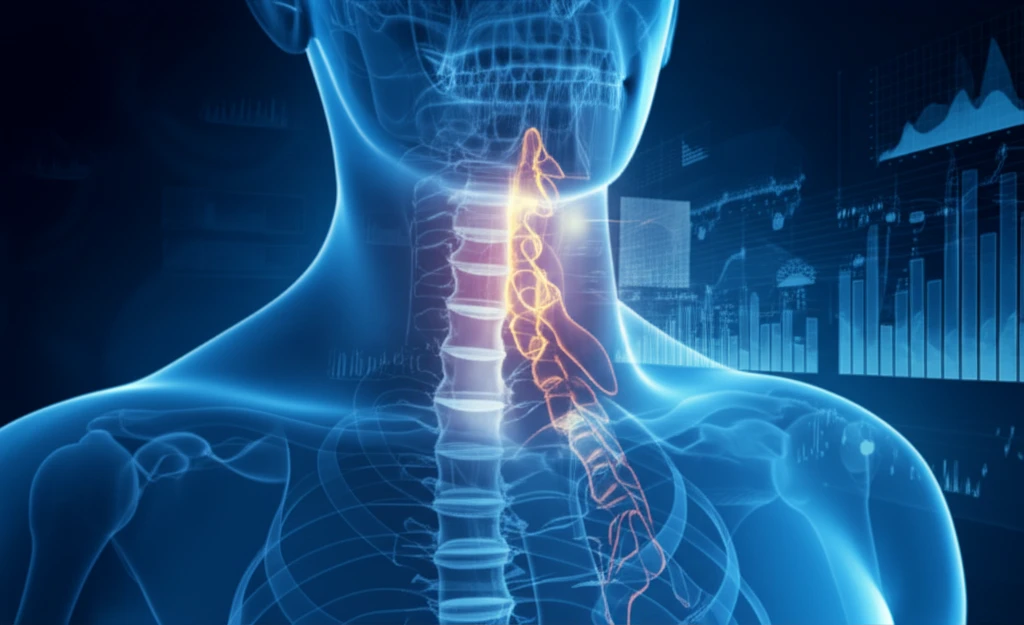
Decoding Cervical Deformity Surgery: What You Need to Know About Complications

"A new study offers insights into predicting complications after cervical deformity surgery, empowering patients and doctors."
Cervical deformity surgery, aimed at correcting spinal misalignments in the neck, is becoming increasingly common. While these procedures can significantly improve a patient's quality of life, understanding the potential complications is crucial. A recent study published in the Journal of Clinical Neuroscience sheds light on the factors that can predict the occurrence of complications following this complex surgery.
This article delves into the key findings of the study, offering a comprehensive overview for patients, caregivers, and medical professionals. We'll explore the risk factors identified, the accuracy of the predictive models developed, and what these insights mean for pre-operative planning and patient education.
By examining the research, we aim to provide a clear, concise understanding of the potential challenges associated with cervical deformity surgery, empowering readers to make informed decisions and engage in proactive discussions with their healthcare providers.
Unveiling the Risks: Key Findings from the Study
The study, based on a prospective multicenter database, analyzed data from 123 patients who underwent cervical deformity surgery. The researchers examined various patient demographics, clinical data, and radiographic measurements to identify risk factors for both medical and surgical complications.
- Neurological: Nerve damage or dysfunction.
- Dysphagia/Dysphonia: Difficulty swallowing or speaking.
- Cardiopulmonary: Problems with heart or lungs.
- Infection: Infections at the surgical site.
Empowering Patients and Improving Outcomes
This study highlights the importance of pre-operative risk assessment and patient education in cervical deformity surgery. By identifying potential risk factors, surgeons can tailor treatment plans, optimize surgical approaches, and better prepare patients for potential challenges. As research in this field continues, the predictive models will become more refined, further improving patient outcomes and quality of life.