
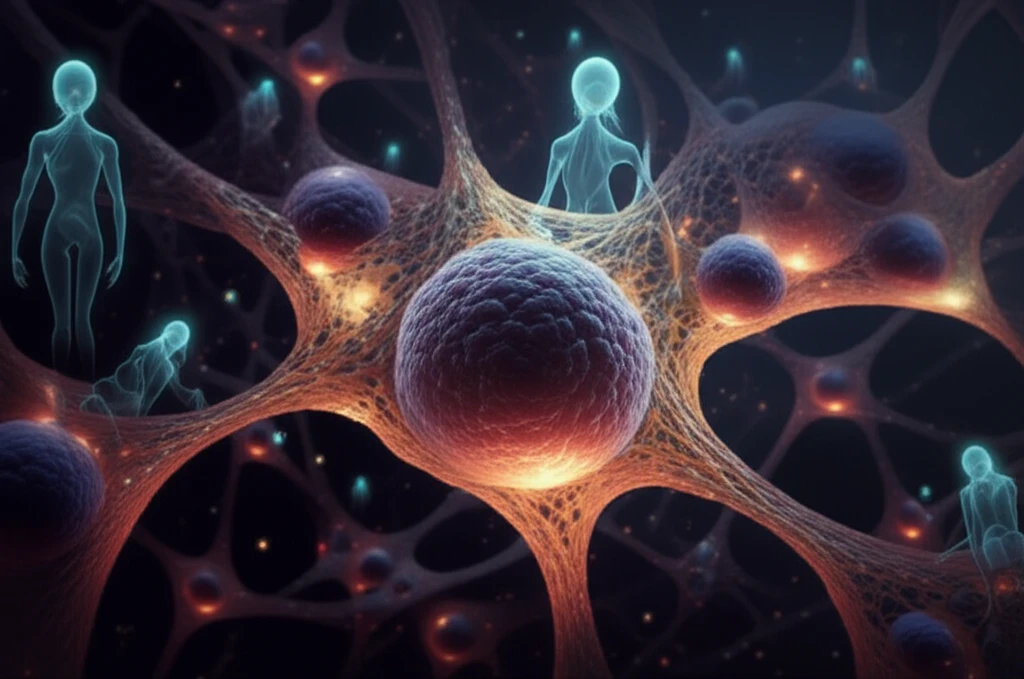
Interconnected cells with E-cadherin bridges and survivin figures, some cells undergoing apoptosis.

Decoding Cell Behavior: How E-cadherin, Survivin, and Apoptosis Interact

"Unlocking the secrets of cell survival and death in cancer research through E-cadherin interactions, survivin expression, and apoptosis in MDCK cell culture models."


In the complex world of cancer research, understanding how cells behave is crucial. Scientists are constantly working to unravel the mechanisms that allow cancer cells to thrive, resist treatment, and spread. Central to this understanding are the interactions between proteins and cellular processes that govern cell life and death.

One such area of focus is the interplay between E-cadherin, a protein that helps cells stick together; survivin, a protein that inhibits apoptosis (programmed cell death) and promotes cell survival; and apoptosis itself, a critical process for maintaining healthy tissues. By studying how these factors interact, researchers hope to find new ways to target cancer cells and improve treatment outcomes.

This article delves into a study that explores these interactions using Madin-Darby canine kidney (MDCK) cells, a well-established model for epithelial cells, and their transformed counterparts. The research sheds light on how E-cadherin, survivin, and apoptosis are interconnected and how these interactions influence cell behavior in different environments.

The Critical Roles of E-cadherin, Survivin, and Apoptosis

Interconnected cells with E-cadherin bridges and survivin figures, some cells undergoing apoptosis.

To fully appreciate the study's findings, it's essential to understand the roles of E-cadherin, survivin, and apoptosis:

E-cadherin: This protein acts like cellular glue, helping cells adhere to one another and form tissues. It's particularly important in epithelial cells, which line the surfaces of the body and form glands. E-cadherin also plays a role in cell signaling and regulating cell growth.

  • Survivin: A member of the inhibitor of apoptosis (IAP) protein family, survivin has a dual role. It inhibits apoptosis, allowing cells to survive even when they should self-destruct. Simultaneously, it promotes cell proliferation and regulates cell division, potentially fueling uncontrolled growth.
  • Apoptosis: This is a programmed cell death, a natural and essential process that removes damaged or unwanted cells from the body. Apoptosis prevents cells with DNA damage from replicating, thus protecting against cancer.
The study explores how cancer cells often disrupt these processes, reducing E-cadherin expression to detach and spread, while increasing survivin to resist apoptosis and sustain uncontrolled growth. This research provides insights into factors controlling survivin’s lifespan and its impact on apoptosis.

The Future of Cancer Treatment: Targeting Survivin and E-cadherin Interactions

This research underscores the importance of understanding the complex interplay between E-cadherin, survivin, and apoptosis in cancer development. By identifying the factors that regulate these interactions, scientists can develop more targeted and effective cancer therapies. Future research may focus on developing drugs that downregulate survivin, promote E-cadherin trans-interactions, and restore the normal apoptotic response in cancer cells, ultimately improving treatment outcomes and patient survival. Further research could help translate these discoveries into clinical applications, offering new hope in the fight against cancer.

About this Article -

This article was crafted using a human-AI hybrid and collaborative approach. AI assisted our team with initial drafting, research insights, identifying key questions, and image generation. Our human editors guided topic selection, defined the angle, structured the content, ensured factual accuracy and relevance, refined the tone, and conducted thorough editing to deliver helpful, high-quality information.See our About page for more information.

Everything You Need To Know

1

What is E-cadherin and what does it do?

E-cadherin is a protein that functions like an adhesive, enabling cells to bind to each other and form tissues, especially epithelial tissues. It's critical for cell signaling and controlling cell growth. When E-cadherin function is reduced, cells can detach more easily, which is a characteristic of cancer metastasis.

2

What is survivin and what role does it play in cells?

Survivin is a protein that inhibits apoptosis, or programmed cell death, allowing cells to survive even when they should self-destruct. Additionally, survivin promotes cell proliferation and regulates cell division. In cancer, survivin is often overexpressed, contributing to the uncontrolled growth and survival of cancer cells. It belongs to the inhibitor of apoptosis (IAP) protein family.

3

What is apoptosis, and why is it important?

Apoptosis is a programmed cell death, a natural and essential process that removes damaged or unwanted cells from the body. Apoptosis prevents cells with DNA damage from replicating, thus protecting against cancer. Cancer cells often evade apoptosis, which allows them to survive and proliferate uncontrollably.

4

Why is it important to study how E-cadherin, survivin, and apoptosis interact with each other?

The interplay between E-cadherin, survivin, and apoptosis is critical because it affects whether a cell lives, dies, or proliferates. E-cadherin promotes cell adhesion and normal tissue structure, while survivin inhibits apoptosis and promotes cell survival. Cancer cells often disrupt this balance by reducing E-cadherin and increasing survivin to evade apoptosis, leading to uncontrolled growth and spread. Understanding these interactions can lead to new cancer treatments.

5

What are the potential future directions for cancer treatment based on this research?

Future cancer treatments may focus on drugs that can downregulate survivin, promote E-cadherin trans-interactions, and restore the normal apoptotic response in cancer cells. By targeting these specific molecules and pathways, researchers aim to develop more effective therapies that can selectively kill cancer cells while minimizing harm to healthy tissues. This approach holds promise for improving treatment outcomes and patient survival.

Newsletter Subscribe

Subscribe to get the latest articles and insights directly in your inbox.