
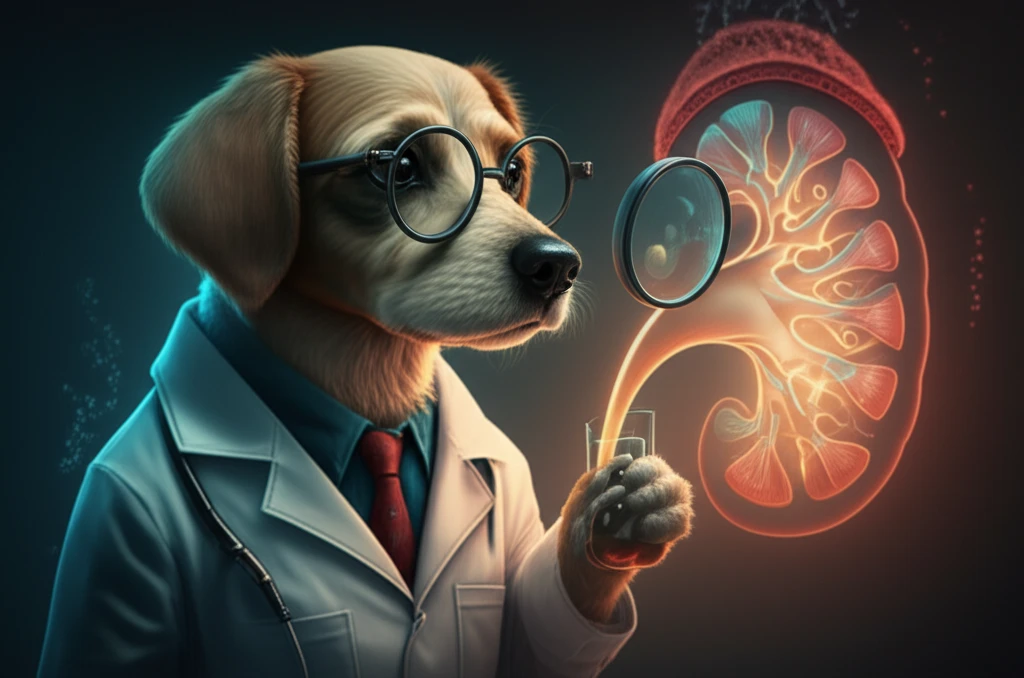
A friendly dog in a lab coat, examining a urine sample, symbolizing pet health and diagnostics.

Decoding Canine Kidney Health: How Urine Tests Can Save Your Dog's Life

"Unraveling the mysteries of canine kidney disease and how early detection through urine analysis can significantly impact your furry friend's longevity."


Caring for a dog often involves a lot of love, play, and the comforting presence of a furry companion. But, as responsible pet owners, we also need to be vigilant about their health. One of the most common and concerning health issues in dogs, especially as they age, is chronic kidney disease. Early detection is key to managing this condition effectively, which is where regular veterinary check-ups and diagnostic tests like urine analysis come into play.

This article delves into the importance of these tests, focusing on the urinary protein-to-creatinine ratio (UP:C), urine specific gravity (USG), and the presence of bacteria in your dog's urine. We will break down how these factors are interconnected and what they reveal about your dog's kidney health. The aim is to equip you with the knowledge to understand your vet's recommendations better and to advocate for your dog's health proactively.

Understanding your dog's health can be complex, but early awareness is key to helping them live longer and healthier lives. Join us as we explore the science behind urine tests and how they are used to monitor and protect your canine companion's well-being. By understanding these tests, you can be an informed and proactive advocate for your dog's health.

The Urine Test Unveiled: What Does It Really Tell Us?

A friendly dog in a lab coat, examining a urine sample, symbolizing pet health and diagnostics.

Urine analysis is a routine diagnostic procedure in veterinary medicine, offering a wealth of information about your dog's overall health. Two key components of a standard urinalysis are USG and UP:C. USG indicates the concentration of urine and, therefore, how well the kidneys are working to conserve water. UP:C measures the amount of protein in the urine, which can indicate kidney damage or disease. These two factors, when examined together, provide a more complete picture of kidney function.

In addition to USG and UP:C, a urine culture can be performed to identify the presence of bacteria, which may indicate a urinary tract infection (UTI). Understanding the interplay of these factors helps veterinarians diagnose, monitor, and manage kidney disease and other urinary conditions. Regular testing is a proactive step in safeguarding your dog's health, allowing for early detection and intervention.

  • Urine Specific Gravity (USG): This measures how concentrated the urine is. Higher values suggest the kidneys are effectively conserving water, while lower values may indicate kidney issues.
  • Urinary Protein-to-Creatinine Ratio (UP:C): This ratio measures the amount of protein in the urine compared to creatinine, a waste product. High levels of protein can indicate kidney damage.
  • Urine Culture: This test identifies the presence of bacteria in the urine, which could signal a urinary tract infection.
The study, as mentioned in the article, found that USG cannot reliably predict UP:C levels. Even within a certain dipstick protein category, there was not enough correlation between USG and UP:C to draw any reliable conclusions. This emphasizes the need for direct UP:C measurement as a critical diagnostic step. If a UTI is present, a follow-up UP:C measurement after the infection is resolved is advisable, as the infection may artificially elevate protein levels in the urine.

Empowering Pet Owners Through Knowledge

Understanding your dog's health doesn't have to be intimidating. By staying informed about key diagnostic tests and their implications, you can provide the best possible care for your canine companion. Remember, regular check-ups, including urine analysis, are crucial in detecting and managing conditions like kidney disease early on. With this knowledge, you can actively participate in your dog's healthcare, ensuring they enjoy a long, healthy, and happy life by your side.

About this Article -

This article was crafted using a human-AI hybrid and collaborative approach. AI assisted our team with initial drafting, research insights, identifying key questions, and image generation. Our human editors guided topic selection, defined the angle, structured the content, ensured factual accuracy and relevance, refined the tone, and conducted thorough editing to deliver helpful, high-quality information.See our About page for more information.

This article is based on research published under:

DOI-LINK: 10.1111/jvim.15377, Alternate LINK

Title: Relationships Among Urinary Protein-To-Creatinine Ratio, Urine Specific Gravity, And Bacteriuria In Canine Urine Samples

Subject: General Veterinary

Journal: Journal of Veterinary Internal Medicine

Publisher: Wiley

Authors: Alison G. Meindl, Bianca N. Lourenço, Amanda E. Coleman, Kate E. Creevy

Published: 2018-12-02

Everything You Need To Know

1

Why is urine analysis so important for my dog's health, particularly as they age?

Urine analysis is crucial because it helps in the early detection of common health issues like chronic kidney disease in dogs, especially as they age. Regular veterinary check-ups that include urine analysis can identify potential problems before they become severe. Specifically, the urine specific gravity (USG), urinary protein-to-creatinine ratio (UP:C), and presence of bacteria in the urine are key indicators of kidney health and potential urinary tract infections. Early detection allows for timely intervention and management, potentially extending your dog's lifespan and improving their quality of life.

2

What do USG and UP:C tell me about my dog's kidney function, and why are they both measured in a urine analysis?

USG, or urine specific gravity, measures the concentration of your dog's urine, indicating how well the kidneys are conserving water. Higher USG values suggest effective water conservation, while lower values may indicate kidney issues. UP:C, or urinary protein-to-creatinine ratio, measures the amount of protein in the urine compared to creatinine. Elevated protein levels can signify kidney damage. Both USG and UP:C are measured because they offer different but complementary insights into kidney function. USG assesses the kidney's ability to concentrate urine, while UP:C assesses protein leakage. Neither can reliably predict the other, so assessing both provides a comprehensive understanding of kidney health.

3

If my dog has a urinary tract infection (UTI), how does that affect the urine protein levels, and what should I do?

A urinary tract infection (UTI) can artificially elevate protein levels in your dog's urine, potentially leading to a misleadingly high urinary protein-to-creatinine ratio (UP:C). If a UTI is present, it's essential to treat the infection first. After the infection is resolved, a follow-up UP:C measurement is advisable to accurately assess kidney function without the influence of the infection. This ensures a more precise evaluation of any underlying kidney issues.

4

How can I, as a pet owner, use the information from my dog's urine tests to better advocate for their health?

By understanding the key indicators in urine tests, such as urine specific gravity (USG) and urinary protein-to-creatinine ratio (UP:C), you can actively participate in your dog's healthcare. Knowing what these values represent allows you to discuss your dog's kidney health more effectively with your veterinarian. Regular check-ups, including urine analysis, are crucial for early detection and management of conditions like kidney disease. Furthermore, if a dipstick protein test is performed, understand that it may not be as reliable as a direct UP:C measurement, and advocate for a UP:C test if protein is detected. This proactive approach ensures your dog receives timely and appropriate care, promoting a longer, healthier life.

5

The study mentioned that USG cannot reliably predict UP:C levels. What are the implications of this finding for monitoring my dog's kidney health?

The finding that urine specific gravity (USG) cannot reliably predict urinary protein-to-creatinine ratio (UP:C) emphasizes the importance of directly measuring UP:C as a critical diagnostic step. Relying solely on USG to assess kidney health may lead to missed cases of proteinuria, a key indicator of kidney damage. The implication is that a comprehensive kidney health assessment should include a direct UP:C measurement, especially if there's any suspicion of kidney issues or if the dog is at risk due to age or other health conditions. This ensures a more accurate and complete evaluation of kidney function.

Newsletter Subscribe

Subscribe to get the latest articles and insights directly in your inbox.