
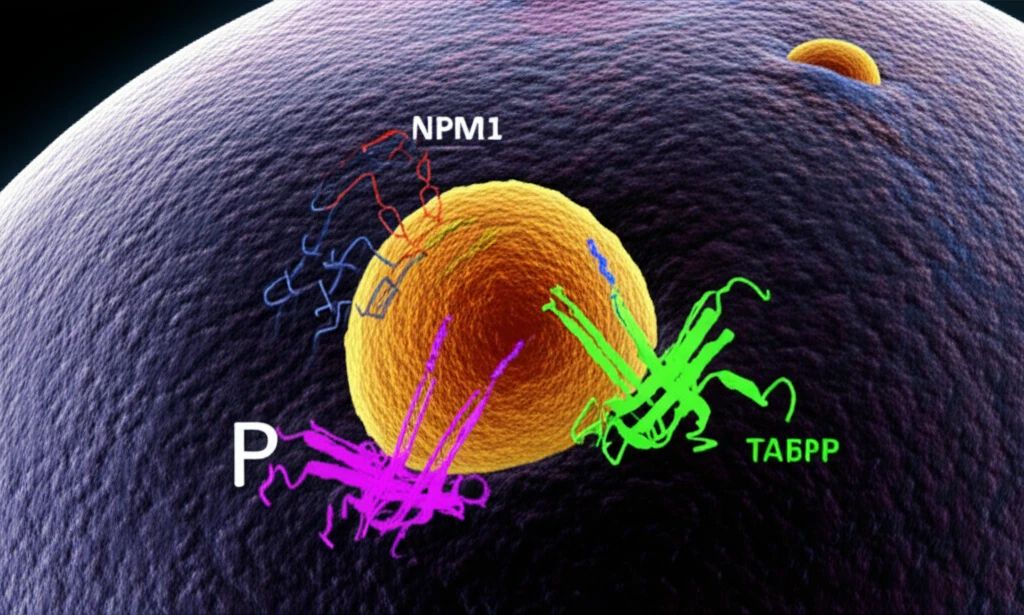
Illustration depicting the dephosphorylation process of NPM1 protein in a cancer cell during radiation therapy.

Decoding Cancer's Code: How a Multifunctional Protein Holds the Key to Smarter Radiotherapy

"Unlocking the Power Within: Exploring How a Protein Called NPM1 Could Revolutionize Cancer Treatment and Improve Survival Rates"


Cancer, a relentless adversary, continues to challenge medical science. While progress has been made, the fight against this complex disease requires relentless innovation. Radiotherapy, a cornerstone of cancer treatment, faces an ongoing battle against tumor resistance. But, recent discoveries shed light on a potential game-changer—a protein called NPM1.

This research delves into the multifaceted role of NPM1 within tumor cells, particularly in response to radiation. By understanding how NPM1 behaves during and after radiation, scientists hope to uncover new strategies to enhance the effectiveness of radiotherapy. This research promises to refine cancer treatment by enhancing existing therapeutic methods.

This study provides an exciting new direction in our fight against cancer. As you explore the details, you'll gain insights into how these discoveries can improve the lives of countless individuals affected by this devastating disease.

NPM1: A Multifaceted Protein at the Heart of Cancer's Response to Radiation

Illustration depicting the dephosphorylation process of NPM1 protein in a cancer cell during radiation therapy.

At the core of the study is NPM1 (Nucleophosmin), a protein that has long been associated with cell growth and cancer. NPM1 is essential for normal cell functions. However, its role in cancer is complex, and its behavior is critical for understanding how tumors respond to radiation.

The research team examined the phosphoproteome of cancer cells before and after irradiation. This analysis revealed significant changes in protein phosphorylation, particularly involving NPM1. Phosphorylation is a fundamental cellular process, where phosphate groups attach to proteins, influencing their function. Through the study the team were able to observe how phosphorylation patterns on NPM1 change immediately after radiation exposure.

  • NPM1 is a versatile protein with many functions.
  • Knockdown of NPM1 reduced cancer cell survival after radiation.
  • NPM1 dephosphorylation is not the result of a fast cell cycle arrest.
  • The dephosphorylation of NPM1 is important for tumor cell survival.
These findings reveal that NPM1 is dephosphorylated shortly after irradiation, mainly at two specific sites: threonine-199 and threonine-234/237. This dephosphorylation seems crucial to the cancer's response to radiation and could offer opportunities to improve treatment outcomes. Understanding the detailed process could revolutionize cancer therapy, offering greater effectiveness and improving patient survival rates.

A Promising Future for Cancer Treatment

This research gives us cause for hope, illustrating the critical role of NPM1 in how tumors react to radiation therapy. By understanding and targeting the processes involving NPM1, it's possible to significantly improve radiation therapy, making it more effective in destroying cancer cells while sparing healthy tissue. The results suggest new paths for cancer therapy, offering new hope for improved survival and a better quality of life for those with cancer.

About this Article -

This article was crafted using a human-AI hybrid and collaborative approach. AI assisted our team with initial drafting, research insights, identifying key questions, and image generation. Our human editors guided topic selection, defined the angle, structured the content, ensured factual accuracy and relevance, refined the tone, and conducted thorough editing to deliver helpful, high-quality information.See our About page for more information.

This article is based on research published under:

DOI-LINK: 10.1016/j.tranon.2018.10.015, Alternate LINK

Title: Phosphoproteome Profiling Reveals Multifunctional Protein Npm1 As Part Of The Irradiation Response Of Tumor Cells

Subject: Cancer Research

Journal: Translational Oncology

Publisher: Elsevier BV

Authors: Nadine Wiesmann, Rita Gieringer, Franz Grus, Juergen Brieger

Published: 2019-02-01

Everything You Need To Know

1

What is NPM1 and what is its role in cancer treatment?

NPM1, or Nucleophosmin, is a protein that has long been associated with cell growth and cancer. It plays a key role in how tumors respond to radiation. Research has shown that NPM1 is dephosphorylated shortly after irradiation, specifically at threonine-199 and threonine-234/237. This dephosphorylation is crucial for the cancer's response to radiation, making NPM1 a potential target to improve radiotherapy outcomes. By understanding and targeting the processes involving NPM1, it's possible to significantly improve radiation therapy, making it more effective in destroying cancer cells while sparing healthy tissue.

2

How does NPM1 influence a tumor's response to radiation?

NPM1's influence on a tumor's response to radiation involves a process called phosphorylation, where phosphate groups attach to proteins, influencing their function. The research team found that changes in protein phosphorylation, especially those involving NPM1, occur immediately after radiation exposure. Specifically, NPM1 is dephosphorylated shortly after irradiation at threonine-199 and threonine-234/237. This dephosphorylation is important for tumor cell survival, which indicates that by understanding and manipulating this process, the effectiveness of radiotherapy can be improved.

3

What are the implications of NPM1 dephosphorylation in cancer treatment?

The dephosphorylation of NPM1, which occurs shortly after radiation exposure at specific sites like threonine-199 and threonine-234/237, is a crucial process for tumor cell survival. This implies that if scientists can understand and control this dephosphorylation process, they can potentially improve the effectiveness of radiotherapy. Targeting NPM1 could lead to more effective treatment, potentially improving patient survival rates and quality of life by destroying cancer cells while minimizing damage to healthy tissues. The goal is to refine cancer treatment by enhancing existing therapeutic methods.

4

Why is this research on NPM1 considered a 'game-changer' in cancer treatment?

This research is considered a potential game-changer because it sheds light on a key mechanism underlying tumor resistance to radiotherapy. By focusing on the protein NPM1, scientists have identified a crucial process—dephosphorylation—that influences how cancer cells react to radiation. The understanding of the role of NPM1 allows for the potential development of new strategies to enhance radiotherapy, making it more effective in destroying cancer cells. Furthermore, this could lead to the ability to spare healthy tissue, thereby improving survival rates and quality of life for cancer patients.

5

How can understanding NPM1's function lead to improved cancer treatment?

Understanding NPM1's function can lead to improved cancer treatment by providing insights into how tumors respond to radiation therapy. The research revealed that NPM1 is dephosphorylated shortly after irradiation at specific sites, and this process is crucial for tumor cell survival. By targeting and manipulating the processes involving NPM1, researchers can potentially improve the effectiveness of radiotherapy. This could involve developing drugs that interfere with the dephosphorylation process, thus making cancer cells more vulnerable to radiation. This can lead to more effective therapies, offering new hope for improved survival and a better quality of life for those with cancer.

Newsletter Subscribe

Subscribe to get the latest articles and insights directly in your inbox.