
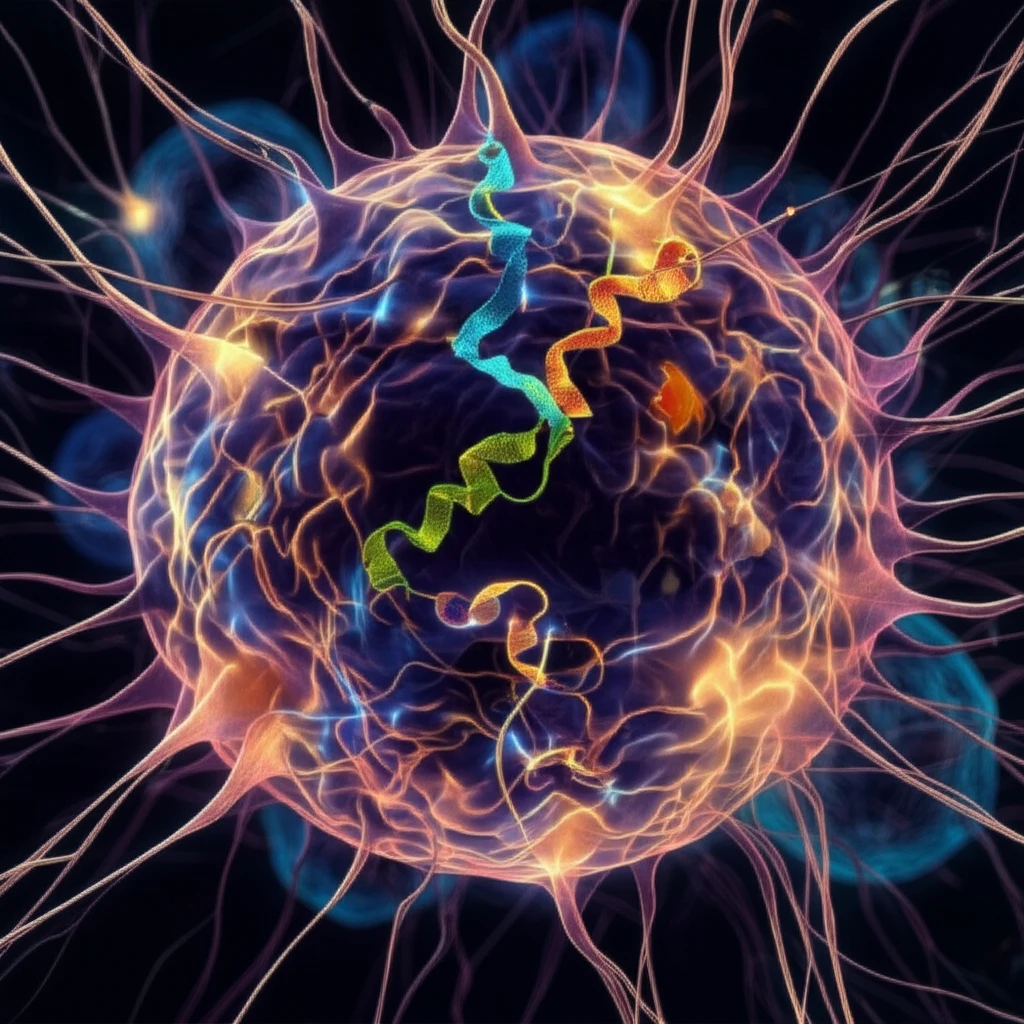
Decoding Cancer: How Fusion Proteins Hijack Growth Signals for Survival

"Unraveling the Connection Between Oncogenic Fusion Proteins and the Insulin-Like Growth Factor Pathway in Cancer"
Cancer, a disease characterized by uncontrolled cell growth, often arises from genetic mutations that disrupt normal cellular functions. Among these mutations, chromosomal translocations, where parts of chromosomes break off and attach to other chromosomes, play a significant role. These translocations can lead to the creation of 'fusion proteins,' abnormal proteins that drive cancer development by interfering with normal signaling pathways.
One critical signaling pathway that cancer cells frequently exploit is the insulin-like growth factor (IGF) pathway. The IGF pathway regulates cell growth, survival, and metabolism, making it an attractive target for cancer cells seeking to gain an advantage. The IGF1R receptor, a key component of this pathway, promotes cell survival and proliferation when activated by IGF ligands.
Recent research has shed light on how oncogenic fusion proteins manipulate the IGF pathway to promote cancer progression. By increasing IGF1R levels and activity, these fusion proteins can drive uncontrolled cell growth and prevent cell death, ultimately contributing to tumor formation and metastasis. Understanding this intricate relationship between fusion proteins and the IGF pathway is crucial for developing more effective cancer therapies.
How Fusion Proteins Highjack the IGF Signaling Pathway?
Oncogenic fusion proteins often disrupt the normal function of transcription factors, proteins that regulate gene expression. These disrupted transcription factors can then activate the IGF1R gene, leading to increased IGF1R production. This overproduction of IGF1R makes cancer cells more sensitive to IGF ligands, further stimulating cell growth and survival.
- Increased IGF1R Expression: Fusion proteins can directly activate the IGF1R gene, leading to higher levels of the receptor on the cell surface.
- Ligand-Mediated Receptor Phosphorylation: Increased IGF1R levels enhance the receptor's response to IGF ligands, resulting in increased receptor phosphorylation and downstream signaling.
- Adoption of the IGF1R Signaling Pathway: Fusion proteins can hijack the IGF1R signaling pathway, using it to transmit growth and survival signals even in the absence of IGF ligands.
Targeting the Source: Future Therapies
The discovery of how oncogenic fusion proteins exploit the IGF pathway opens new avenues for targeted cancer therapies. By simultaneously targeting both the fusion proteins and the IGF1R receptor, researchers hope to develop more effective treatments that can overcome the limitations of existing therapies. This combined approach could potentially disrupt the aberrant signaling pathways driving cancer growth, leading to improved outcomes for patients.