
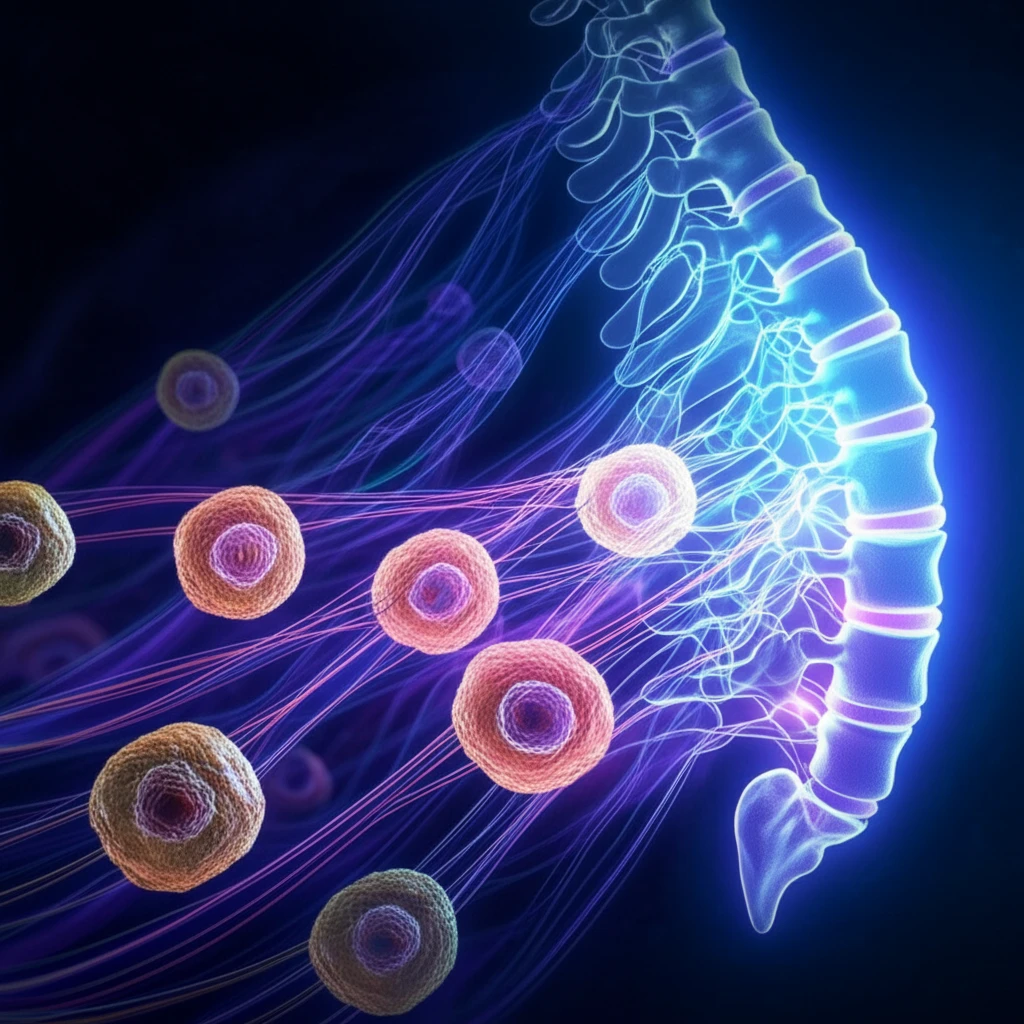
Breast cancer cells migrating towards a spine, guided by CX3CL1/CX3CR1 signaling.

Decoding Bone Metastasis: How Breast Cancer Cells Target the Spine

"New research illuminates the CX3CL1/CX3CR1 pathway, offering potential targets for preventing spinal metastasis in breast cancer patients."


Metastasis, the spread of cancer from its primary site to other parts of the body, remains a leading cause of cancer-related deaths. Spinal metastasis, in particular, significantly impacts a patient's quality of life, leading to pain, fractures, and spinal cord compression. Among cancers that commonly metastasize to the bone, breast cancer is a prominent culprit, frequently targeting the spine.

While advancements in cancer therapies have improved survival rates, the challenge of preventing and treating metastasis persists. Researchers are continuously seeking to unravel the mechanisms that govern metastasis, hoping to identify new therapeutic targets.

Recent research sheds light on a specific signaling pathway involved in breast cancer's affinity for the spine. This article explores the role of the CX3CL1/CX3CR1 axis and the Src/FAK signaling pathway in spinal metastasis, offering potential new avenues for treatment and prevention.

The CX3CL1/CX3CR1 Axis: A Key to Spinal Metastasis?

Breast cancer cells migrating towards a spine, guided by CX3CL1/CX3CR1 signaling.

A study published in the Journal of Cancer (2018) investigated the role of C-X3-C chemokine ligand 1 (CX3CL1) and its receptor CX3CR1 in breast cancer cells metastasizing to the spine. Previous research suggested CX3CL1's involvement in tumor development and metastasis, but the precise mechanisms remained unclear.

The researchers focused on understanding how breast cancer cells target the spine, a common site for metastasis. Their findings revealed:

  • CX3CR1 Overexpression: The receptor CX3CR1 was found to be more abundant in spinal metastases of breast cancer compared to surrounding tissue.
  • CX3CL1 Expression in Spinal Bone: CX3CL1 was significantly more expressed in normal spinal cancellous bone compared to bone in the limbs.
  • CX3CL1 Promotes Migration: CX3CL1 promoted the migration and invasion abilities of MDA-MB-231 breast cancer cells in laboratory experiments.
  • No Effect on Cell Growth: CX3CL1 did not appear to significantly affect the growth rate of breast cancer cells.
These findings suggest that CX3CL1 in the spinal bone may attract CX3CR1-expressing breast cancer cells, encouraging them to migrate to and invade the spine.

Implications for Future Therapies

The study's identification of the CX3CL1/CX3CR1 and Src/FAK signaling pathways as key players in spinal metastasis opens doors for new therapeutic strategies. Targeting these pathways with drugs like Bosutinib and PF-00562271, which inhibit Src and FAK respectively, could potentially prevent or reduce spinal metastasis in breast cancer patients. Further research is needed to validate these findings and translate them into effective clinical treatments. These could improve outcomes and quality of life for individuals at risk of or already experiencing spinal metastasis from breast cancer.

About this Article -

This article was crafted using a human-AI hybrid and collaborative approach. AI assisted our team with initial drafting, research insights, identifying key questions, and image generation. Our human editors guided topic selection, defined the angle, structured the content, ensured factual accuracy and relevance, refined the tone, and conducted thorough editing to deliver helpful, high-quality information.See our About page for more information.

This article is based on research published under:

DOI-LINK: 10.7150/jca.26497, Alternate LINK

Title: Cx3Cl1 Involves In Breast Cancer Metastasizing To The Spine Via The Src/Fak Signaling Pathway

Subject: Oncology

Journal: Journal of Cancer

Publisher: Ivyspring International Publisher

Authors: Yun Liang, Lei Yi, Peng Liu, Libo Jiang, Houlei Wang, Annan Hu, Chi Sun, Jian Dong

Published: 2018-01-01

Everything You Need To Know

1

What is spinal metastasis and why is it a significant concern?

Spinal metastasis occurs when cancer cells spread from the original tumor site, such as the breast, to the spine. This is a significant concern because it often leads to severe pain, fractures, and spinal cord compression, greatly diminishing a patient's quality of life. Breast cancer cells frequently target the spine, making understanding the mechanisms of spinal metastasis crucial.

2

How does the CX3CL1/CX3CR1 pathway contribute to spinal metastasis?

The CX3CL1/CX3CR1 signaling pathway plays a key role in the process of breast cancer cells metastasizing to the spine. CX3CL1, found in the spinal bone, attracts breast cancer cells that express the receptor CX3CR1. This attraction promotes the migration and invasion of these cancer cells into the spine. The research indicates that the CX3CL1/CX3CR1 axis is critical for this process to occur.

3

What are CX3CL1 and CX3CR1 and how do they interact?

CX3CL1 is a signaling molecule, a chemokine ligand, found in the spinal bone. CX3CR1 is its receptor, found on breast cancer cells. The interaction between CX3CL1 and CX3CR1 acts like a homing signal, guiding breast cancer cells to the spine. Once the cancer cells with the CX3CR1 receptor recognize and bind to CX3CL1, they are encouraged to invade the spine.

4

How can the Src/FAK signaling pathway be targeted to prevent spinal metastasis?

The study suggests that the Src/FAK signaling pathway is also involved in spinal metastasis. Drugs such as Bosutinib and PF-00562271, which inhibit Src and FAK respectively, could potentially be used to prevent or reduce spinal metastasis. These drugs would target the pathways that enable the cancer cells to metastasize, which means they could potentially stop or slow down the spread of cancer to the spine.

5

What are the potential implications of these findings for future breast cancer treatments?

Targeting the CX3CL1/CX3CR1 and Src/FAK pathways with drugs is a promising area for future therapies. This could include drugs like Bosutinib and PF-00562271. These therapies aim to disrupt the signaling processes that allow breast cancer cells to colonize the spine. If successful, these treatments could improve outcomes and quality of life for individuals facing spinal metastasis from breast cancer. However, more research is needed to confirm the effectiveness and safety of these approaches.

Newsletter Subscribe

Subscribe to get the latest articles and insights directly in your inbox.