
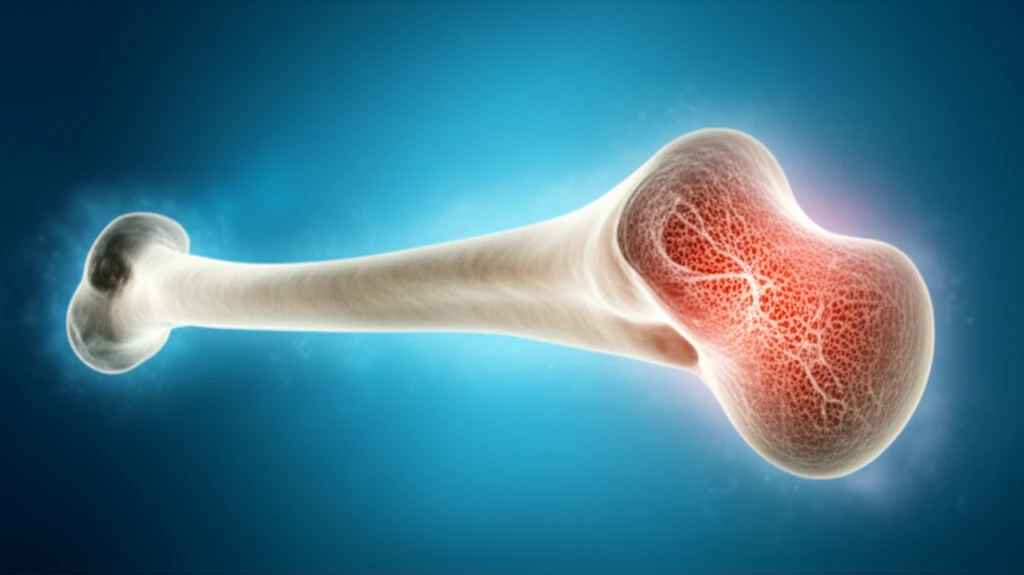
Decoding Bone Health: How Modern Science Measures Your Risk and What You Can Do About It

"New research unveils advanced techniques for assessing bone porosity, offering insights into osteoporosis and fracture risk."
Our bones, the silent guardians of our physical well-being, often go unnoticed until a fracture or a diagnosis of osteoporosis casts a spotlight on their importance. Bone health is not merely about the structural integrity of our skeletons; it's a dynamic process that reflects our overall health and lifestyle. In recent years, advancements in medical imaging have provided unprecedented opportunities to delve deeper into the intricacies of bone structure, offering new ways to assess risk and guide interventions.
This article explores the latest research in bone health assessment, focusing on a study that compares different methods for measuring cortical porosity. Cortical porosity, or the presence of holes in the outer layer of bone, is a critical indicator of bone strength and fracture risk. By understanding how scientists measure porosity and interpret the results, you can gain valuable insights into your own bone health and make informed decisions about your care.
The study, published in Bone, examines the agreement between high-resolution peripheral quantitative computed tomography (HR-pQCT) and synchrotron radiation micro-CT (SR-µCT). HR-pQCT is a non-invasive imaging technique, while SR-µCT is a more advanced, laboratory-based method. By comparing these techniques, researchers are gaining a better understanding of how to accurately assess bone health and predict fracture risk.
Unveiling the Techniques: HR-pQCT and SR-µCT in Detail
The research hinges on two primary imaging techniques: HR-pQCT and SR-µCT. HR-pQCT, which is often used in clinical settings, offers a convenient, non-invasive way to assess bone structure. It works by using X-rays to create detailed images of the bone's architecture, including the cortical porosity in the distal radius, the lower part of your forearm.
- HR-pQCT: A non-invasive technique using X-rays to create detailed images of the bone's structure.
- SR-µCT: A laboratory-based technique using synchrotron radiation to generate high-resolution images.
- Cortical Porosity: The presence of holes in the outer layer of bone, a key indicator of bone strength and fracture risk.
Empowering Your Bone Health: Moving Forward
As research in bone health continues to evolve, so does our ability to safeguard our skeletal system. Understanding the different methods for assessing bone health, as well as the factors that influence it, is the first step in taking proactive steps towards a stronger, healthier future. Whether you're already concerned about your bone health or simply looking to maintain it, the insights from studies like these can help you make informed decisions. Consult with your healthcare provider to discuss your individual risk factors and explore strategies to keep your bones strong and resilient, for years to come.