
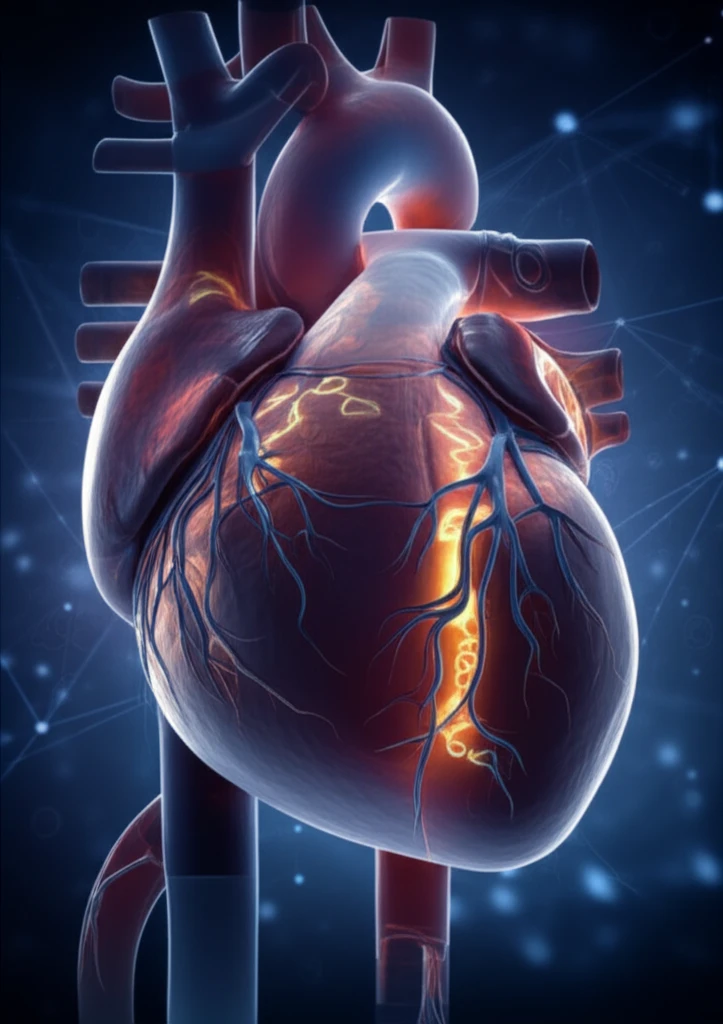
Illustration of a heart-shaped blood vessel network with glowing genes, symbolizing integrated studies of blood flow and heart health.

Decoding Blood Flow: How Integrated Studies Are Revolutionizing Heart Health

"Unlock the secrets of mechanoresponsive genes and discover how blood flow impacts your cardiovascular health through cutting-edge genomic research."


Blood flow is a critical factor in the development and progression of plaque in our arteries. Endothelial cells, which line the interior surface of blood vessels, are incredibly sensitive to the forces exerted by blood flow. These cells respond by expressing a vast number of genes—over 1,000—making it challenging to pinpoint the exact mechanisms at play in disease.

Traditional genomic studies have often fallen short due to a lack of statistical power, struggling to detect subtle yet significant changes in gene expression. To overcome this hurdle, scientists are turning to meta-analysis, a powerful technique that combines data from multiple microarray studies. By integrating these datasets, researchers aim to enhance the consistency and reliability of their findings.

A groundbreaking study published in Thrombosis and Haemostasis has successfully demonstrated this approach. Researchers conducted a systematic meta-analysis of available microarray studies to improve the identification of mechanoresponsive genes—genes that respond to the mechanical forces of blood flow. This innovative research offers new insights into cardiovascular health and potential therapeutic targets.

Unlocking Gene Secrets: How Blood Flow Affects Your Heart

Illustration of a heart-shaped blood vessel network with glowing genes, symbolizing integrated studies of blood flow and heart health.

The research team began by gathering data from three major databases: PubMed, Gene Expression Omnibus (GEO), and ArrayExpress. Their search focused on studies examining the relationship between endothelial cells, fluid mechanical forces, and gene expression. After meticulously screening and removing duplicates and irrelevant papers, the team identified 17 studies suitable for analysis. These studies used microarray technology to measure gene expression in endothelial cells exposed to different flow conditions.

A key challenge was the variability in experimental setups. Some studies were conducted in vivo (within a living organism), while others were in vitro (in a lab setting). The in vivo studies were excluded due to the difficulty in accurately measuring shear profiles—the forces exerted by blood flow on the vessel walls. This left 11 in vitro studies using human umbilical vein endothelial cells (HUVECs) in flow chambers.

  • Data Normalization: Each dataset was processed using specialized algorithms to ensure consistency and comparability. Affymetrix data underwent Robust Multiarray Analysis (RMA), while Illumina and Agilent datasets were normalized using appropriate methods from the Lumi and Limma R packages, respectively.
  • Annotation of Microarray Platforms: To create a unified dataset, all probes (DNA sequences used to detect genes) were mapped to human Entrez IDs, a common identifier. This allowed the researchers to combine data from different microarray platforms, even though they used different probes.
  • Cross-Platform Correction: To minimize biases arising from different experimental runs and microarray platforms, the ComBat algorithm was employed. This sophisticated tool helps to remove batch effects while preserving the true biological signal.
The integrated dataset revealed over 1,600 genes that are responsive to shear stress—a far greater number than identified in any single study. This highlights the power of meta-analysis to uncover subtle yet significant changes in gene expression. Importantly, all known mechanosensitive genes and pathways were present in this expanded gene set, validating the approach.

Looking Ahead: New Directions in Heart Health Research

This meta-analysis represents a significant step forward in our understanding of how blood flow influences cardiovascular health. By integrating data from multiple studies and employing sophisticated bioinformatics techniques, researchers have created a more robust and comprehensive picture of mechanoresponsive gene expression. This knowledge could pave the way for new diagnostic tools and therapeutic interventions targeting specific genes and pathways involved in atherosclerosis and other cardiovascular diseases. Future research will explore the role of microRNAs, histone occupancy, and other regulatory mechanisms in mechanotransduction, offering even deeper insights into the intricate relationship between blood flow and heart health.

About this Article -

This article was crafted using a human-AI hybrid and collaborative approach. AI assisted our team with initial drafting, research insights, identifying key questions, and image generation. Our human editors guided topic selection, defined the angle, structured the content, ensured factual accuracy and relevance, refined the tone, and conducted thorough editing to deliver helpful, high-quality information.See our About page for more information.

This article is based on research published under:

DOI-LINK: 10.1160/th15-09-0704, Alternate LINK

Title: Integration Of Flow Studies For Robust Selection Of Mechanoresponsive Genes

Subject: Hematology

Journal: Thrombosis and Haemostasis

Publisher: Georg Thieme Verlag KG

Authors: Nataly Maimari, Ryan M. Pedrigi, Alessandra Russo, Krysia Broda, Rob Krams

Published: 2016-01-01

Everything You Need To Know

1

How does blood flow affect the health of the heart?

Blood flow significantly impacts cardiovascular health by influencing the expression of mechanoresponsive genes in endothelial cells. These cells, which line the interior of blood vessels, are sensitive to the mechanical forces exerted by blood flow. When blood flow is disrupted, the expression of over 1,000 genes is affected, which can contribute to the development of plaque in arteries and other cardiovascular diseases. Understanding how blood flow regulates these genes is crucial for developing effective treatments and preventive strategies. The research focuses on these genes and pathways involved in atherosclerosis and other cardiovascular diseases.

2

What is meta-analysis, and why is it important in the context of this research?

Meta-analysis is a powerful technique used to combine data from multiple microarray studies. Traditional genomic studies often lack the statistical power to detect subtle changes in gene expression. By integrating datasets from various studies, meta-analysis enhances the consistency and reliability of findings. In the context of blood flow and heart health, meta-analysis helps identify mechanoresponsive genes, providing a more comprehensive understanding of how blood flow impacts cardiovascular health. This approach is critical because it overcomes the limitations of individual studies, revealing a broader set of genes affected by blood flow. This process, integrating diverse datasets, allows researchers to identify a larger number of shear stress responsive genes.

3

What are mechanoresponsive genes, and why are they significant?

Mechanoresponsive genes are genes that respond to the mechanical forces of blood flow, especially shear stress. These genes play a vital role in the cardiovascular system by regulating endothelial cell function and influencing the development of cardiovascular diseases like atherosclerosis. Identifying and understanding these genes is important because they serve as potential therapeutic targets. Research uses advanced bioinformatics techniques to analyze microarray data, which helps researchers find these genes. The ability to target the genes offers possibilities for the development of new diagnostic tools and therapeutic interventions.

4

What is the role of endothelial cells in relation to blood flow?

Endothelial cells are cells that line the interior surface of blood vessels. They are highly sensitive to the forces of blood flow. When exposed to blood flow, these cells express a vast number of genes, including mechanoresponsive genes. The condition of these cells and the genes they express is very important for maintaining healthy blood vessels and preventing the development of cardiovascular diseases. Understanding the response of endothelial cells to blood flow allows for targeted therapies aimed at restoring proper vessel function, which could prevent or treat conditions like atherosclerosis. This is what the studies hope to achieve.

5

What bioinformatics techniques were used, and what is their significance?

Bioinformatics techniques are critical for analyzing large datasets generated from microarray studies. Data normalization ensures consistency, annotation creates a unified dataset, and cross-platform correction minimizes biases. These techniques are essential because they enable researchers to integrate and analyze data from multiple studies, even if the studies use different experimental setups or platforms. This integrated analysis facilitates the identification of a broader set of mechanoresponsive genes and a deeper understanding of the relationship between blood flow and heart health. The use of algorithms like ComBat is an example of sophisticated tools to produce higher accuracy.

Newsletter Subscribe

Subscribe to get the latest articles and insights directly in your inbox.