
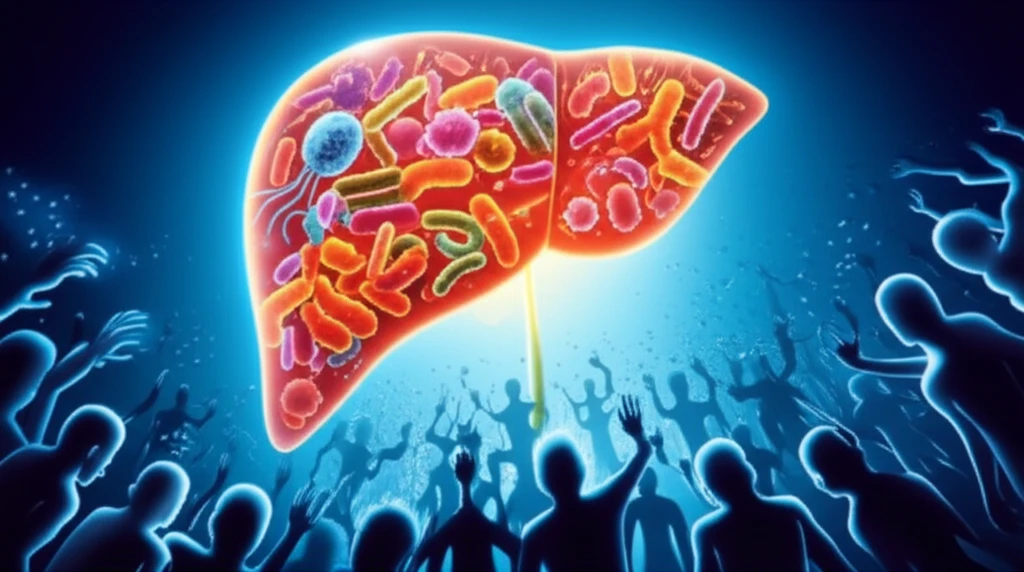
A visual representation of the gut-liver axis, showing healthy gut bacteria protecting the liver from autoimmune attack.

Decoding Autoimmune Cholangitis: How Gut Health Holds the Key

"Emerging research highlights the critical link between gut microbiota and the development of autoimmune cholangitis, offering new avenues for prevention and treatment."


Autoimmune cholangitis, particularly primary biliary cholangitis (PBC), is a chronic liver disease characterized by the immune system mistakenly attacking the small bile ducts in the liver. This leads to inflammation, scarring, and eventually liver failure. While the exact cause of PBC remains unknown, genetic predisposition and environmental factors are believed to play a significant role.

In recent years, the gut microbiota – the complex community of microorganisms residing in our digestive tract – has emerged as a key player in the development and progression of various autoimmune diseases, including PBC. The gut-liver axis, a bidirectional communication pathway between the gut and the liver, allows gut bacteria and their products to influence liver health.

A groundbreaking study published in the Journal of Autoimmunity sheds light on the intricate relationship between gut microbiota and autoimmune cholangitis. Researchers investigated how imbalances in gut bacteria (dysbiosis) and the translocation of bacteria from the gut to the liver contribute to the disease process. This article breaks down the study's findings, exploring the implications for prevention and treatment.

The Gut-Liver Connection: Unraveling the Role of Gut Bacteria in Autoimmune Cholangitis

A visual representation of the gut-liver axis, showing healthy gut bacteria protecting the liver from autoimmune attack.

The Journal of Autoimmunity study used a well-established mouse model of PBC, known as dnTGFβRII mice, to investigate the impact of gut microbiota on the disease. These mice spontaneously develop autoimmune cholangitis, mimicking the key features of PBC in humans. Researchers also utilized TLR2-deficient dnTGFβRII mice (dnTGFβRIITLR2-/-) to examine the role of Toll-like receptor 2 (TLR2), a protein that recognizes bacterial components and plays a crucial role in the immune system.

Here are some key findings from the study:

  • Dysbiosis in PBC: DnTGFβRII mice exhibited a significantly altered gut microbiota composition compared to healthy control mice. This dysbiosis was characterized by an increase in Firmicutes bacteria and a decrease in Bacteroidetes bacteria.
  • Antibiotic Treatment Alleviates Cholangitis: Administering antibiotics to dnTGFβRII mice to alter their gut microbiota significantly reduced liver inflammation and bile duct damage. This finding suggests that gut bacteria play a direct role in driving the autoimmune response in the liver.
  • TLR2 Deficiency Exacerbates Cholangitis: DnTGFβRIITLR2-/- mice, lacking TLR2, displayed more severe autoimmune cholangitis compared to dnTGFβRII mice with intact TLR2. This indicates that TLR2 normally helps maintain gut barrier integrity, preventing bacterial translocation to the liver.
  • Increased Gut Permeability: TLR2-deficient mice exhibited increased gut permeability, also known as "leaky gut." This means that the lining of their intestines was more porous, allowing bacteria and their products to leak into the bloodstream and travel to the liver.
  • Bacterial Translocation to the Liver: TLR2-deficient mice had a higher number of bacteria in their livers, confirming that gut bacteria were indeed translocating from the gut to the liver. This bacterial translocation further amplified liver inflammation and damage.
These findings demonstrate that dysbiosis and bacterial translocation from the gut to the liver play a crucial role in the pathogenesis of autoimmune cholangitis in this mouse model. TLR2, which is important for maintaining gut barrier integrity, seems to be a critical factor in preventing bacterial translocation and subsequent liver inflammation.

What Does This Mean for You? Practical Steps to Protect Your Gut and Liver Health

While this research was conducted in mice, it has significant implications for understanding and potentially treating autoimmune cholangitis in humans. Here's what you can do to support your gut and liver health:

About this Article -

This article was crafted using a human-AI hybrid and collaborative approach. AI assisted our team with initial drafting, research insights, identifying key questions, and image generation. Our human editors guided topic selection, defined the angle, structured the content, ensured factual accuracy and relevance, refined the tone, and conducted thorough editing to deliver helpful, high-quality information.See our About page for more information.

Everything You Need To Know

1

What is the primary focus of the research discussed concerning autoimmune cholangitis?

The main focus is the relationship between gut microbiota and autoimmune cholangitis, specifically primary biliary cholangitis (PBC). Research explores how imbalances in gut bacteria (dysbiosis) and bacterial translocation from the gut to the liver contribute to the disease. The studies utilize mouse models, particularly dnTGFβRII mice and dnTGFβRIITLR2-/- mice, to understand these processes and their implications for prevention and treatment.

2

How does dysbiosis in the gut contribute to the development of autoimmune cholangitis, based on the study findings?

The study indicates that dysbiosis, an imbalance in the gut microbiota, is a key factor. DnTGFβRII mice, which spontaneously develop autoimmune cholangitis, exhibited a specific dysbiosis pattern: an increase in Firmicutes bacteria and a decrease in Bacteroidetes bacteria. This altered gut environment contributes to the disease process, as altering the gut microbiota with antibiotics reduced liver inflammation and damage.

3

What role does TLR2 play in the context of gut health and autoimmune cholangitis, and what happens when it's deficient?

TLR2 (Toll-like receptor 2) is crucial for maintaining gut barrier integrity. It recognizes bacterial components and helps prevent bacterial translocation from the gut to the liver. When TLR2 is deficient, as seen in dnTGFβRIITLR2-/- mice, the gut becomes more permeable ('leaky gut'), allowing bacteria and their products to leak into the bloodstream and travel to the liver. This results in more severe autoimmune cholangitis, highlighting TLR2's protective role.

4

Can you explain the significance of the gut-liver axis in the context of autoimmune cholangitis?

The gut-liver axis is a bidirectional communication pathway. It allows gut bacteria and their products to influence liver health. In autoimmune cholangitis, the gut-liver axis becomes a critical site of dysfunction. Dysbiosis and bacterial translocation, as highlighted by the research, exemplify how gut bacteria impact the liver through this axis. This interaction significantly affects the development and progression of the disease, emphasizing the importance of gut health in liver disease.

5

What are the practical implications of this research for individuals seeking to protect their gut and liver health, considering the findings regarding autoimmune cholangitis?

The research, though conducted on mice, provides insights relevant to humans. The findings emphasize the importance of maintaining a healthy gut microbiota. This could involve dietary adjustments to support a balanced gut environment, potentially including prebiotics and probiotics, or lifestyle changes that positively influence gut health. Protecting the gut lining, as TLR2 helps do, is also essential. These actions could help prevent dysbiosis, bacterial translocation, and inflammation, all of which are linked to autoimmune cholangitis and other liver diseases. It's recommended to consult healthcare professionals for personalized advice.

Newsletter Subscribe

Subscribe to get the latest articles and insights directly in your inbox.