
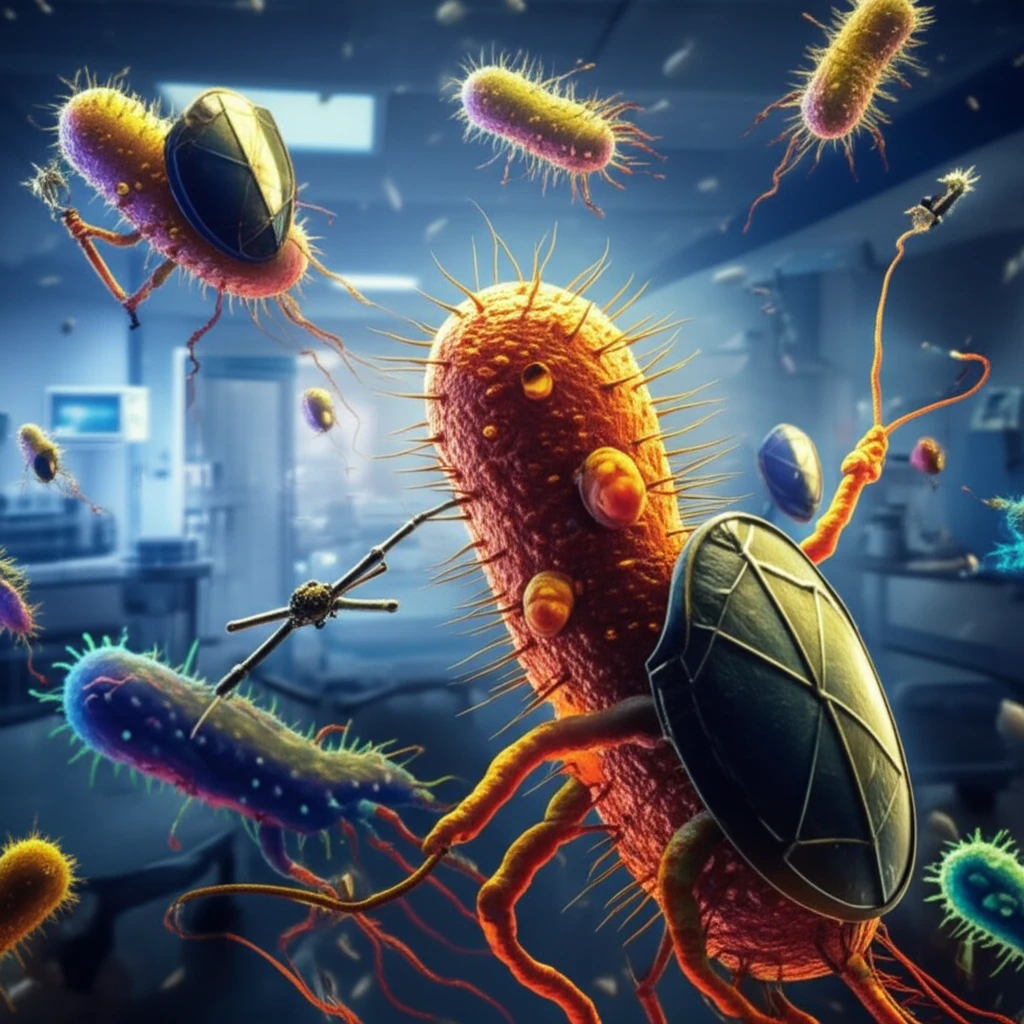
Bacteria evolving with shields, weapons, and modern hospitals.

Decoding Antibiotic Resistance: A Guide to Staying Ahead

"Understanding how antimicrobial stewardship protects us from superbugs."


In an era where medical advancements have become commonplace, the looming threat of antibiotic resistance casts a long shadow. Antibiotics, once considered miracle drugs, are becoming less effective as bacteria evolve and develop defenses against them. This phenomenon, known as antimicrobial resistance (AMR), poses a significant risk to global public health.

The rise of antibiotic-resistant bacteria, often referred to as "superbugs," has the potential to reverse decades of progress in treating infectious diseases. Common infections that were once easily managed with antibiotics are now becoming increasingly difficult, and in some cases, impossible to treat. This can lead to prolonged illness, increased hospitalizations, higher medical costs, and a greater risk of mortality.

Understanding the mechanisms and drivers behind antibiotic resistance is crucial for developing strategies to combat this growing problem. This article delves into the complex world of antibiotic resistance, exploring how it arises, how it spreads, and what steps can be taken at individual and global levels to mitigate its impact and protect the effectiveness of these vital medications.

What is Antibiotic Resistance and Why Does It Matter?

Bacteria evolving with shields, weapons, and modern hospitals.

Antibiotic resistance occurs when bacteria change in response to the use of antibiotics. These changes allow bacteria to survive and multiply even in the presence of medications designed to kill them. This resistance can develop through various mechanisms, including genetic mutations, horizontal gene transfer (the exchange of genetic material between bacteria), and the acquisition of resistance genes from other microorganisms.

The consequences of antibiotic resistance are far-reaching and affect nearly every aspect of modern medicine. Infections caused by resistant bacteria are more likely to:

  • Require treatment with stronger, more toxic, and more expensive antibiotics.
  • Lead to longer hospital stays and increased healthcare costs.
  • Increase the risk of treatment failure and death.
  • Spread to others, further exacerbating the problem.
The rise of resistance threatens our ability to treat common infections, perform surgeries, and manage chronic conditions. Antibiotics are essential for preventing infections during surgeries, organ transplants, and cancer chemotherapy. Without effective antibiotics, these procedures become much riskier. The list of reviewers of Antimicrobial Chemotherapy in 2018 shows the depth of concern in this field.

How Can You Help Combat Antibiotic Resistance?

Combating antibiotic resistance requires a multi-faceted approach involving individuals, healthcare professionals, policymakers, and researchers. Simple steps individuals can take include:

<ul> <li>Only use antibiotics when prescribed by a healthcare professional.</li> <li>Complete the full course of antibiotics, even if you start feeling better.</li> <li>Never share antibiotics with others or use leftover prescriptions.</li> <li>Practice good hygiene, such as frequent handwashing, to prevent infections.</li> <li>Get vaccinated to prevent infections that may require antibiotic treatment.</li> </ul>

Antimicrobial stewardship programs play a crucial role in promoting the appropriate use of antibiotics in healthcare settings. These programs involve strategies such as antibiotic guidelines, education, and monitoring to ensure that antibiotics are used judiciously. By working together, we can preserve the effectiveness of antibiotics and protect public health for future generations.

About this Article -

This article was crafted using a human-AI hybrid and collaborative approach. AI assisted our team with initial drafting, research insights, identifying key questions, and image generation. Our human editors guided topic selection, defined the angle, structured the content, ensured factual accuracy and relevance, refined the tone, and conducted thorough editing to deliver helpful, high-quality information.See our About page for more information.

Everything You Need To Know

1

What exactly is antibiotic resistance, and why should I be concerned about it?

Antibiotic resistance is a phenomenon where bacteria evolve and develop defenses against antibiotics, making these medications less effective. This happens through mechanisms like genetic mutations, horizontal gene transfer, and acquiring resistance genes. The concern stems from the fact that common infections become harder, or even impossible, to treat, potentially leading to longer illnesses, increased hospitalizations, higher medical costs, and a greater risk of death. Without effective antibiotics, procedures like surgeries and cancer chemotherapy become significantly riskier.

2

In what ways do "superbugs" or antibiotic-resistant bacteria, impact our ability to treat infections?

The rise of 'superbugs,' or antibiotic-resistant bacteria, has the potential to reverse decades of progress in treating infectious diseases. Infections caused by resistant bacteria often require stronger, more toxic, and more expensive antibiotics. This leads to longer hospital stays, increased healthcare costs, a higher risk of treatment failure, and the potential spread of resistance to others. The increasing prevalence of these resistant organisms threatens our ability to manage even common infections effectively.

3

What is horizontal gene transfer, and how does it contribute to the spread of antibiotic resistance among bacteria?

Horizontal gene transfer is the exchange of genetic material between bacteria, allowing them to share resistance genes. This means a bacterium can acquire resistance from another, even if they are not directly related. This process accelerates the spread of antibiotic resistance because it enables bacteria to quickly adapt and become resistant to multiple antibiotics. It's a key mechanism by which resistance traits are disseminated throughout bacterial populations.

4

How does antimicrobial stewardship play a role in preventing the proliferation of antibiotic resistance?

The text mentions how antimicrobial stewardship protects us from superbugs. However, the text does not explicitly detail how antimicrobial stewardship programs function to reduce resistance. Typically, these programs promote the appropriate use of antibiotics, ensuring they are prescribed only when necessary, at the correct dose, and for the proper duration. By reducing unnecessary antibiotic use, antimicrobial stewardship minimizes the selective pressure that drives the evolution and spread of antibiotic resistance in bacteria. This would limit genetic mutations, horizontal gene transfer, and acquisition of resistant genes.

5

Beyond individual actions, what systemic or global approaches are necessary to effectively combat antibiotic resistance and its broader implications for public health and medical advancements?

While individuals play a role, tackling antibiotic resistance demands a multi-pronged approach involving healthcare professionals, policymakers, and researchers. Healthcare needs to implement antimicrobial stewardship programs. Policymakers must create and enforce regulations to control antibiotic use in agriculture and healthcare, while also investing in research for new antibiotics and alternative therapies. Global collaboration is essential to monitor resistance trends, share data, and coordinate strategies to minimize the spread of resistance across borders. Without these coordinated efforts, medical advancements could be undermined by the increasing ineffectiveness of antibiotics.

Newsletter Subscribe

Subscribe to get the latest articles and insights directly in your inbox.