
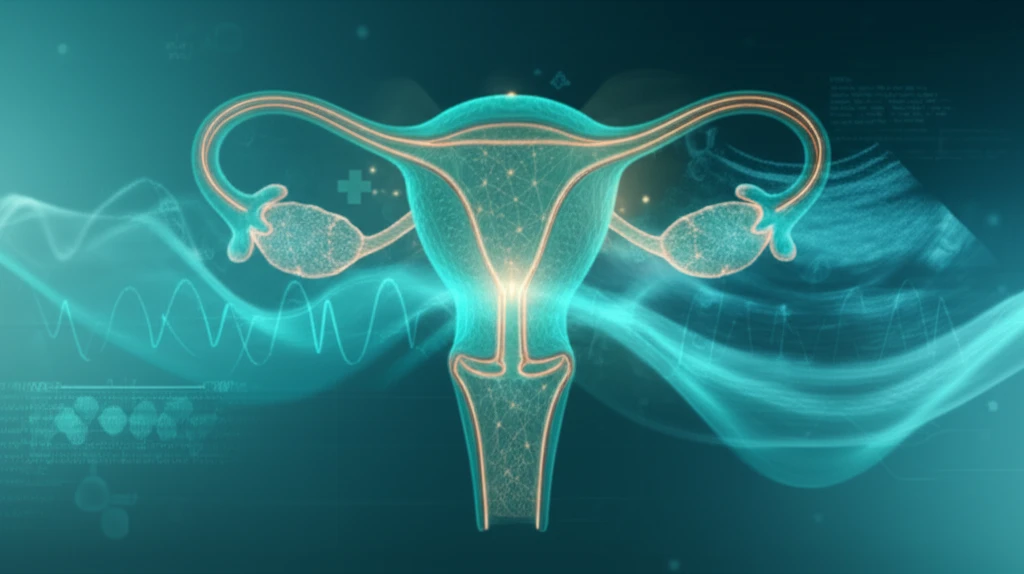
Decoding Adenomyosis: How Ultrasound is Revolutionizing Diagnosis

"A Deep Dive into the Latest Advances in Transvaginal Ultrasound for Accurate Detection and Management"
Adenomyosis, a condition where endometrial tissue grows into the muscular walls of the uterus, affects a significant number of women, often causing chronic pain, heavy bleeding, and fertility issues. Traditionally, a definitive diagnosis required a hysterectomy followed by a histological examination, an invasive approach that doesn't suit women who desire future pregnancies or seek less drastic interventions.
Fortunately, advancements in imaging technologies offer promising alternatives. Transvaginal ultrasound (TVUS) has emerged as a valuable tool, providing a non-invasive method to visualize the uterus and identify key indicators of adenomyosis. This technique allows for earlier diagnosis and more informed management decisions, helping women avoid unnecessary surgeries and explore various treatment options.
This article delves into the latest research on TVUS for adenomyosis diagnosis, highlighting its accuracy, benefits, and the specific imaging features that contribute to reliable detection. We'll explore how this technology is changing the standard of care, improving outcomes, and empowering women with the knowledge they need to manage their condition effectively.
Why TVUS is Becoming the Go-To Diagnostic Tool
TVUS offers a less invasive and more accessible means of diagnosing adenomyosis compared to traditional methods. Its ability to visualize the uterus in real-time allows clinicians to identify key markers of the condition without the need for surgery. Moreover, TVUS is generally more affordable and readily available than other imaging techniques like MRI, making it a practical choice for many patients.
- Non-Invasive: Eliminates the need for surgical intervention, reducing risks and recovery time.
- Accessible: More widely available compared to MRI, making it easier for women to access diagnostic services.
- Affordable: Generally less expensive than other imaging methods, lowering the financial burden on patients.
- Real-Time Visualization: Allows clinicians to assess the uterus dynamically, identifying subtle signs of adenomyosis.
The Future of Adenomyosis Diagnosis
TVUS has emerged as a front-line tool for diagnosing adenomyosis, offering a non-invasive, accessible, and cost-effective alternative to traditional methods. Its accuracy, particularly when combined with specific imaging features and advanced techniques like color Doppler and elastography, positions it as a cornerstone in modern gynecological care. As research continues, TVUS promises to further refine diagnostic precision, leading to earlier interventions, better treatment outcomes, and improved quality of life for women affected by this condition.