
Decoding Acroangiodermatitis: What You Need to Know About This Skin Condition

"A comprehensive guide to acroangiodermatitis, its causes, symptoms, and how it mimics other serious conditions like Kaposi's sarcoma."
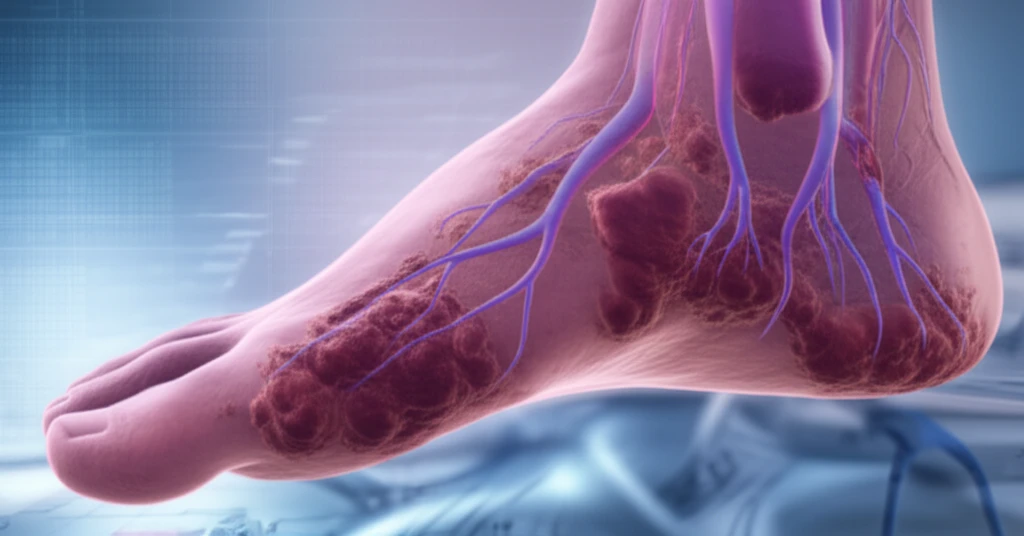
Acroangiodermatitis, also known as pseudo-Kaposi's sarcoma, is a rare skin condition characterized by the unusual proliferation of blood vessels. It often manifests as reddish-purple or brownish lesions on the skin, particularly on the feet and ankles. While it's not cancerous, acroangiodermatitis can mimic the appearance of Kaposi's sarcoma (KS), a cancer that develops from the cells that line blood and lymph vessels, especially in individuals with weakened immune systems, such as those with HIV.
Distinguishing between acroangiodermatitis and Kaposi's sarcoma is crucial for accurate diagnosis and appropriate treatment. One key difference lies in the underlying causes. Acroangiodermatitis is typically linked to chronic venous insufficiency (poor blood flow in the veins), arteriovenous malformations (abnormal connections between arteries and veins), or other conditions that affect blood circulation. Kaposi's sarcoma, on the other hand, is strongly associated with human herpesvirus 8 (HHV-8) infection, particularly in individuals with HIV.
This article delves into the intricacies of acroangiodermatitis, exploring its clinical features, diagnostic approaches, and management strategies. We'll shed light on how it differs from Kaposi's sarcoma and other similar conditions, providing you with the knowledge to understand this often-misunderstood skin disorder.
What Causes Acroangiodermatitis?
Acroangiodermatitis arises from conditions that compromise blood flow, leading to increased pressure and inflammation in the affected area. This, in turn, stimulates the proliferation of blood vessels, resulting in the characteristic skin lesions.
- Chronic Venous Insufficiency: This is one of the most common causes, where valves in the veins of the legs don't function properly, leading to blood pooling and increased pressure.
- Arteriovenous Malformations or Fistulas: These abnormal connections disrupt normal blood flow and can cause localized pressure changes.
- Paralyzed Limbs: Reduced mobility can impair circulation, increasing the risk of acroangiodermatitis.
- Amputation Stumps: Altered blood flow dynamics in the residual limb can contribute to the condition.
- Thrombotic Conditions: Blood clots can obstruct vessels and lead to circulatory problems.
The Importance of Accurate Diagnosis
While acroangiodermatitis is not cancerous, it can significantly impact quality of life due to discomfort and cosmetic concerns. Accurate diagnosis is crucial to differentiate it from more serious conditions like Kaposi's sarcoma and to address any underlying circulatory problems. If you notice unusual skin lesions, especially on your lower extremities, consult a dermatologist for proper evaluation and management.