
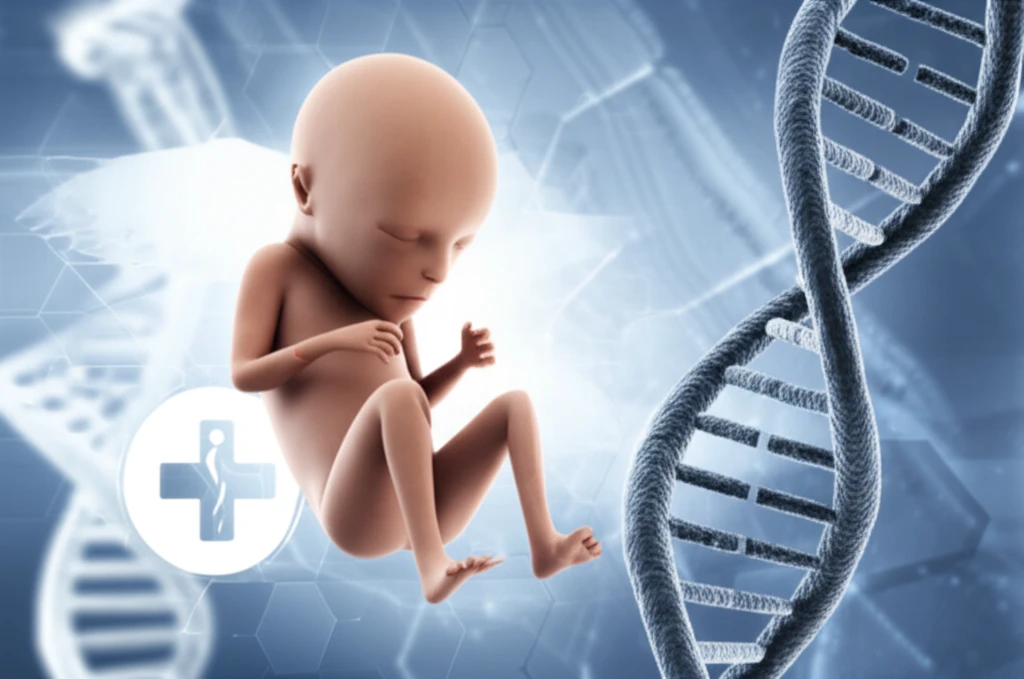
Illustration of a fetus with short limbs and a narrow chest, symbolizing SRTD3, with DNA and medical symbols.

Deciphering SRTD3: A Guide to Understanding a Rare Fetal Condition

"Unraveling the complexities of short-rib thoracic dysplasia 3 (SRTD3) and its implications for expectant parents."


Navigating the complexities of prenatal health can be overwhelming, especially when faced with rare conditions that may affect your baby. One such condition is short-rib thoracic dysplasia 3 (SRTD3), a skeletal disorder that presents unique challenges. This article serves as a comprehensive guide, breaking down the essential aspects of SRTD3 to help you understand its implications and the support available.

SRTD3, also known as short-rib polydactyly syndrome type III, is a genetic disorder characterized by specific physical features observed in a developing fetus. It is often associated with compound heterozygous mutations in the DYNC2H1 gene. Understanding these details is crucial for parents seeking information and guidance.

This article will delve into the specifics of SRTD3, providing a clear overview of its causes, diagnostic methods, and potential impacts. Our goal is to equip you with knowledge and support as you navigate the complexities of this rare condition.

What is Short-Rib Thoracic Dysplasia 3 (SRTD3)?

Illustration of a fetus with short limbs and a narrow chest, symbolizing SRTD3, with DNA and medical symbols.

SRTD3 is a rare skeletal dysplasia that primarily affects the development of the rib cage and limbs. This condition is often identified during prenatal ultrasounds, where characteristic features like short ribs, a narrow chest, and, in some cases, polydactyly (the presence of extra fingers or toes) are observed. The severity of SRTD3 can vary, influencing the health and well-being of the affected individual.

The genetic basis of SRTD3 is complex, often involving mutations in the DYNC2H1 gene. This gene provides instructions for creating a protein essential for the structure and function of cilia. Cilia are tiny, hair-like structures found on cells, playing a vital role in cell signaling and movement. Mutations in DYNC2H1 can disrupt these processes, leading to skeletal and other developmental abnormalities.

  • Short Ribs: A distinctive feature, often shorter than typical.
  • Narrow Chest: The rib cage may be underdeveloped, limiting chest capacity.
  • Limb Abnormalities: Shortened limbs are common.
  • Polydactyly: Extra fingers or toes may be present.
  • Genetic Basis: Primarily linked to mutations in the DYNC2H1 gene.
  • Variable Severity: The extent of the condition can differ.
Understanding the specific genetic changes that lead to SRTD3 is crucial for both diagnosis and family planning. Diagnostic methods include prenatal ultrasound, chorionic villus sampling, and genetic testing to determine the presence of relevant gene mutations.

Moving Forward: Support and Resources

Receiving a diagnosis related to SRTD3 can be a challenging experience. It is essential to seek support from medical professionals, genetic counselors, and support groups. These resources can provide valuable information, emotional support, and guidance as you navigate the journey ahead. Researching the condition and connecting with others who have similar experiences can provide comfort and a sense of community. With the right knowledge and support, families can face the complexities of SRTD3 with confidence.

About this Article -

This article was crafted using a human-AI hybrid and collaborative approach. AI assisted our team with initial drafting, research insights, identifying key questions, and image generation. Our human editors guided topic selection, defined the angle, structured the content, ensured factual accuracy and relevance, refined the tone, and conducted thorough editing to deliver helpful, high-quality information.See our About page for more information.

This article is based on research published under:

DOI-LINK: 10.1016/j.tjog.2017.12.021, Alternate LINK

Title: Prenatal Diagnosis Of Short-Rib Polydactyly Syndrome Type Iii Or Short-Rib Thoracic Dysplasia 3 With Or Without Polydactyly (Srtd3) Associated With Compound Heterozygous Mutations In Dync2H1 In A Fetus

Subject: Obstetrics and Gynecology

Journal: Taiwanese Journal of Obstetrics and Gynecology

Publisher: Elsevier BV

Authors: Chih-Ping Chen, Tsang-Ming Ko, Tung-Yao Chang, Schu-Rern Chern, Shin-Wen Chen, Shih-Ting Lai, Tzu-Yun Chuang, Wayseen Wang

Published: 2018-02-01

Everything You Need To Know

1

What exactly is Short-Rib Thoracic Dysplasia 3 (SRTD3)?

Short-Rib Thoracic Dysplasia 3 (SRTD3) is a rare skeletal dysplasia impacting the development of the rib cage and limbs. It's often detected during prenatal ultrasounds, where features like short ribs, a narrow chest, and possibly polydactyly (extra fingers or toes) are observed. The mutations in the DYNC2H1 gene are often associated with SRTD3. The severity of SRTD3 varies, affecting the individual's health differently. Understanding the underlying genetic changes is crucial for accurate diagnosis and informed family planning.

2

How is Short-Rib Thoracic Dysplasia 3 (SRTD3) diagnosed before birth?

Prenatal diagnosis of Short-Rib Thoracic Dysplasia 3 (SRTD3) typically involves prenatal ultrasound to identify characteristic features such as short ribs and limb abnormalities. Chorionic villus sampling and amniocentesis can also be performed to obtain fetal cells for genetic testing. Genetic analysis focuses on detecting mutations in the DYNC2H1 gene, which is strongly associated with SRTD3. Early and accurate diagnosis is essential for expectant parents to understand the condition and prepare for appropriate medical care and management.

3

How do mutations in the DYNC2H1 gene cause Short-Rib Thoracic Dysplasia 3 (SRTD3)?

Mutations in the DYNC2H1 gene disrupt the function of cilia, which are essential for cell signaling and movement during development. These cilia play a critical role in skeletal formation, and when the DYNC2H1 gene is mutated, the resulting dysfunctional cilia lead to skeletal abnormalities, particularly affecting rib and limb development. This disruption causes the characteristic features of Short-Rib Thoracic Dysplasia 3 (SRTD3), such as short ribs, narrow chest, and limb malformations.

4

If a child is diagnosed with Short-Rib Thoracic Dysplasia 3 (SRTD3), what kind of support and resources are available for the family?

Families of children diagnosed with Short-Rib Thoracic Dysplasia 3 (SRTD3) can seek support from medical professionals, including genetic counselors who can provide information about the condition and its inheritance. Support groups and patient advocacy organizations offer valuable emotional support and connections with other families facing similar challenges. Medical management may involve a multidisciplinary approach, including specialists in genetics, pulmonology, and orthopedics, to address the specific needs of the child.

5

What are the potential long-term implications for individuals diagnosed with Short-Rib Thoracic Dysplasia 3 (SRTD3) and how might the severity of the condition impact their life?

The long-term implications for individuals with Short-Rib Thoracic Dysplasia 3 (SRTD3) depend significantly on the severity of the condition. Severe cases may result in significant respiratory complications due to the underdeveloped rib cage, potentially requiring ongoing medical support. The impact on limb function and overall skeletal development can affect mobility and daily activities. While there's no cure for Short-Rib Thoracic Dysplasia 3 (SRTD3), comprehensive management can improve the quality of life for affected individuals. This may involve respiratory support, orthopedic interventions, and ongoing monitoring to address potential complications. Further research is needed to fully understand the long-term prognosis and develop targeted therapies for Short-Rib Thoracic Dysplasia 3 (SRTD3).

Newsletter Subscribe

Subscribe to get the latest articles and insights directly in your inbox.