
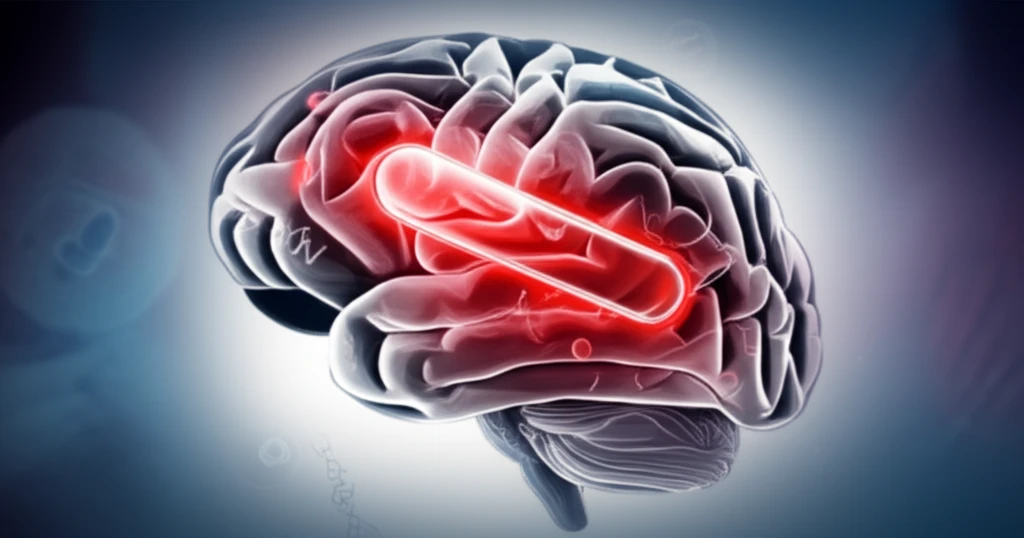
D-Dimer: The Unsung Hero in Mild Traumatic Brain Injury Detection?

"Could a simple blood test revolutionize how we diagnose brain injuries, potentially reducing unnecessary CT scans?"
Traumatic brain injuries (TBIs), especially mild ones, are frequently encountered in emergency rooms. While Computed Tomography (CT) scans are invaluable in assessing the damage, they come with their own set of concerns, most notably the risk of radiation exposure. This is particularly worrying for vulnerable populations like children and pregnant women, sparking the search for safer, equally effective diagnostic tools.
Imagine a world where diagnosing a TBI was as simple as a blood test. That’s the promise of biomarker research, aiming to identify substances in the blood that signal the presence and severity of brain injury. One such promising biomarker is D-dimer, a protein fragment produced when blood clots break down. Researchers are exploring its potential to flag structural disorders in the brain following a mild TBI, offering a quicker and more accessible diagnostic route.
In a recent study published in the Journal of Neurotrauma, researchers delved into the relationship between D-dimer levels and structural damage in patients with mild TBI. Their findings suggest that D-dimer elevation could serve as a valuable indicator, potentially reducing the reliance on CT scans and paving the way for more efficient and safer TBI diagnosis.
D-Dimer: A Clot Breakdown Product with Diagnostic Potential
D-dimer, at its core, is a byproduct of the body's natural clot-busting process. When a blood clot forms and then dissolves, D-dimer is released into the bloodstream. Elevated levels are typically associated with conditions like deep vein thrombosis and pulmonary embolism, indicating increased clotting and fibrinolysis (the breakdown of fibrin, the protein that forms the structure of a blood clot).
- Study Design: Researchers analyzed data from 73 patients admitted to Kenwakai Ootemachi Hospital with mild TBIs (Glasgow Coma Scale scores of 14-15).
- Patient Classification: Patients were divided into two groups: those with structural disorders detected on CT scans or MRI (lesion-positive) and those without (lesion-negative).
- D-dimer Measurement: Blood samples were taken within one hour of admission to measure D-dimer levels, along with other coagulation markers.
- Statistical Analysis: Researchers compared D-dimer levels between the two groups and performed multivariate logistic regression to identify independent predictors of structural disorder.
The Future of TBI Diagnosis: A Simpler Blood Test?
This research highlights the promise of D-dimer as a biomarker for detecting structural disorders in mild TBI patients. By potentially reducing the need for CT scans, this approach could minimize radiation exposure and streamline the diagnostic process. However, further research is needed to validate these findings in larger, multi-center studies and to establish standardized D-dimer ranges. The development of reliable blood biomarkers like D-dimer could revolutionize TBI diagnosis, offering a faster, safer, and more accessible alternative to traditional imaging techniques. As research progresses, we may soon see a future where a simple blood test can provide critical insights into brain injury, improving patient care and outcomes.