
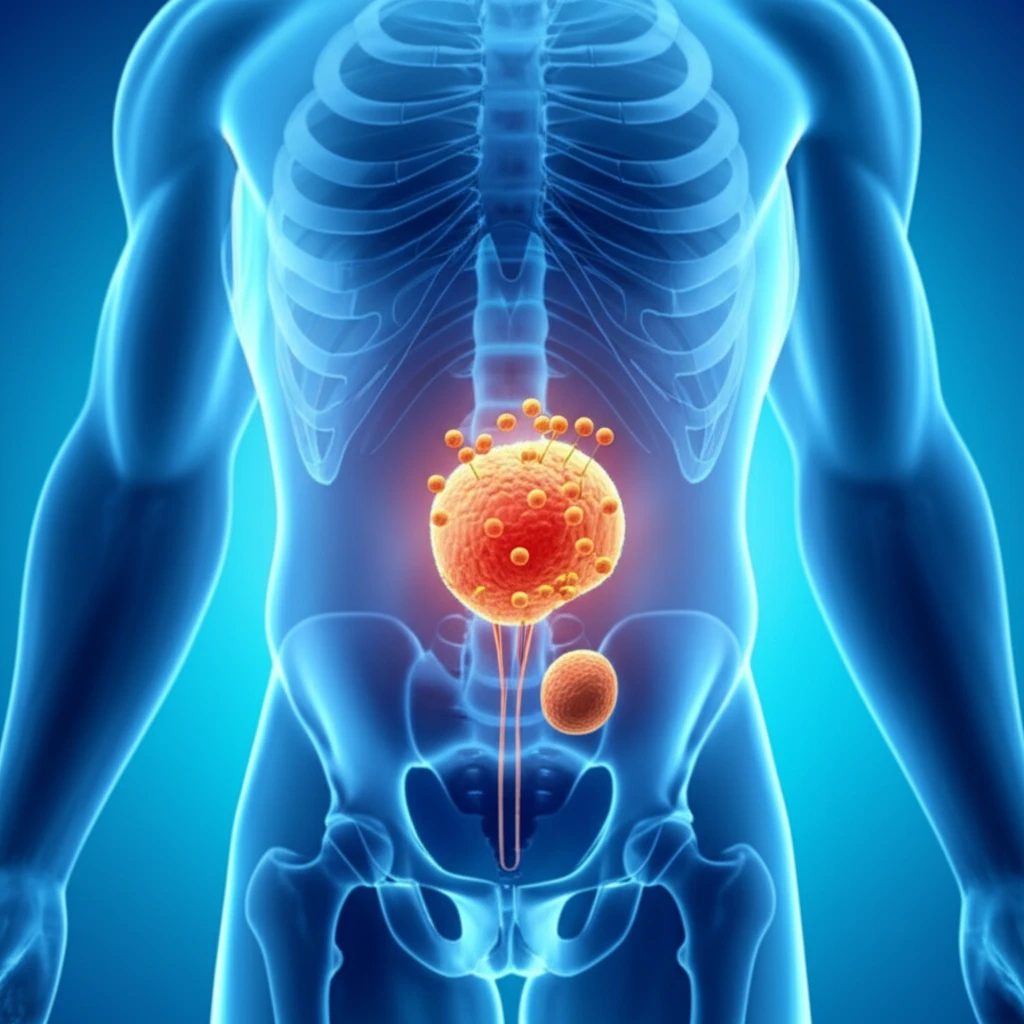
Cutting-Edge Prostate Cancer Treatment: How Focal Brachytherapy Is Changing the Game

"Discover how focal brachytherapy, combined with prophylactic irradiation, offers a tailored approach to treating prostate cancer, minimizing side effects and improving patient outcomes."
Prostate cancer treatment is constantly evolving, and one of the most promising advancements is focal brachytherapy. This technique focuses radiation on the cancerous area within the prostate, known as the index lesion, while sparing healthy tissue. This targeted approach aims to reduce the side effects associated with traditional whole-gland radiation therapy.
Researchers have been exploring the benefits of combining focal brachytherapy with prophylactic irradiation, a strategy that involves treating the index lesion and also providing a lower dose of radiation to the surrounding tissue. The goal is to control the cancer effectively while minimizing the risk of recurrence and side effects.
A recent study published in Cancer/Radiothérapie investigated the dosimetric impact of different focal brachytherapy approaches. The study's findings shed light on how these techniques can optimize radiation delivery and protect critical organs, offering new hope for men with prostate cancer.
The Current Burden of Prostate Cancer
Prostate cancer is the most common cancer in men and the second-leading cause of cancer death among males in the United States. The 2023 estimates cited in the literature included 288,300 new cases and 34,700 deaths. Approximately 80-85% of cases usually present as localized disease, for which active surveillance, whole-gland definitive radiotherapy, and radical prostatectomy are recognized treatment options. Recent systematic reviews have examined focal brachytherapy as a way to pursue disease control while potentially reducing genitourinary and gastrointestinal toxicity associated with whole-gland treatment.
What is Focal Brachytherapy and Why Is It Important?
Focal brachytherapy is a minimally invasive procedure where radioactive seeds are implanted directly into the prostate gland to target the cancerous lesion. Unlike traditional radiation therapy, which treats the entire prostate, focal brachytherapy precisely targets the tumor, reducing damage to surrounding healthy tissues such as the bladder, rectum, and nerves responsible for sexual function.
- Precision Targeting: Delivers radiation directly to the tumor while sparing healthy tissue.
- Reduced Side Effects: Minimizes urinary, bowel, and sexual dysfunction.
- Improved Quality of Life: Allows patients to maintain a more active and fulfilling lifestyle during and after treatment.
- Customized Treatment: Tailors the radiation dose and area to the specific characteristics of the tumor.
A Fast-Moving Evidence Base
Recent reviews describe focal therapy for prostate cancer as an active field involving treatment mechanisms, technological innovations, clinical outcomes, and future directions. Another 2026 review presents focal therapy as a promising alternative to radical prostate treatment, with the goal of balancing oncological control and functional preservation. Research published in 2024 also describes focal therapy as a viable option for selected patients with localized prostate cancer. Together, these reviews show continuing interest while emphasizing that patient selection remains central to the field.
The Importance of Careful Selection
Focal low-dose-rate brachytherapy has been addressed through a multidisciplinary consensus process. A consensus report published in 2012 included proposed selection criteria for appropriate focal brachytherapy candidates and a proposed framework for trial design. This history indicates that focal brachytherapy requires defined eligibility standards and structured clinical evaluation rather than being treated as a universally suitable replacement for whole-gland therapy.
Choosing Among Focal Options
Focal therapies are presented as potential alternatives to traditional prostate cancer treatments, with the possibility of reducing treatment-related side effects. The available option may not be the same for every patient, so treatment choice should reflect the individual's condition and preferences. The source specifically recommends consultation with both a urologist and a radiation oncologist when determining the most suitable focal therapy. This comparative decision-making approach places patient-specific assessment at the center of treatment selection.
The Future of Prostate Cancer Treatment
Focal brachytherapy represents a significant step forward in prostate cancer treatment. Its ability to precisely target cancerous lesions while minimizing damage to healthy tissue offers hope for improved outcomes and a better quality of life for men facing this diagnosis. As research continues and technology advances, focal brachytherapy is poised to become an increasingly important tool in the fight against prostate cancer.
Mapping the Field’s Next Directions
Focal therapy has been widely used as a minimally invasive strategy for targeted treatment of localized prostate cancer in recent years. A 2024 bibliometric analysis examined 1,312 relevant papers published during the previous decade. The analysis covered countries, institutions, journals, authors, keywords, and references, providing a broad map of how the research field has developed. This expanding publication base points to sustained scientific attention and a growing need to clarify the most effective future directions.
Outcomes Beyond Tumor Control
Studies of focal brachytherapy have examined more than cancer control alone, including functional outcomes and treatment toxicity. One reported study evaluated midterm oncologic, functional, and toxicity outcomes in men treated with focal brachytherapy, emphasizing the technique's ability to adapt seed implantation to the tumor's volume and location. A separate review and meta-analysis assessed oncologic and toxicity outcomes of definitive focal brachytherapy, while another cited 5.7-year clinical outcomes and a pair-matched comparison with radical treatment. These studies reflect the importance of evaluating how treatment affects patients' lives as well as whether it controls the disease.