
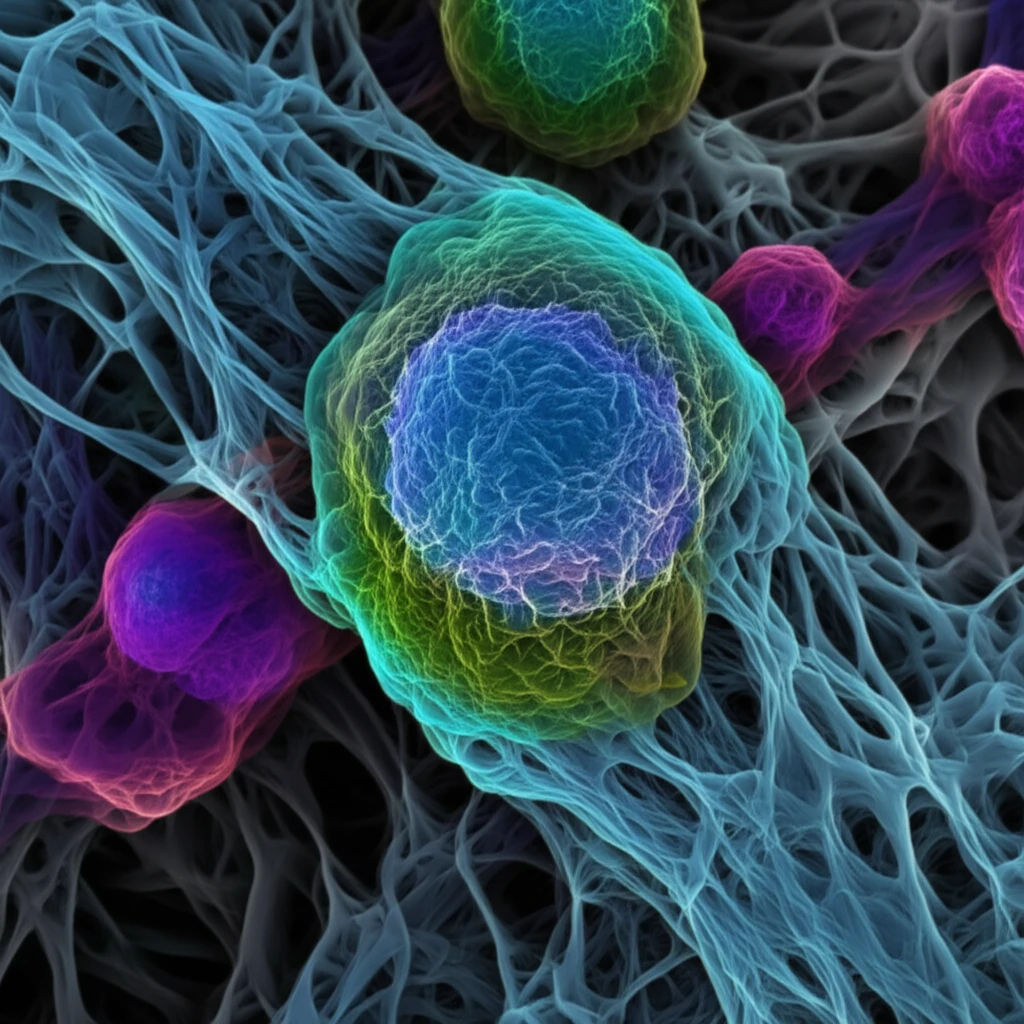
Culturing Cells in 3D: A Step-by-Step Guide

"Unlock the secrets to establishing and characterizing primary cell cultures in three dimensions, and discover how this innovative approach is revolutionizing biomedical research."
Traditional two-dimensional (2D) cell cultures have long been the cornerstone of biological and medical research. However, these simplified systems often fail to accurately replicate the intricate environment found within living tissues. This limitation has spurred the development of three-dimensional (3D) cell culture techniques, offering a more realistic and physiologically relevant platform for studying cell behavior.
3D cell cultures provide cells with a more natural environment, allowing them to interact with each other and the surrounding matrix in a way that closely mimics in vivo conditions. This leads to more accurate results in studies of cell growth, differentiation, drug response, and disease mechanisms. The shift towards 3D cultures is particularly relevant in fields like cancer research, regenerative medicine, and drug discovery, where understanding complex tissue interactions is crucial.
This article dives into the methods for establishing and characterizing primary cell cultures in a 3D environment. Drawing from research on innovative approaches, we will provide a step-by-step guide, highlight the benefits of 3D cultures over traditional 2D methods, and discuss the potential of this technology to revolutionize biomedical research. Whether you're a seasoned researcher or new to the field, this guide will equip you with the knowledge to harness the power of 3D cell cultures in your own work.
Setting Up Your 3D Cell Culture: A Practical Guide
Creating a successful 3D cell culture requires careful consideration of several factors, including the choice of scaffold material, cell seeding density, and culture conditions. The following steps will guide you through the process:
- Collagen: A natural extracellular matrix protein that provides excellent cell adhesion and biocompatibility.
- Alginate: A polysaccharide derived from seaweed that forms a gel-like matrix, allowing for easy cell encapsulation.
- Synthetic hydrogels: These materials can be tailored to mimic specific tissue properties and provide controlled degradation.
The Future of 3D Cell Cultures: Transforming Biomedical Research
3D cell culture is more than just a laboratory technique; it represents a paradigm shift in how we approach biomedical research. By bridging the gap between traditional 2D cultures and complex in vivo models, 3D cultures offer a powerful platform for studying cell behavior in a more realistic and physiologically relevant context.
As technology advances, we can expect to see even more sophisticated 3D culture systems emerge, incorporating microfluidics, biosensors, and advanced imaging techniques. These innovations will enable researchers to precisely control and monitor the cellular microenvironment, leading to new insights into disease mechanisms and the development of more effective therapies.
Whether you're exploring new drug candidates, investigating complex tissue interactions, or developing personalized medicine strategies, 3D cell cultures hold the key to unlocking new frontiers in biomedical research. Embrace this technology and join the growing community of scientists who are shaping the future of healthcare.