
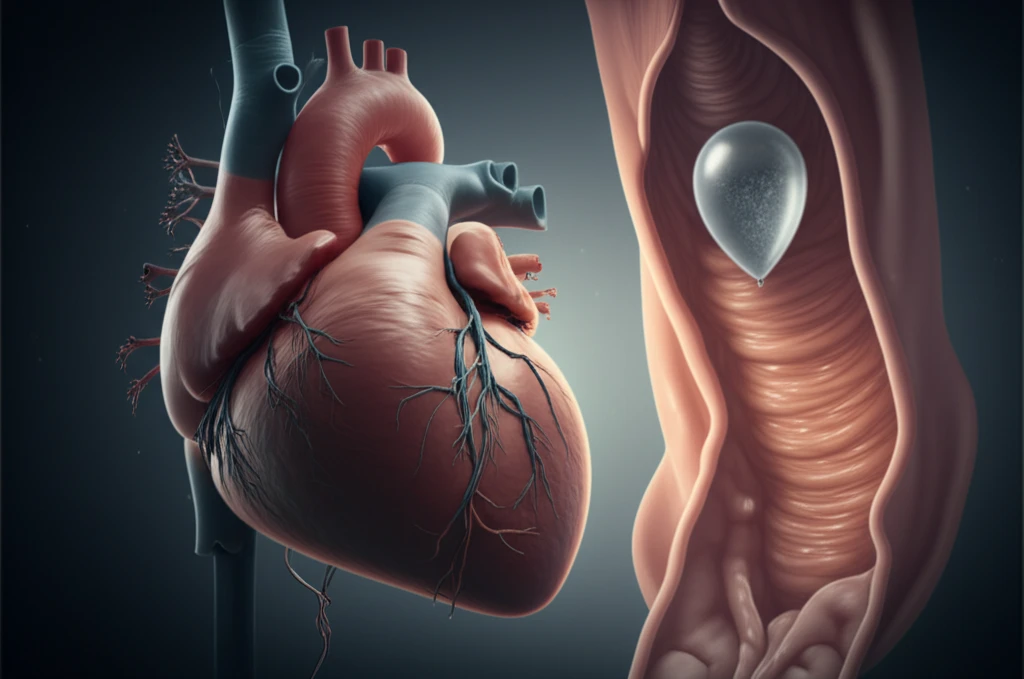
Heart and Esophagus Proximity

Cryoballoon Ablation: Is it Safe for Esophageal Health?

"A deep dive into the risks and benefits of cryoballoon ablation for atrial fibrillation and its potential impact on esophageal well-being. Understand what to consider if you're contemplating this procedure."


Atrial fibrillation (AFib) is a common heart condition that causes an irregular and often rapid heart rate. For many, this can lead to unpleasant symptoms like palpitations, fatigue, and shortness of breath. When medications aren't enough, doctors might recommend a procedure called ablation to restore a normal heart rhythm.

Cryoballoon ablation has emerged as a popular technique. It involves using a special balloon that freezes heart tissue to block the abnormal electrical signals causing AFib. But here's the catch: the esophagus, the tube that carries food from your mouth to your stomach, sits right behind the heart. This proximity raises concerns about potential injury during the procedure.

This article breaks down the potential risks to your esophagus during cryoballoon ablation. It will help you understand what precautions medical teams take and what to discuss with your doctor if you're considering this treatment.

What Esophageal Risks Are Associated with Cryoballoon Ablation?

Heart and Esophagus Proximity

Cryoballoon ablation, while effective for treating atrial fibrillation, carries potential risks for the esophagus due to its proximity to the heart. Several studies have explored the types and frequency of esophageal injuries that can occur.

According to research, the most common issues include:

  • Esophageal Lesions (ELs): These can range from mild inflammation (erythema) and superficial damage (erosions) to, in rare cases, more severe ulcerations.
  • Gastric Hypomotility (GH): This refers to a slowing down of the stomach's ability to empty, potentially causing discomfort or digestive issues.
In a study titled "Clinical Investigation of Esophageal Injury from Cryoballoon Ablation of Persistent Atrial Fibrillation," researchers investigated these complications in 101 patients undergoing cryoballoon ablation for persistent AFib. They found that esophageal lesions occurred in approximately 10.9% of patients, while gastric hypomotility was observed in 15.8%.

Making Informed Decisions About Your Heart Health

Cryoballoon ablation can be a game-changer for those struggling with AFib. Knowing the risks, especially to your esophagus, allows you to have informed conversations with your healthcare team. Don't hesitate to ask questions about their experience with the procedure, the precautions they take to protect the esophagus, and what to watch out for after the ablation. With open communication, you can confidently pursue a treatment plan that prioritizes both your heart and digestive health.

About this Article -

This article was crafted using a human-AI hybrid and collaborative approach. AI assisted our team with initial drafting, research insights, identifying key questions, and image generation. Our human editors guided topic selection, defined the angle, structured the content, ensured factual accuracy and relevance, refined the tone, and conducted thorough editing to deliver helpful, high-quality information.See our About page for more information.

This article is based on research published under:

DOI-LINK: 10.1111/pace.13578, Alternate LINK

Title: Clinical Investigation Of Esophageal Injury From Cryoballoon Ablation Of Persistent Atrial Fibrillation

Subject: Cardiology and Cardiovascular Medicine

Journal: Pacing and Clinical Electrophysiology

Publisher: Wiley

Authors: Takatoshi Shigeta, Kaoru Okishige, Hideshi Aoyagi, Takuro Nishimura, Rena A. Nakamura, Naruhiko Ito, Yusuke Tsuchiya, Mitsutoshi Asano, Tsukasa Shimura, Hidetoshi Suzuki, Manabu Kurabayashi, Yuichi Fukami, Shinya Sakita, Takehiko Keida, Tetsuo Sasano, Kenzo Hirao, Yasuteru Yamauchi

Published: 2018-12-14

Everything You Need To Know

1

What is cryoballoon ablation and how does it work for Atrial Fibrillation?

Cryoballoon ablation is a medical procedure primarily used to treat Atrial Fibrillation (AFib), a heart condition characterized by an irregular and often rapid heart rate. The procedure involves inserting a special balloon catheter into the heart. This balloon is then inflated and used to freeze and destroy the heart tissue causing the abnormal electrical signals that lead to AFib. The aim is to restore a normal heart rhythm, alleviating symptoms like palpitations and shortness of breath.

2

What are the potential esophageal risks associated with cryoballoon ablation?

Due to the proximity of the esophagus to the heart, cryoballoon ablation carries potential risks to this digestive organ. The primary risks include Esophageal Lesions (ELs), which can vary from mild inflammation and superficial damage to severe ulcerations. Another risk is Gastric Hypomotility (GH), where the stomach's ability to empty slows down, potentially leading to digestive discomfort. Research indicates that esophageal injuries are not uncommon following this procedure.

3

How common are esophageal injuries after cryoballoon ablation, according to research?

According to a study titled "Clinical Investigation of Esophageal Injury from Cryoballoon Ablation of Persistent Atrial Fibrillation," esophageal lesions were observed in approximately 10.9% of patients undergoing cryoballoon ablation. Furthermore, Gastric Hypomotility occurred in about 15.8% of the patients. These figures highlight the importance of understanding and discussing these risks with your healthcare team.

4

Why is it important to discuss esophageal health when considering cryoballoon ablation for Atrial Fibrillation?

Because the esophagus is located right behind the heart, it's crucial to discuss its health during the consideration of cryoballoon ablation. Knowing the risks, such as Esophageal Lesions (ELs) and Gastric Hypomotility (GH), allows patients to have informed conversations with their doctors. It is important to understand the precautions the medical team takes to protect the esophagus during the procedure and what to watch for afterward. Open communication ensures a treatment plan that considers both heart and digestive health.

5

What steps can I take to ensure my digestive health is considered if I'm scheduled for cryoballoon ablation?

Before undergoing cryoballoon ablation, engage in open and detailed conversations with your healthcare team. Inquire about their experience with the procedure and the specific precautions they employ to minimize risks to the esophagus. Ask about the potential for Esophageal Lesions (ELs) and Gastric Hypomotility (GH), and what steps will be taken to monitor and manage these conditions if they arise. Discuss any pre-existing digestive issues and how they might be affected. Post-procedure, follow up on any digestive symptoms promptly.

Newsletter Subscribe

Subscribe to get the latest articles and insights directly in your inbox.