
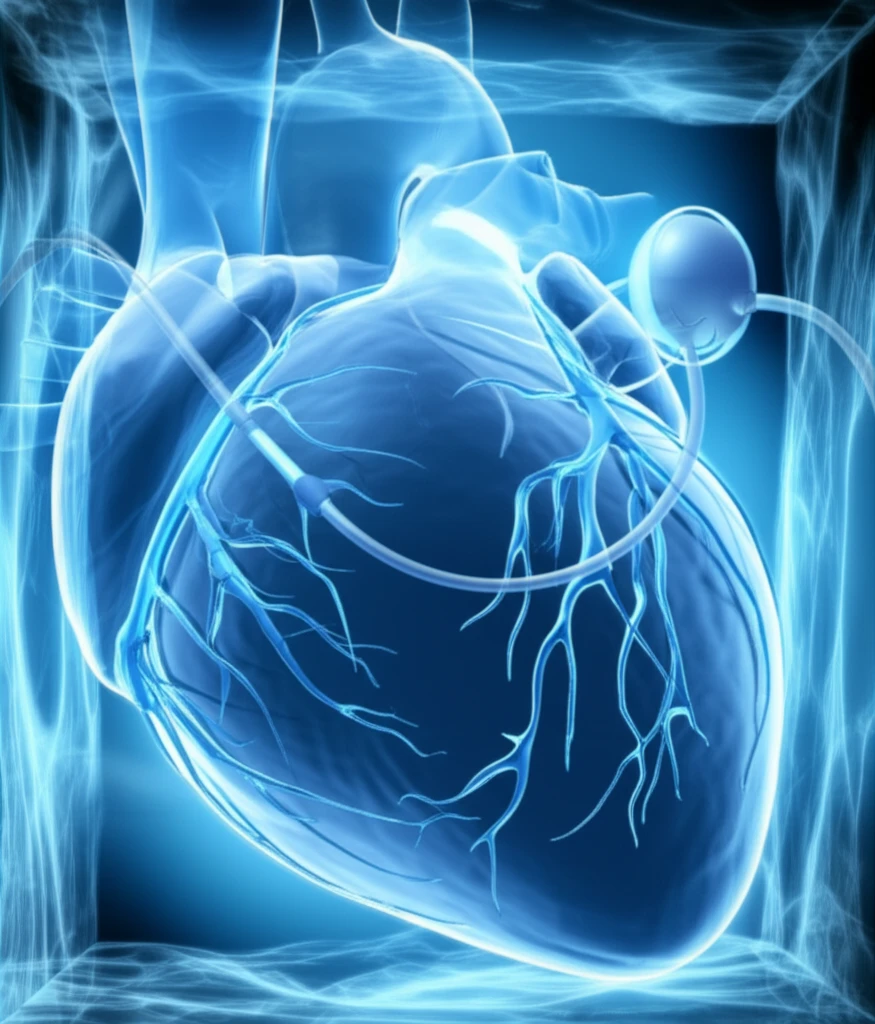
Cryo-Pulmonary Vein Isolation: Sharpening the Edge of Second-Generation Ablation

"A Deep Dive into Tailored Approaches, Lessons Learned, and the Future of Atrial Fibrillation Treatment"
In the quest to conquer atrial fibrillation (AFib), catheter ablation has emerged as a powerful tool, evolving from experimental beginnings to a well-established treatment. Among the various approaches, pulmonary vein isolation (PVI) stands as a cornerstone. This involves creating a barrier around the pulmonary veins, preventing the erratic electrical signals that trigger AFib from reaching the heart.
Traditionally, radiofrequency (RF) ablation has been the go-to method for PVI. However, the rise of cryoballoon ablation offers a compelling alternative. This technique utilizes a balloon inflated with a freezing agent to create lesions, effectively isolating the pulmonary veins. The evolution from first-generation to second-generation cryoballoon technology has brought significant advancements in both procedural efficiency and clinical outcomes.
This article delves into the world of cryo-pulmonary vein isolation, focusing on the lessons learned from second-generation cryoballoon ablation. We'll explore how tailoring the approach can optimize results, discuss the biophysics behind the technology, compare cryoablation to radiofrequency ablation, and examine the crucial parameters for achieving durable pulmonary vein isolation. Ultimately, our goal is to provide a clear understanding of this innovative technique and its potential to transform AFib treatment.
Cryo vs. Radiofrequency Ablation: Understanding the Differences
While both cryoablation and radiofrequency ablation aim to achieve pulmonary vein isolation, they operate through distinct mechanisms. Radiofrequency ablation uses heat to create lesions, while cryoablation employs freezing. This fundamental difference translates into variations in lesion characteristics and potential complications.
- Lesion Morphology: Cryoablation creates more uniform lesions compared to RF ablation.
- Inflammation: RF ablation can induce more edema and inflammation.
- Thrombogenicity: RF energy has been shown to be more thrombogenic than cryoablation.
The Future of Cryo-Pulmonary Vein Isolation: Tailoring Treatment for Optimal Outcomes
Second-generation cryoballoon ablation has solidified its place as a valuable strategy in the treatment of AFib. Its safety and effectiveness, coupled with a relatively rapid learning curve, make it an attractive option for many electrophysiologists.
The trend towards shorter freezing times and individualized dosing strategies holds great promise for further improving the safety and efficacy of cryo-PVI. By carefully monitoring parameters like time-to-effect and temperature curves, electrophysiologists can tailor the ablation procedure to each patient's unique needs.
As technology advances and our understanding of AFib evolves, cryo-pulmonary vein isolation will likely continue to refine. Future research will focus on optimizing ablation parameters, identifying predictors of long-term success, and exploring the role of cryoablation in conjunction with other AFib treatment strategies. The ultimate goal is to provide personalized and effective care that minimizes risks and improves the quality of life for individuals living with atrial fibrillation.