
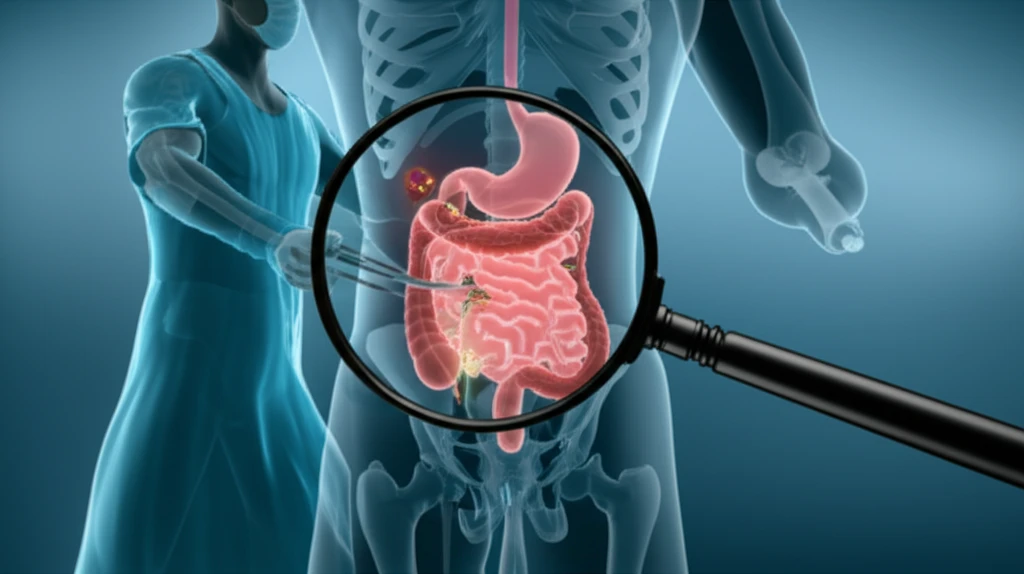
Laparoscopic surgery illustration for Crohn's disease

Crohn's Disease Surgery: Is Keyhole the Best Approach?

"Exploring the benefits and long-term outcomes of laparoscopic ileocecal resection for Crohn's Disease."


Crohn's disease, a chronic inflammatory condition of the digestive tract, often requires a multifaceted approach to treatment. While medications play a crucial role in managing symptoms, surgery becomes necessary for many patients when complications arise or medications are no longer effective.

Traditionally, open surgery was the standard approach, but recent advancements have led to increased use of laparoscopic techniques. This minimally invasive method offers several potential advantages, including smaller incisions, reduced pain, and faster recovery times.

A recent study published in "coloproctology" (2018) investigated the outcomes of laparoscopic ileocecal resection – a common surgical procedure for Crohn's disease affecting the region where the small and large intestines meet. This article will delve into the study's findings, exploring the benefits, risks, and long-term considerations associated with this surgical approach.

Laparoscopic Ileocecal Resection: A Detailed Look

Laparoscopic surgery illustration for Crohn's disease

The study, conducted across two specialist centers, retrospectively analyzed data from 538 patients who underwent ileocecal resection for Crohn's disease between 1998 and 2013. The primary goal was to assess the short- and long-term outcomes of laparoscopic surgery compared to open surgery.

Here's a breakdown of some key findings from the research:

  • Prevalence: Stenosing (narrowing) and penetrating Crohn's disease were almost equally prevalent, accounting for 50.2% and 42.9% of cases, respectively.
  • Surgical Approach: The majority of patients (71.2%) underwent laparoscopic surgery, highlighting its growing adoption.
  • Anastomosis Technique: Various anastomosis techniques were used, with side-to-side (43.9%) and end-to-end (40.7%) being the most common. Hand-sewn anastomosis was preferred in most cases (62.4%).
  • Inflammation at Resection Margin: A significant finding was the presence of inflammatory activity at the resection margin (27.7%), which was later identified as a risk factor for recurrence.
  • Morbidity: The 30-day morbidity rate was 22.5%, with a 3% rate of anastomotic leakage. Risk factors for leakage included ASA score, BMI, age, open surgery, and the length of the resected segment.
  • Recurrence: Over a median follow-up of 6 years, clinical recurrence rates were 17.6% at 1 year, 45.4% at 5 years, and 55.0% at 10 years. Smoking and inflammation at the oral resection margin were identified as significant risk factors for recurrence.
These findings suggest that laparoscopic ileocecal resection is a safe and effective approach for managing Crohn's disease when performed by experienced surgeons. However, the study also emphasizes the importance of considering risk factors for complications and recurrence.

Key Takeaways and Considerations

The study reinforces the idea that laparoscopic surgery, when performed by experienced surgeons, can be a safe and effective option for Crohn's disease management. The lower complication rates and faster recovery times associated with this approach make it an attractive alternative to open surgery for many patients.

However, the findings also highlight the importance of addressing risk factors for recurrence. The presence of inflammation at the resection margin and smoking habits were identified as significant predictors of disease recurrence. This suggests that more aggressive medical management or lifestyle changes may be necessary to reduce the risk of recurrence in these patients.

Ultimately, the decision to undergo laparoscopic ileocecal resection should be made in consultation with a multidisciplinary team of specialists, including gastroenterologists and surgeons. A comprehensive evaluation of the patient's individual risk factors and preferences is essential to ensure the best possible outcome.

About this Article -

This article was crafted using a human-AI hybrid and collaborative approach. AI assisted our team with initial drafting, research insights, identifying key questions, and image generation. Our human editors guided topic selection, defined the angle, structured the content, ensured factual accuracy and relevance, refined the tone, and conducted thorough editing to deliver helpful, high-quality information.See our About page for more information.

This article is based on research published under:

DOI-LINK: 10.1007/s00053-018-0261-9, Alternate LINK

Title: Ergebnisse Der Laparoskopischen Chirurgie Bei Morbus Crohn

Subject: Gastroenterology

Journal: coloproctology

Publisher: Springer Science and Business Media LLC

Authors: P. C. Manegold, S. Fichtner-Feigl

Published: 2018-05-29

Everything You Need To Know

1

What is Crohn's disease, and what role does surgery play in its treatment?

Crohn's disease is a chronic inflammatory condition affecting the digestive tract. It often necessitates a multifaceted treatment approach, with surgery becoming a crucial option when complications arise or medications prove ineffective. The laparoscopic ileocecal resection is a surgical procedure used for Crohn's disease, especially when the small and large intestines meet, a common site of impact.

2

What are the main benefits of laparoscopic ileocecal resection compared to other surgical methods?

Laparoscopic ileocecal resection offers several advantages compared to open surgery, including smaller incisions, reduced pain, and faster recovery times. The study highlights that the laparoscopic approach is considered safe and effective. Moreover, the study found that the majority of patients (71.2%) underwent laparoscopic surgery. However, factors like the presence of inflammatory activity at the resection margin and smoking have been identified as significant risk factors for recurrence, suggesting a need for comprehensive patient management and post-operative care to minimize recurrence rates.

3

What were the key findings from the study regarding laparoscopic ileocecal resection?

The study analyzed data from 538 patients. The key findings focused on various aspects of the procedure: prevalence of Crohn's disease types (stenosing and penetrating), surgical approach (laparoscopic versus open), anastomosis techniques, the presence of inflammation at the resection margin, morbidity rates, and recurrence rates over a median follow-up of 6 years. This comprehensive analysis helped to understand the short-term outcomes and long-term recurrence.

4

What complications can occur after laparoscopic ileocecal resection, and what factors increase the risk of these complications?

The 30-day morbidity rate was 22.5%, with a 3% rate of anastomotic leakage. Risk factors for leakage included ASA score, BMI, age, open surgery, and the length of the resected segment. These factors emphasize the importance of careful patient selection, surgical technique, and post-operative monitoring to minimize complications.

5

What are the long-term outcomes of laparoscopic ileocecal resection, and what factors influence the recurrence of Crohn's disease?

Clinical recurrence rates were 17.6% at 1 year, 45.4% at 5 years, and 55.0% at 10 years. Smoking and inflammation at the oral resection margin were identified as significant risk factors for recurrence. These findings show the chronic nature of Crohn's disease and the need for long-term monitoring and management. The identification of risk factors like smoking and inflammation at the resection margin is critical for tailoring post-operative care and lifestyle recommendations to improve long-term outcomes.

Newsletter Subscribe

Subscribe to get the latest articles and insights directly in your inbox.