
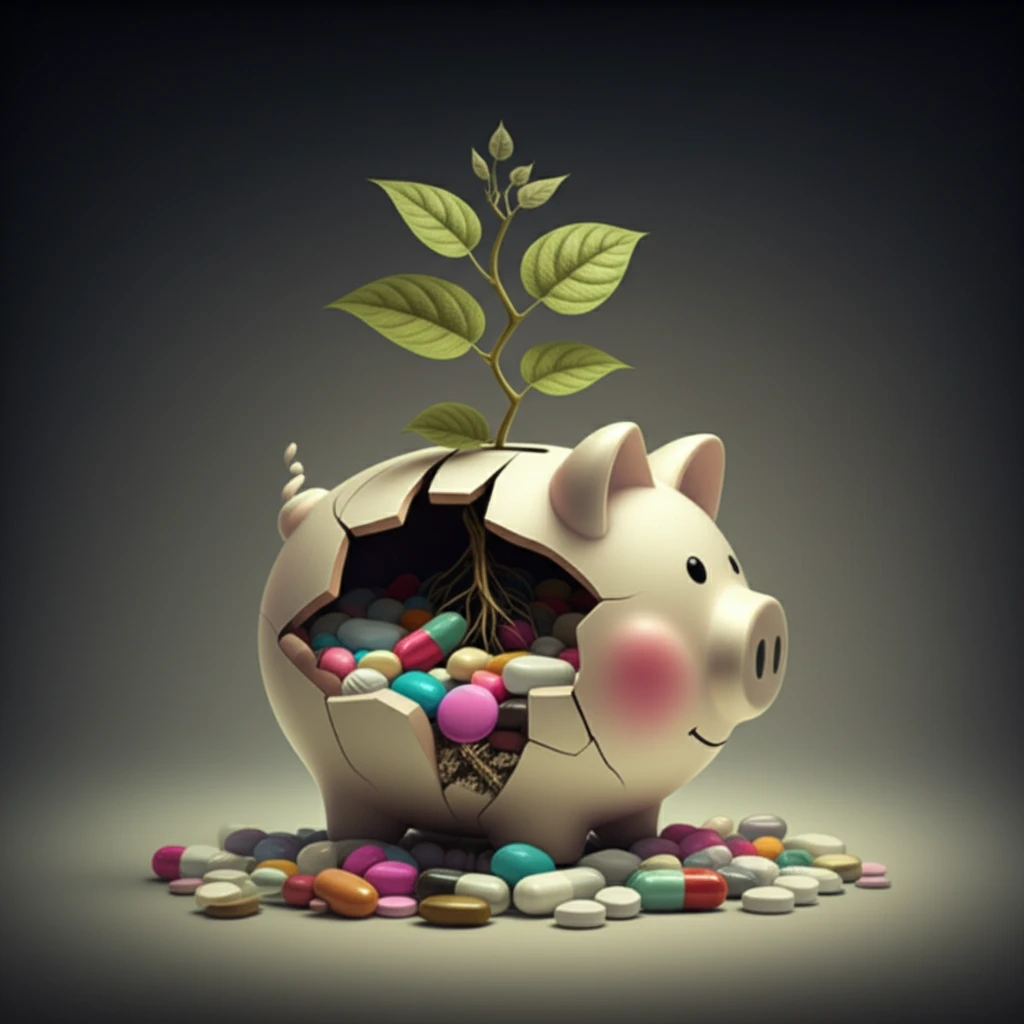
Broken piggy bank overflowing with pills and a resilient plant, symbolizing the economic challenges and hope in antibiotic research.

Cracking the Code: Why Antibiotic Development Needs an Economic Revolution

"Explore the economic pitfalls hindering antibiotic research and development (R&D) and discover innovative strategies for a healthier future."


For decades, antibiotics have been our frontline defense against bacterial infections. But the golden age of antibiotic discovery, which stretched from the 1940s to the 1990s, has faded. Major pharmaceutical companies, once at the forefront of this fight, have largely shifted their focus to more profitable therapeutic areas, leaving a critical gap in our ability to combat increasingly resistant bacteria.

The consequences of this shift are alarming. As bacteria evolve and develop resistance to existing antibiotics, we face the growing threat of infections that are difficult, or even impossible, to treat. This crisis is compounded by the overuse and misuse of antibiotics in both human and agricultural settings, accelerating the spread of resistance and pushing us closer to a post-antibiotic era.

The challenge now lies in reinvigorating antibiotic research and development (R&D). This requires a multi-pronged approach that not only addresses the scientific and regulatory hurdles but also tackles the underlying economic disincentives that have discouraged investment in this critical field. The goal of this article is to explore these economic barriers, examine recent initiatives aimed at stimulating innovation, and propose tangible solutions to ensure a robust pipeline of new antibiotics.

The Economic Roadblocks in Antibiotic Development

Broken piggy bank overflowing with pills and a resilient plant, symbolizing the economic challenges and hope in antibiotic research.

The path to developing new antibiotics is fraught with economic challenges, creating a formidable barrier for researchers and companies alike. These obstacles span the entire value chain, from initial discovery to clinical trials and market launch, each contributing to the overall disincentive for investment.

One of the primary hurdles is the difficulty in identifying new antibacterial molecules and mechanisms of action. Traditional methods of drug discovery have become less fruitful, leading to a decline in scientific talent and research programs dedicated to antibiotic development. This scarcity of expertise further compounds the challenge of innovation.

  • Basic Science Hurdles: Identifying novel antibacterial molecules and mechanisms is increasingly difficult, leading to a decline in research talent.
  • Preclinical 'Valley of Death': Promising drug candidates often fail to transition from basic science to clinical trials due to funding gaps and a lack of effective preclinical models.
  • Clinical Trial Costs: The high cost of Phase I-III clinical trials, estimated at upwards of $130 million, deters small- and medium-sized enterprises (SMEs) from investing in potential antibiotics.
Even if a drug successfully navigates clinical trials, it must then navigate the complex and varied regulatory landscapes of different drug authorities. The differing requirements for patient selection, clinical endpoint definitions, and statistical parameters across agencies like the FDA, EMA, and others add to the expense and reduce the effective patent period of the product. Furthermore, the limited sales volumes of new antibiotics, driven by short treatment durations and antimicrobial stewardship programs, undermine the financial justification for development and commercialization.

Seizing the Opportunity: A Call to Action

The economic challenges facing antibiotic development demand bold and innovative solutions. By expanding late-stage funding for clinical trials and implementing market-based incentives, such as Market Entry Rewards or Options Market for Antibiotics, we can revitalize the antibiotic pipeline and ensure a sustainable supply of life-saving drugs. The time to act is now. Only through concerted effort and strategic investment can we overcome these economic barriers and safeguard public health for generations to come.

About this Article -

This article was crafted using a human-AI hybrid and collaborative approach. AI assisted our team with initial drafting, research insights, identifying key questions, and image generation. Our human editors guided topic selection, defined the angle, structured the content, ensured factual accuracy and relevance, refined the tone, and conducted thorough editing to deliver helpful, high-quality information.See our About page for more information.

Everything You Need To Know

1

Why has the development of new antibiotics slowed down?

The slowdown in antibiotic development is primarily due to economic disincentives. Major pharmaceutical companies have shifted their focus away from antibiotic research and development (R&D) toward more profitable areas. The path to new antibiotics is expensive, with hurdles like identifying new antibacterial molecules, navigating the 'Valley of Death' in preclinical stages, and the high costs of clinical trials (Phase I-III trials costing upwards of $130 million) discouraging investment. Furthermore, limited sales volumes, due to short treatment durations and antimicrobial stewardship programs, undermine the financial viability of developing new antibiotics.

2

What are the specific economic barriers hindering antibiotic development, as outlined?

The economic roadblocks include the difficulty in identifying new antibacterial molecules and mechanisms of action, leading to a decline in research talent. There is the 'Valley of Death' where promising drug candidates fail to transition from basic science to clinical trials due to funding gaps and lack of effective preclinical models. Furthermore, the high costs of clinical trials (Phase I-III) deter investment, especially for small- and medium-sized enterprises (SMEs). Navigating various regulatory landscapes adds to the expense and reduces patent periods. Finally, the limited sales volumes of new antibiotics reduce the financial justification for development and commercialization.

3

What is the 'Valley of Death' in the context of antibiotic development, and why is it significant?

The 'Valley of Death' refers to the critical phase in drug development where promising drug candidates often fail to transition from basic science to clinical trials. This occurs due to funding gaps and the lack of effective preclinical models. This phase is significant because it represents a major barrier to innovation. Many potential antibiotics are lost at this stage, preventing them from ever reaching patients who desperately need them. Overcoming this hurdle is crucial for revitalizing the antibiotic pipeline and ensuring a sustainable supply of life-saving drugs.

4

How do regulatory challenges impact the economic viability of new antibiotics?

Regulatory challenges significantly impact the economic viability by adding to the expense of development and reducing the effective patent period. Different drug authorities, such as the FDA and EMA, have varying requirements for patient selection, clinical endpoint definitions, and statistical parameters. These differences mean that companies must invest more time and resources to meet these varied requirements, increasing the overall cost. Additionally, the time spent navigating these regulatory processes reduces the period during which a company can exclusively sell the drug under patent protection, thereby decreasing potential revenue and investment returns, further undermining the financial justification.

5

What solutions are proposed to address the economic challenges in antibiotic development?

To overcome the economic barriers, the article suggests several solutions. These include expanding late-stage funding for clinical trials and implementing market-based incentives. Market Entry Rewards and Options Market for Antibiotics are mentioned as potential strategies to stimulate innovation. By providing financial incentives and ensuring a viable market for new antibiotics, these measures aim to revitalize the antibiotic pipeline, encourage investment, and ultimately ensure a sustainable supply of life-saving drugs to combat antibiotic resistance.

Newsletter Subscribe

Subscribe to get the latest articles and insights directly in your inbox.