
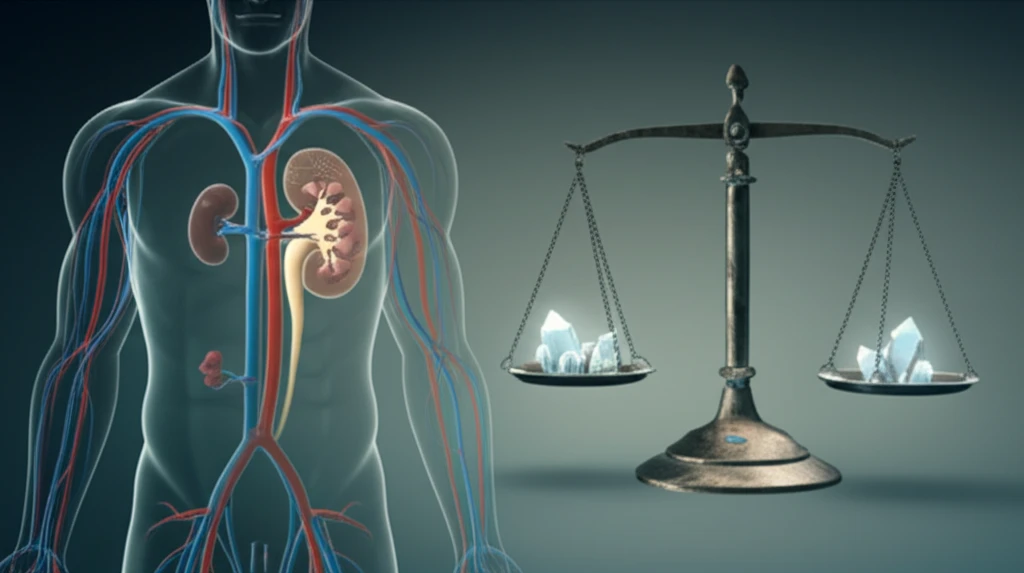
Illustration depicting the interconnectedness of kidney health, mineral balance, and the human body. Focus on the internal systems with a balanced scale and the kidneys.

Cracking the Code: Understanding the Link Between Kidney Health, Mineral Imbalances, and Your Well-being

"Explore the complexities of Chronic Kidney Disease-Mineral Bone Disorder (CKD-MBD) and how it impacts your health, from cardiovascular risks to the importance of personalized care."


Kidney health is a cornerstone of overall well-being, yet it's often overlooked until problems arise. Chronic Kidney Disease-Mineral Bone Disorder (CKD-MBD) represents a significant challenge, affecting millions worldwide. This condition highlights the intricate relationship between our kidneys, bone health, and the delicate balance of minerals in our blood. Understanding CKD-MBD isn't just for medical professionals; it's vital knowledge for anyone interested in proactive health management.

This article delves into the heart of CKD-MBD, exploring its impact on cardiovascular health, the global guidelines designed to manage it, and the gaps that exist between these guidelines and real-world practices. We'll examine how mineral imbalances, particularly those involving calcium, phosphorus, and parathyroid hormone (PTH), can affect your body. You'll also learn about the importance of personalized care and how to advocate for your health.

Whether you're seeking to understand a recent diagnosis, support a loved one, or simply expand your health knowledge, this article aims to demystify CKD-MBD. We'll provide accessible explanations, explore the latest research, and empower you with the information needed to make informed decisions about your health. Let's embark on a journey toward better kidney health together.

Decoding CKD-MBD: What You Need to Know

Illustration depicting the interconnectedness of kidney health, mineral balance, and the human body. Focus on the internal systems with a balanced scale and the kidneys.

CKD-MBD is more than just a mouthful of medical jargon; it signifies a systemic disorder that affects multiple aspects of your health. The term itself evolved from 'renal osteodystrophy,' emphasizing the broader implications of the condition beyond bone health. The key lies in the interplay of your kidneys, bones, and crucial minerals like calcium, phosphorus, and PTH.

When kidneys aren't functioning optimally, they can't effectively regulate these minerals. This can lead to imbalances in your blood, causing a cascade of health issues. Elevated levels of calcium, phosphorus, and PTH are linked to increased cardiovascular problems and overall mortality. This makes understanding and managing CKD-MBD a critical aspect of maintaining long-term health. It's a complex interplay, but we'll break it down step by step.

  • Elevated Phosphorus: High phosphorus levels can lead to vascular calcification, hardening of the arteries, and increased risk of heart disease.
  • Calcium Imbalance: Both high and low calcium levels can cause problems, affecting bone health and contributing to cardiovascular issues.
  • Parathyroid Hormone (PTH): Elevated PTH is a response to mineral imbalances, but chronically high levels can further exacerbate bone and cardiovascular problems.
  • Impact on Bones: CKD-MBD can weaken bones, increasing the risk of fractures and other skeletal issues.
Recognizing the importance of proactive management, many countries have developed clinical practice guidelines. These guidelines, often based on the work of organizations like the Kidney Disease: Improving Global Outcomes (KDIGO) and the Kidney Disease Outcomes Quality Initiative (KDOQI), offer recommendations for managing mineral levels. However, as we'll see, putting these guidelines into practice can be complex, and local factors play a significant role.

Take Control: Your Path to Kidney Health

CKD-MBD may seem complex, but with knowledge comes empowerment. By understanding the interplay of minerals, the importance of personalized care, and the role of global guidelines, you can take an active role in your kidney health. Regular check-ups, open communication with your healthcare provider, and a proactive approach to managing your mineral levels are essential steps. This journey is not one you have to take alone. Seek support, ask questions, and stay informed. Your well-being is worth it.

About this Article -

This article was crafted using a human-AI hybrid and collaborative approach. AI assisted our team with initial drafting, research insights, identifying key questions, and image generation. Our human editors guided topic selection, defined the angle, structured the content, ensured factual accuracy and relevance, refined the tone, and conducted thorough editing to deliver helpful, high-quality information.See our About page for more information.

This article is based on research published under:

DOI-LINK: 10.5049/ebp.2014.12.2.35, Alternate LINK

Title: Gaps Between Global Guidelines And Local Practices In Ckd-Mbd

Subject: Cardiology and Cardiovascular Medicine

Journal: Electrolytes & Blood Pressure

Publisher: The Korean Society of Electrolyte Metabolism

Authors: Gheun-Ho Kim

Published: 2014-01-01

Everything You Need To Know

1

What is Chronic Kidney Disease-Mineral Bone Disorder (CKD-MBD)?

Chronic Kidney Disease-Mineral Bone Disorder (CKD-MBD) is a systemic disorder that arises from the complex interaction between your kidneys, bones, and minerals such as calcium, phosphorus and parathyroid hormone (PTH). When kidneys don't function correctly, they fail to regulate these minerals effectively, leading to imbalances that can trigger cardiovascular problems, bone issues, and increased mortality risk. This condition is not limited to bone health, which is why the term evolved from renal osteodystrophy.

2

How do imbalances in calcium, phosphorus, and parathyroid hormone (PTH) specifically impact my health in the context of CKD-MBD?

In CKD-MBD, elevated phosphorus levels can lead to vascular calcification, increasing the risk of heart disease. Calcium imbalances, both high and low levels, affect bone health and contribute to cardiovascular issues. Elevated parathyroid hormone (PTH), while initially a response to mineral imbalances, can further worsen bone and cardiovascular problems if it remains chronically high. These imbalances weaken bones, potentially leading to fractures and other skeletal problems.

3

What are the key guidelines used to manage mineral levels in CKD-MBD, and how are they implemented globally?

Clinical practice guidelines from organizations like Kidney Disease: Improving Global Outcomes (KDIGO) and Kidney Disease Outcomes Quality Initiative (KDOQI) are pivotal for managing mineral levels in CKD-MBD. These guidelines offer recommendations for managing calcium, phosphorus, and parathyroid hormone (PTH) levels. However, the implementation of these guidelines varies globally, and local factors significantly influence their application. Bridging the gap between guideline recommendations and real-world practices remains a challenge.

4

Why is personalized care so important in managing Chronic Kidney Disease-Mineral Bone Disorder (CKD-MBD)?

Personalized care is crucial in managing Chronic Kidney Disease-Mineral Bone Disorder (CKD-MBD) because the condition affects individuals differently based on various factors such as the stage of kidney disease, other existing health conditions, and lifestyle. A one-size-fits-all approach may not be effective, as mineral imbalances and their impact can vary significantly. Personalized care involves tailoring treatment plans to address specific needs and circumstances, optimizing outcomes, and improving the overall well-being of each patient.

5

Beyond medication, what lifestyle adjustments can help manage mineral imbalances related to Chronic Kidney Disease-Mineral Bone Disorder (CKD-MBD), and how do these adjustments impact overall kidney health?

While medication is often necessary, lifestyle adjustments play a significant role in managing mineral imbalances related to Chronic Kidney Disease-Mineral Bone Disorder (CKD-MBD). Dietary modifications, such as limiting phosphorus intake, are crucial. Regular, appropriate exercise can help maintain bone health, and avoiding smoking is essential for overall cardiovascular and kidney health. These adjustments, combined with regular monitoring and communication with healthcare providers, can improve mineral balance, slow the progression of kidney disease, and enhance overall well-being. Failing to address these areas will make any pharmaceutical intervention have limited effect.

Newsletter Subscribe

Subscribe to get the latest articles and insights directly in your inbox.